
Keep reading
Nearby & related
Bremen
Heini Holtenbeen: Bremen’s Enduring Folk Statue
Discover the story, setting, and simple pleasures of visiting this beloved Bremen landmark.
18 October 2026
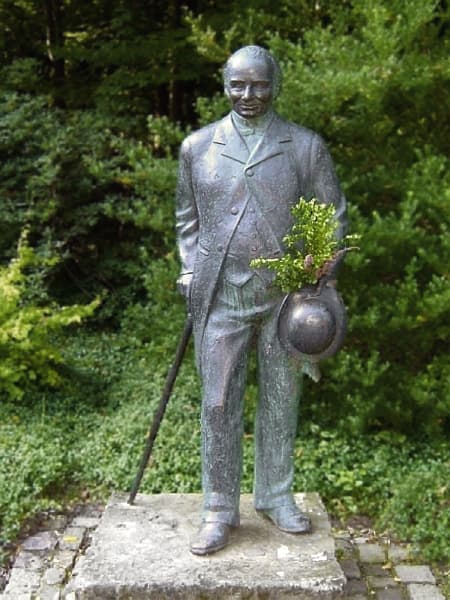
Stand before the bronze figure of Ludwig Knoop and trace the unlikely path from Bremen to Russian cotton mills that shaped the city's fortunes.
Ludwig Knoop left Bremen as a young clerk in the 1830s and returned decades later as one of Europe’s wealthiest industrialists. His statue on the edge of the Bürgerpark captures him in mid-stride, coat open, gaze fixed on the horizon, commemorating the man who turned raw cotton from the American South into finished cloth in Russian factories and then shipped the profits back to his hometown.
Unlike the more famous Roland or Town Musicians, this monument speaks to Bremen’s quieter industrial story. Knoop’s success funded schools, hospitals, and the very parkland where the statue now stands. Visitors who pause here see not just bronze but the link between 19th-century global trade and the green spaces they enjoy today.
Trams 4 and 5 stop within a short walk of the statue. From Bremen Hauptbahnhof the ride takes roughly twelve minutes. Cyclists can follow the Weser River path north and enter the park near the Hollerallee gate. The monument sits on a slight rise, easy to spot once you reach the central lawns.
Early spring brings magnolia blossoms around the base, while autumn offers quieter paths under turning beech trees. Summer weekends fill the surrounding meadows with picnickers; winter visits reward you with crisp light on the bronze surface and fewer crowds.
After viewing the statue, continue south through the park to the rhododendron gardens or cross into the city center for the Übersee-Museum, whose exhibits on global trade echo Knoop’s own story. A fifteen-minute walk reaches the Weser promenade, where restored warehouses recall the port activity that carried his goods.
Keep reading
Discover the story, setting, and simple pleasures of visiting this beloved Bremen landmark.
Knoop built a vast cotton-processing empire in Russia during the 19th century and channeled much of his fortune into Bremen's infrastructure, schools, and parks.
Yes. Trams 4 and 5 serve a nearby stop, and the monument lies inside the pedestrian-friendly Bu00fcrgerpark with level paths.
The statue sits between the city center and the u00dcbersee-Museum; many visitors walk from the Roland statue through the park and onward to the museum in one morning.
The statue stands on flat ground with paved paths; wheelchairs and strollers move easily across the lawns and surrounding park routes.
Some city walking tours focused on industrial history stop here; check the tourist office for current schedules that link the statue with the port warehouses and u00dcbersee-Museum.
This bronze bear links Berlin and Bremen through history, art, and public space in northern Germany.
Climb to Vogelnest for sweeping views across Bremen’s rooftops, the Weser River valley, and rolling countryside beyond.