
Laüs: Exploring the Ancient Greek Ruins of Magna Graecia in Calabria
Wander the evocative remains of a 7th-century BC Greek colony set against the Calabrian hills and sea.
Introduction to Laüs
Laüs stands as one of the lesser-known yet profoundly atmospheric archaeological sites of southern Italy. Founded by Greek colonists from Sybaris in the seventh century BC, this once-thriving city of Magna Graecia occupied a strategic coastal plain near modern Santa Maria del Cedro. Today its scattered temples, city walls and necropoleis offer visitors a quiet window into the Greek settlement of the Italian peninsula.
The Historical Significance of Laüs
Laüs rose to prominence as a trading outpost linking the Ionian and Tyrrhenian coasts. Its location allowed control of fertile river valleys and maritime routes. The city was later conquered by Lucanian tribes and eventually absorbed into the Roman world, yet its Greek layout and sanctuaries remained visible for centuries. Excavations have revealed evidence of multiple temple phases, residential quarters and extensive cemeteries that illustrate both Greek and indigenous cultural interaction.
What to See at the Site
Principal Monuments
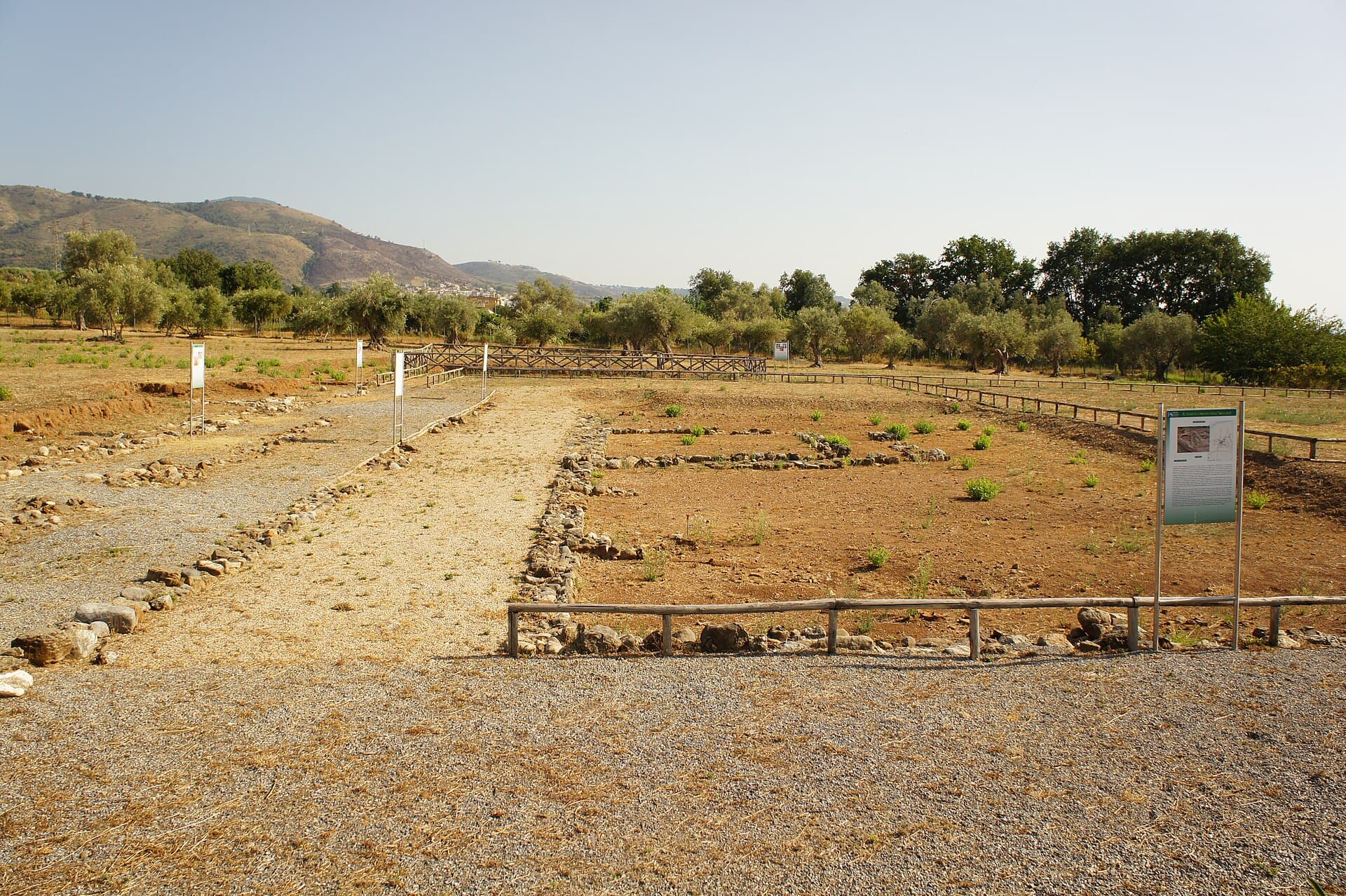
The most striking features include the remains of a Doric temple on the acropolis and sections of the defensive walls that once encircled the lower town. Further downslope lie the outlines of a second sanctuary and numerous burial clusters. Informative panels placed along the paths help visitors understand the original functions of each structure without overwhelming the landscape.
Landscape and Setting
The ruins sit on gentle slopes overlooking the Mediterranean, framed by olive groves and the distant Pollino massif. The combination of archaeological remains and unspoiled countryside creates a contemplative atmosphere rare among more crowded classical sites.
Getting There and Practical Planning
The site lies a short drive inland from the Tyrrhenian coast road. Most visitors arrive by car from Lamezia Terme Airport, roughly ninety minutes north, or from the A2 motorway exit at Falerna. Local buses serve Santa Maria del Cedro village; from there a taxi or short walk reaches the entrance. Comfortable walking shoes are essential, as paths cross uneven terrain and occasional olive orchards.
Best Time to Visit
Spring and early autumn provide the most comfortable conditions, with mild temperatures and fewer insects. Summer visits are possible but require early morning starts to avoid intense heat. Winter rains can make some paths slippery, yet the site remains open year-round and offers a solitary experience during the off-season.
Nearby Attractions
Combine a visit with the extensive remains of Sybaris, thirty minutes south, or the medieval hill town of Scalea. The nearby beaches of Praia a Mare and the natural arches of the Diamante coastline provide a pleasant contrast to the ancient stones.
Visitor tips
- Wear sturdy shoes and bring sun protection; paths are uneven and largely unshaded.
- Download an offline map beforehand, as mobile coverage can be patchy in the surrounding hills.
- Allow at least two hours on site and combine the visit with a meal in Santa Maria del Cedro for an authentic local experience.
Frequently asked questions
How long does it take to explore Lau00fcs?
Most visitors spend between ninety minutes and two hours walking the main paths and viewing the principal ruins.
Is Lau00fcs suitable for children?
The site features open terrain with some uneven ground; older children usually manage well, but younger ones may need close supervision.
Are guided tours available?
Local archaeological associations occasionally organise tours; inquire at the Santa Maria del Cedro tourist office for current schedules.
Can I visit Lau00fcs without a car?
Buses reach the nearby village, but onward travel to the site is easiest by taxi or on foot; renting a car offers the most flexibility for combining sites.
What should I bring for a visit?
Water, sunscreen, a hat and comfortable shoes are essential; there are no facilities at the ruins themselves.