
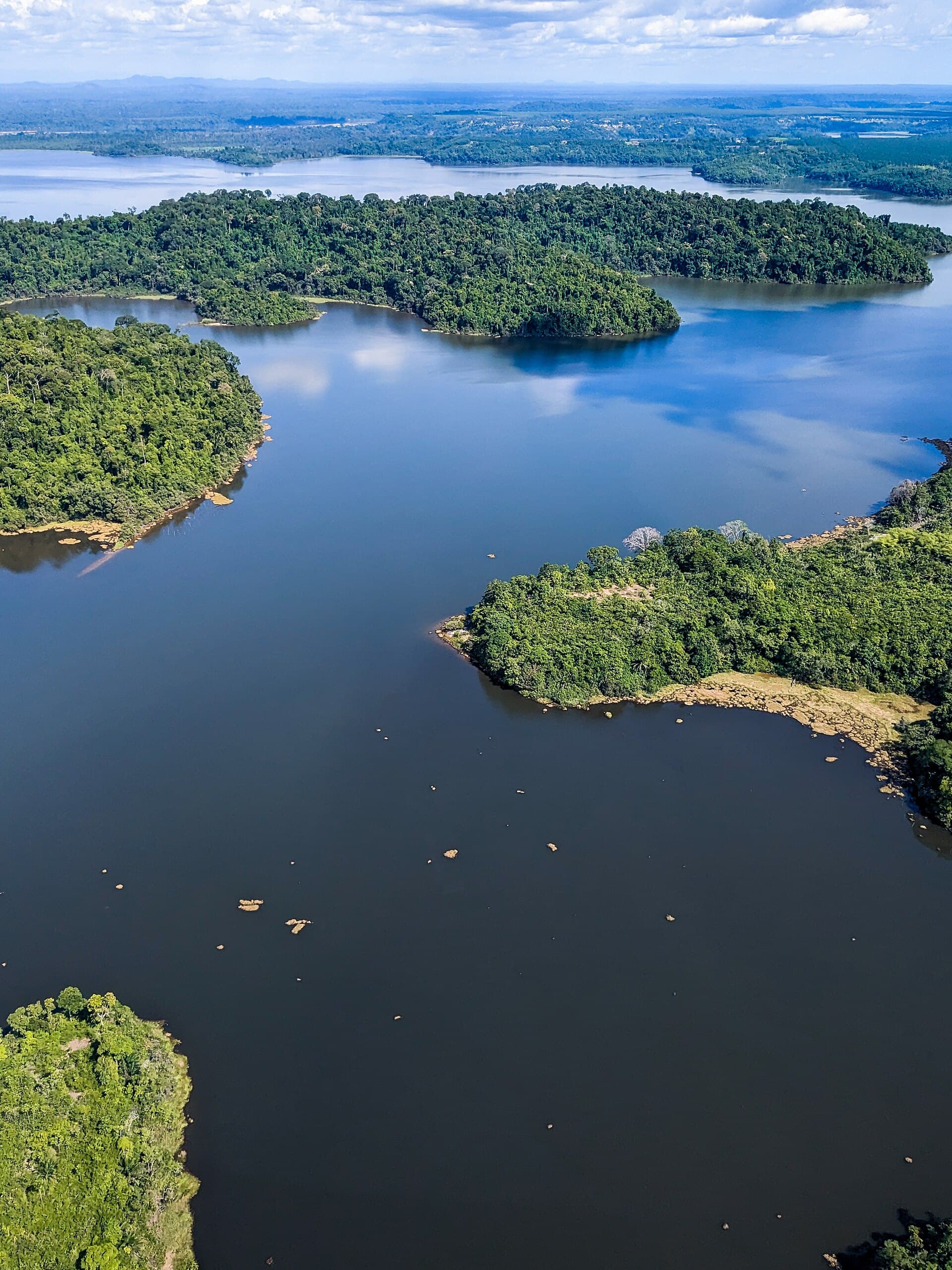
Lake Ossa: Cameroon’s Largest Freshwater Lake in the Littoral Region
A tranquil rainforest lake ideal for boat excursions, birdwatching, and escaping Douala's bustle.
Why Lake Ossa Stands Out
Lake Ossa, the largest natural lake in Cameroon, sits in the Littoral Region near Edea. Its dark waters reflect the surrounding dense rainforest canopy, creating a peaceful setting far removed from coastal humidity. The lake formed in a shallow depression and remains fed by small streams, supporting a quiet ecosystem that draws visitors seeking authentic nature experiences rather than developed resorts.
What to See and Do
Traditional wooden pirogues provide the main way to explore the lake’s 4,000-hectare surface. Short trips reveal scattered islands covered in palms and vines, while longer outings reach quieter coves where herons and kingfishers hunt. Early-morning departures often yield sightings of monkeys moving through shoreline trees. On land, short trails around the western shore lead through secondary forest where local fishermen sometimes demonstrate traditional net-casting techniques.
Practical Activities
- Guided boat circuits lasting two to four hours, focusing on the lake’s perimeter and small inlets.
- Shoreline walks at dawn or dusk to observe waterbirds without disturbing the water surface.
- Visits to nearby villages to learn about freshwater fishing practices that have continued for generations.
Getting There
Most travelers start from Douala, roughly 70 kilometers away by road. The route follows the main Douala–Edea highway, then turns onto a laterite track for the final stretch. Shared taxis or private vehicles reach the lakeshore village of Ebouyé; from there local boat operators provide access. The journey typically takes two to three hours depending on traffic leaving Douala.
Best Time to Visit
The drier months from December through February offer clearer skies and calmer water, improving visibility for wildlife and comfort on the water. Heavy rains from June to October raise water levels and can make access roads slippery, though the lake itself remains accessible year-round for those prepared for tropical downpours.
Nearby Attractions
The Sanaga River lies a short distance south, where visitors can observe larger river traffic and occasional sandbanks. Edea town itself offers markets selling fresh produce and smoked fish. Further afield, the Edea hydroelectric dam provides a striking contrast between engineered infrastructure and the surrounding forest.
Visitor tips
- Hire a local boat operator familiar with the lake's shifting shallows rather than attempting independent navigation.
- Pack lightweight rain protection and sturdy footwear for muddy trails even during the drier season.
- Carry sufficient water and snacks, as facilities at the lakeshore remain limited to small village stalls.
Frequently asked questions
How large is Lake Ossa compared with other Cameroonian lakes?
It is the country's largest natural freshwater body, covering approximately 4,000 hectares with a maximum depth of around 10 meters.
Can visitors swim in Lake Ossa?
Swimming is possible but uncommon; the dark water and occasional submerged vegetation make it better suited to boating than open-water swimming.
Are there any dangerous animals in or around the lake?
Crocodiles and snakes exist in low numbers; visitors should remain with local guides and avoid wading in shallow vegetated areas.
What kind of accommodation exists near Lake Ossa?
Basic guesthouses operate in Edea and lakeside villages; most travelers return to Douala the same day or arrange overnight stays with local families.
Is Lake Ossa suitable for families with children?
Short boat trips work well for older children, but the remote setting and limited facilities make it better for families comfortable with basic travel conditions.