
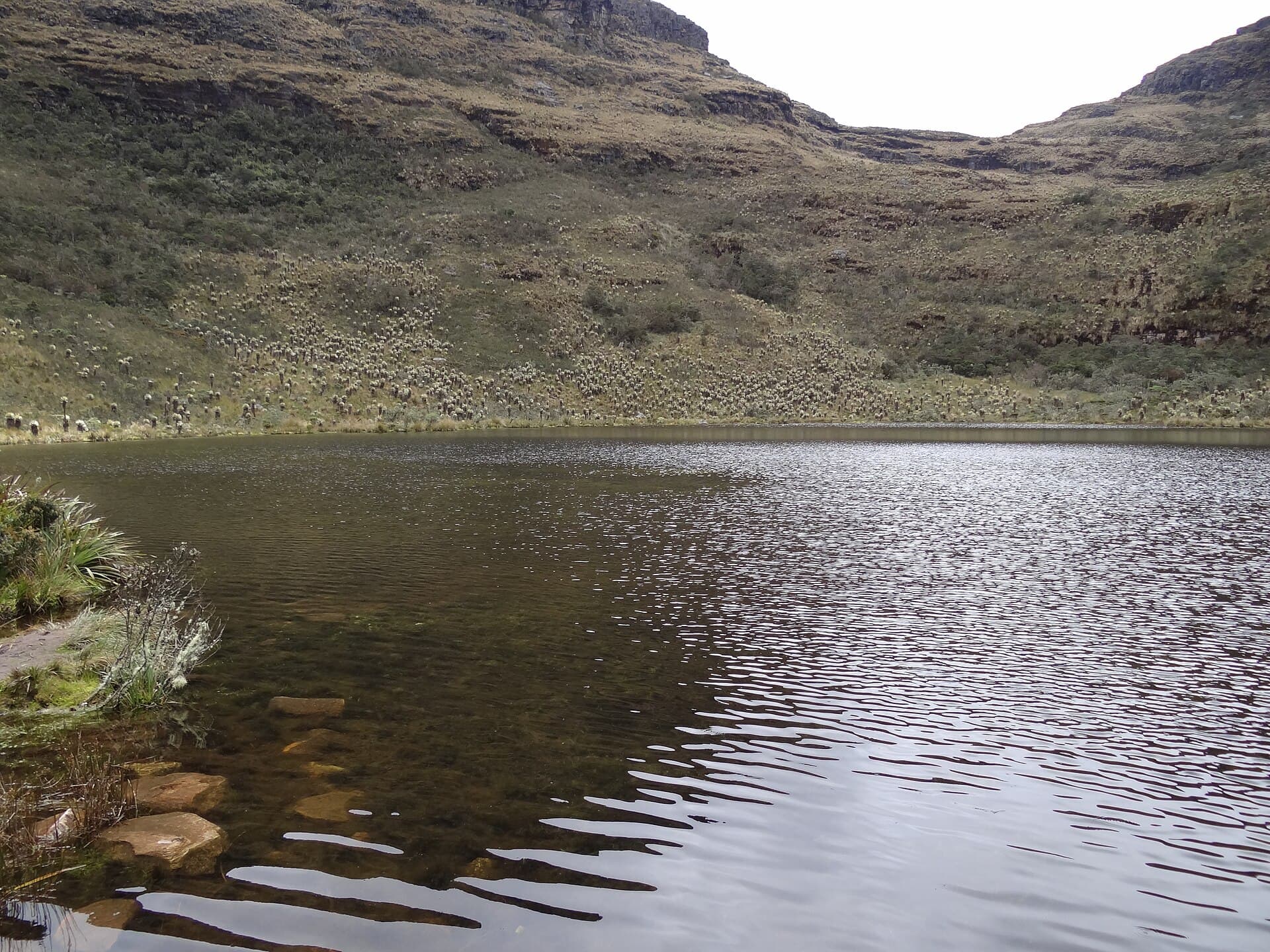
Lake Iguaque: Hiking to Colombia’s Sacred Highland Lake Near Villa de Leyva
Explore the protected trails, Muisca heritage, and alpine scenery of Lake Iguaque in Boyacá’s Iguaque Sanctuary.
Why Lake Iguaque Draws Visitors
Lake Iguaque sits high in the Eastern Andes within the Iguaque Flora and Fauna Sanctuary, a protected area that preserves both biodiversity and deep Muisca cultural roots. The lake itself occupies a glacial basin surrounded by páramo grasslands and cloud forest, offering hikers sweeping views of jagged ridges and distant valleys. Its waters remain clear and cold year-round, reflecting the surrounding peaks and changing sky.
The Hike to the Lake
Most travelers begin at the sanctuary entrance near the village of Monquirá and follow well-marked trails that climb steadily through oak and laurel forests before emerging onto open páramo. The path passes several smaller ponds and offers frequent chances to spot white-tailed deer, spectacled bears, and colorful birds such as the Andean cock-of-the-rock. The final stretch reaches the shore of Lake Iguaque itself, where a small interpretive panel explains the lake’s role in Muisca creation stories.
Getting There from Villa de Leyva
Villa de Leyva serves as the most convenient base. Local buses run to the sanctuary entrance several times daily, or visitors can join guided day tours that include transport and a park ranger. The drive takes roughly 45 minutes over paved and gravel roads before the walking portion begins. Those who prefer independence can arrange a taxi or rent a car and park at the official trailhead.
Flora, Fauna, and Cultural Context
The sanctuary protects fragile high-altitude ecosystems where frailejones, colorful lupines, and cushion plants thrive. Birders often add species to their lists along the route, while the lake area remains an important ceremonial site for local indigenous communities. Rangers enforce quiet zones near the water to honor this heritage.
Best Time to Visit
The clearest weather occurs during the dry seasons from December to February and July to August, when trails stay firmer and visibility is best. Rain is possible any month, so layers and waterproof shells remain essential. Early morning starts help avoid afternoon clouds that frequently shroud the lake.
Nearby Attractions
After descending, many travelers continue to Villa de Leyva’s expansive colonial plaza, the nearby Fossil Museum, or the whitewashed churches of Ráquira. The region also offers easy side trips to the Pozos Azules blue pools and the vineyards of the Valle de Ubaté.
Visitor tips
- Acclimatize in Villa de Leyva for a day before attempting the high-altitude hike to reduce the risk of altitude discomfort.
- Carry plenty of water, a hat, and sun protection; the pu00e1ramo offers little shade once above the tree line.
- Hire an official guide at the entrance if you want deeper insight into Muisca legends and current conservation efforts.
Frequently asked questions
How long does the hike to Lake Iguaque take?
Most hikers need four to six hours round-trip from the sanctuary entrance, depending on pace and stops for wildlife viewing.
Can I swim in Lake Iguaque?
Swimming is discouraged to protect the fragile ecosystem and respect the lakeu2019s cultural significance.
Do I need a guide to visit Lake Iguaque?
A guide is not mandatory on the main trail, but hiring one enhances safety and provides valuable context about the sanctuary.
What should I wear for the hike?
Dress in layers with a waterproof jacket; temperatures can drop quickly and rain is common even in dry months.
Are there facilities at the lake?
Only basic ranger posts and signage exist; bring all food, water, and waste back with you.