Why Lake Ejagham Stands Out
Lake Ejagham formed inside a small volcanic crater and remains one of the most intact crater lakes in the region. Its circular shape, roughly one kilometre across, holds unusually clear water that supports several fish species found nowhere else. The surrounding forest rises steeply from the shore, creating a sheltered microclimate that stays cooler than the nearby lowlands.
What to See and Do
Most visitors begin with a slow circuit of the lake by dugout canoe or small motorboat hired from the village at the northern shore. The short distance allows close views of the forested rim and occasional kingfishers. On calm mornings the water mirrors the crater walls perfectly.
Short trails lead from the lakeside into the surrounding forest. A two-hour loop passes through tall trees and offers chances to spot monkeys and hornbills. Birdwatchers should arrive at dawn when activity peaks along the water’s edge.
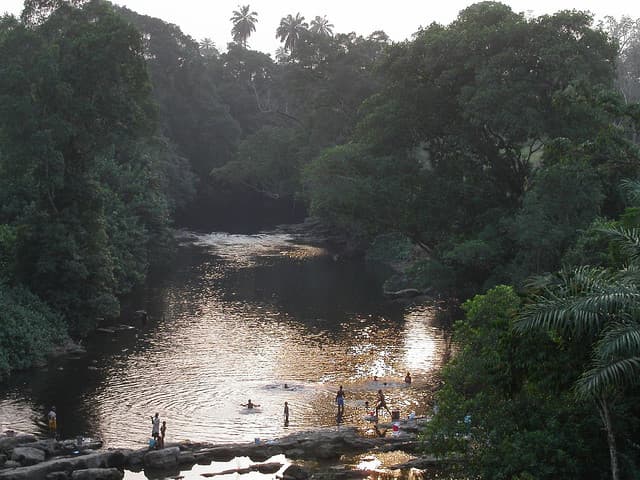
Swimming is possible but not common; the water stays cool year-round and local people use the shallows for washing and fishing. Respect community rules and avoid disturbing gill nets.
Getting There
The lake lies in Southwest Region near the Nigerian border. Most travellers reach the nearest sizable town of Mamfe by road from Bamenda or Kumba, then continue by shared taxi or motorcycle along the graded track that circles the crater. The final descent to the lakeshore is on foot or by motorbike taxi. Carry cash for local transport and arrange return transport before starting any walk.
Best Time to Visit
The drier months from November through February bring clearer skies and firmer paths, making boat trips and forest walks more comfortable. Heavy rains from June to October turn trails muddy and raise the water level, sometimes limiting access. Early morning visits avoid afternoon cloud build-up common even in the dry season.
Nearby Places Worth Adding
Many visitors combine the lake with a stop at the larger Lake Manengouba, roughly two hours north, or continue west toward the Cross River forests for multi-day treks. The border town of Ekok offers basic supplies and a crossing point into Nigeria for those continuing overland.