
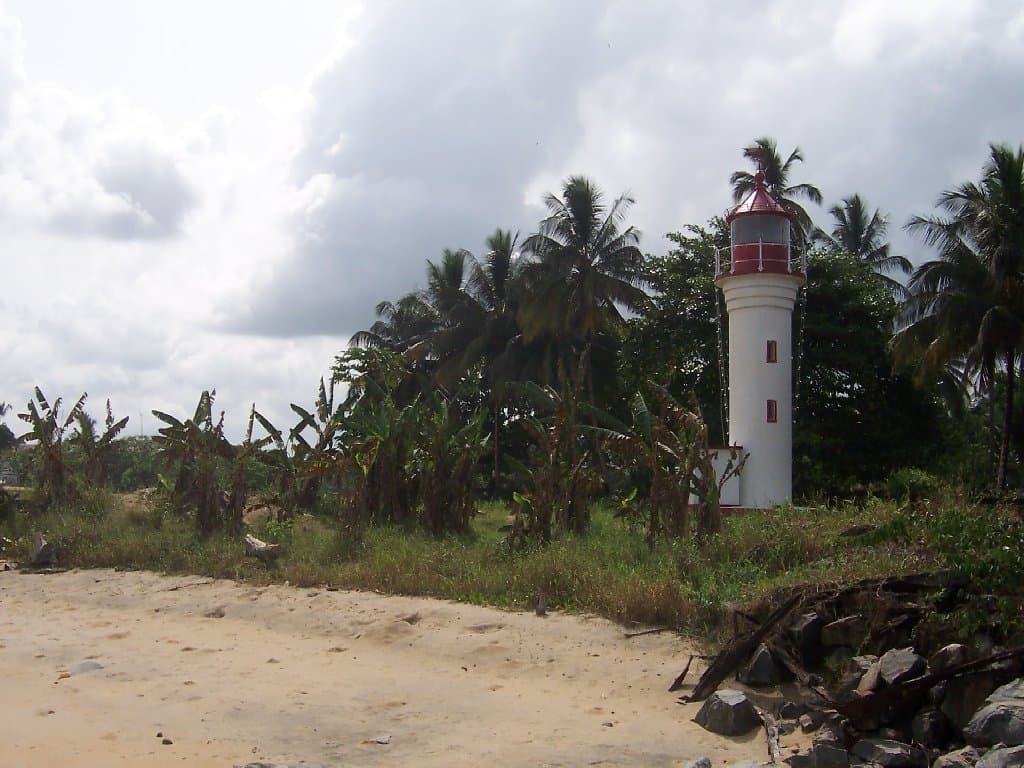
Kribi Range Front Lighthouse: A Coastal Beacon in Southern Cameroon
The Kribi Range Front Lighthouse stands as a historic navigational landmark overlooking the palm-fringed beaches and Atlantic waters of Cameroon’s Kribi coast.
Why Visit the Kribi Range Front Lighthouse
Perched near the shoreline in Cameroon’s Océan region, the Kribi Range Front Lighthouse serves as the forward marker in a pair of range lights that guide vessels safely along this stretch of the Atlantic. Its white tower offers a striking contrast against the green vegetation and turquoise sea, making it a focal point for visitors seeking both maritime history and scenic views. The structure embodies the practical engineering that supports local fishing communities and shipping routes while providing travelers with an elevated vantage point over the coastline.
What to See and Do
Walk the sandy paths leading to the base of the lighthouse for unobstructed panoramas of the ocean and distant ships. The surrounding beach invites relaxed strolls where you can observe local fishermen launching traditional pirogues at dawn or dusk. Photographers appreciate the clean lines of the tower against changing light and the occasional sighting of seabirds. Combine a visit with exploration of the adjacent coastal vegetation, where casuarina trees provide shade and windbreaks typical of this equatorial shoreline.
Practical Activities Nearby
- Observe the interplay between the front and rear range lights that form a visual alignment for mariners.
- Listen to waves and watch for seasonal changes in the coastal ecosystem.
- Chat with local residents about the lighthouse’s role in everyday life along the Kribi waterfront.
Getting There
The lighthouse lies along the coastal road south of Kribi town. Travelers typically arrive by road from Douala, following the paved highway that passes through lush rainforest before reaching the palm-lined approaches to the sea. Once in Kribi, local taxis or motorbike taxis can cover the final stretch to the lighthouse area. The route offers glimpses of roadside markets selling fresh seafood and tropical fruit, adding cultural texture to the journey.
Best Time to Visit
The drier months between November and March generally bring clearer skies and calmer seas, improving visibility for photography and beach walks. During these periods the humidity remains manageable and rainfall is less frequent, allowing comfortable outdoor time near the tower. Even in wetter months the lighthouse remains accessible, though paths may become muddy and the ocean more dramatic.
Nearby Attractions
Just minutes away lie the broad sands of Kribi’s main beaches, popular for swimming and relaxation. A short drive north leads to the impressive Chutes de la Lobé, where a waterfall meets the sea. Further exploration reveals fishing villages and small ports where fresh catch is sold daily, offering insight into the regional economy that the lighthouse helps support.
Visitor tips
- Carry water and wear a hat, as shade is limited near the exposed shoreline.
- Pair your lighthouse visit with an early morning or late afternoon arrival to avoid midday heat and capture better light.
- Respect local fishing activity by staying on established paths and not disturbing boats or nets.
Frequently asked questions
Is the Kribi Range Front Lighthouse climbable?
The tower itself is primarily a working navigational aid and is not generally open for public climbing; visitors enjoy the exterior and surrounding grounds.
Can I swim at the beach near the lighthouse?
The adjacent beach allows swimming, though currents can be strong; always check local conditions and avoid isolated spots.
Are there facilities like restrooms or food vendors at the site?
Basic facilities are minimal; bring your own supplies or stop in Kribi town beforehand for refreshments and essentials.
How long should I plan to spend at the lighthouse?
Most visitors spend one to two hours exploring the grounds, taking photos, and walking the nearby beach.
Is the lighthouse suitable for children or elderly visitors?
The flat sandy approaches are generally accessible, but uneven paths and sun exposure require caution for all ages.