
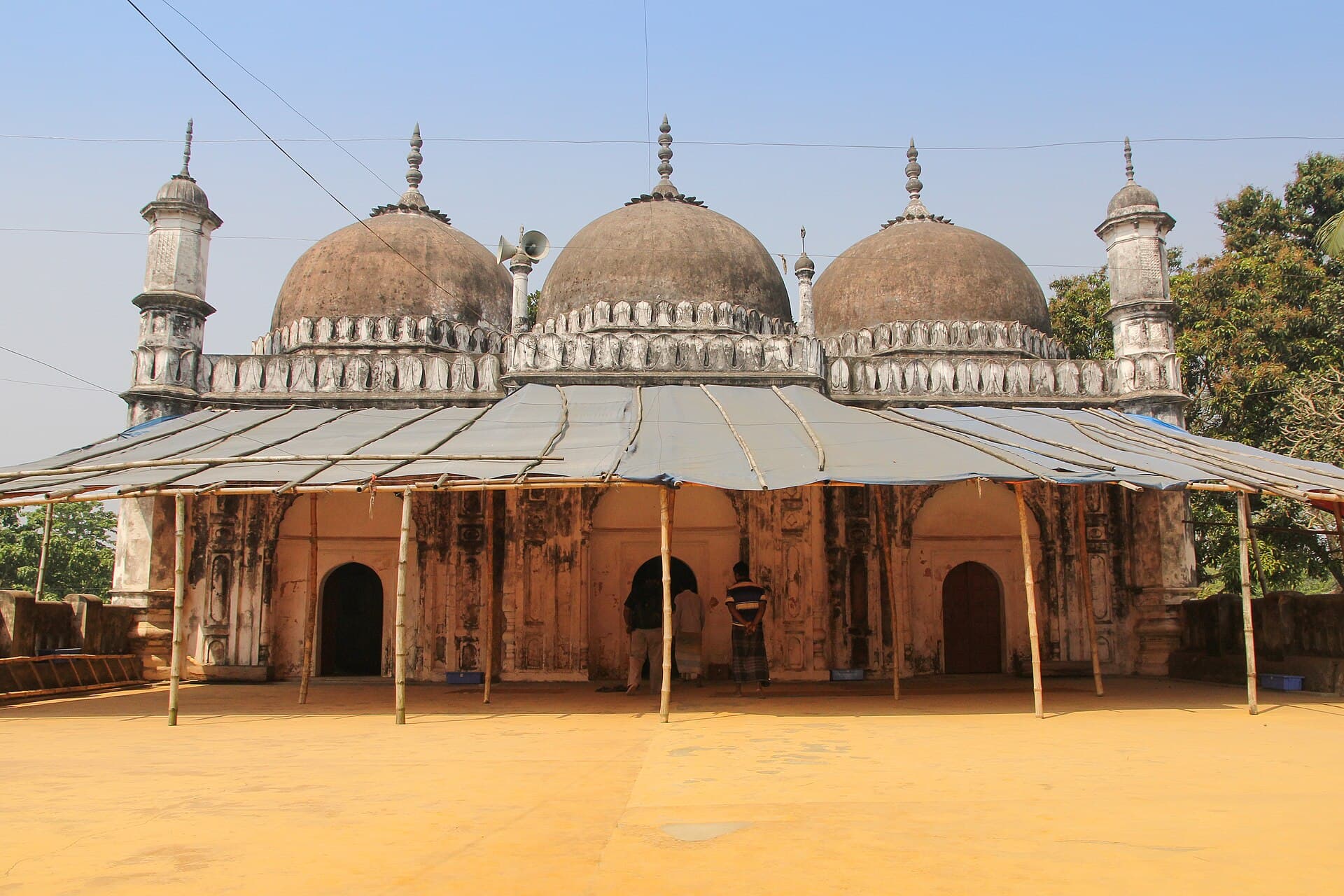
Jhaudia Shahi Mosque: Exploring a 16th-Century Mughal Treasure in Rural Bangladesh
Wander through the terracotta-adorned ruins of this historic mosque set amid the quiet fields of Jhaudia Union.
History and Significance
The Jhaudia Shahi Mosque stands as a preserved example of early Mughal architecture in Bangladesh. Built during the 16th century, it reflects the transition from Sultanate to Mughal styles in Bengal, featuring durable brick construction and detailed surface ornamentation that has survived centuries of monsoon seasons and rural use.
Architecture and What to See
Visitors approach a rectangular prayer hall topped by multiple domes supported on thick walls. The exterior displays rows of terracotta plaques depicting floral motifs, geometric patterns, and small arched niches typical of the period. Inside, the mihrab niche remains intact, framed by carved brickwork. The surrounding open courtyard and remnants of corner towers allow visitors to visualize the original fortified layout. The site feels intimate because it sits within village fields rather than a manicured park.
How to Get There
Reach the mosque by road from Kushtia town, roughly 20 kilometers away. Local buses and shared auto-rickshaws run along the highway toward Jhaudia Union; from the main road a short walk or hired rickshaw leads to the entrance. The flat terrain makes the final stretch easy on foot or bicycle for those who enjoy exploring the surrounding paddy landscapes.
Best Time to Visit
November through February offers the most comfortable weather, with cooler temperatures and lower humidity. Early morning visits provide soft light for photography and fewer local visitors. Avoid the peak monsoon months when paths can become muddy and the brickwork slippery.
Nearby Attractions
Combine a visit with the nearby Lalon Shah shrine in Kumarkhali, known for its Baul music heritage, or the river ghats along the Padma where local ferries operate. The rural roads also pass traditional brick kilns and date-palm groves that illustrate everyday Bangladeshi village life.
Visitor tips
- Wear modest clothing that covers shoulders and knees to respect the religious character of the site.
- Carry drinking water and wear a hat, as shade is limited outside the main prayer hall.
- Hire a local guide from the village for deeper context on the terracotta panels and oral histories.
Frequently asked questions
How old is the Jhaudia Shahi Mosque?
The mosque dates to the 16th century during the early Mughal period in Bengal.
Is the site still used for prayer?
Local residents occasionally use the hall for prayers, so visitors should maintain quiet and respectful behavior.
Are there entry fees or opening hours?
The archaeological site remains open during daylight hours with no formal ticketing; donations toward maintenance are appreciated.
What should I bring for a visit?
Comfortable walking shoes, water, sunscreen, and a camera for the terracotta details are recommended.
Can I combine this with other sites in one day?
Yes, the mosque pairs easily with the Lalon Shah shrine or river excursions from Kushtia.