
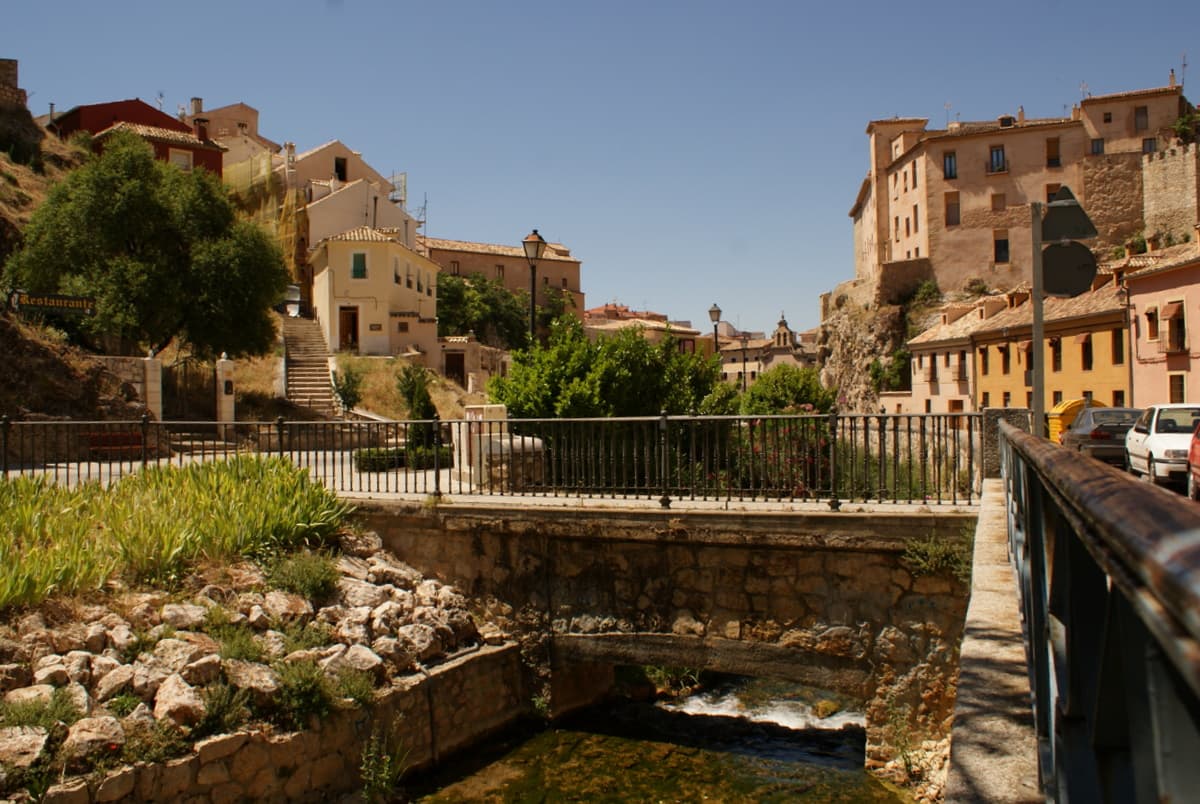
Huécar River: Cuenca’s Dramatic Gorge and Scenic Heart
Follow the Huécar as it carves a deep canyon beneath Cuenca's famous hanging houses and medieval bridges.
The Huécar in Context
The Huécar River flows through Cuenca in Spain’s Castile–La Mancha region, slicing a narrow limestone gorge that has shaped the city for centuries. Its steep cliffs rise directly beneath the old town, creating the dramatic setting for the Casas Colgadas and the San Pablo bridge. The river itself remains modest in volume yet defines the visual identity of Cuenca more than any single monument.
Landmarks Along the Gorge
Start at the Puente de San Pablo, a steel footbridge that spans the Huécar and offers the classic view of the hanging houses clinging to the cliff face. Downstream, the river passes beneath the older stone arches of the Puente de la Trinidad. On the opposite bank, the Convento de San Pablo, now a parador, perches on the rim. Short paths lead to miradors such as the Mirador del Huécar and the viewpoint near the Ermita de la Virgen de la Luz, where the canyon opens into a wider valley.
Walking and Hiking Options
A well-maintained riverside trail runs several kilometres downstream from the city centre, passing through poplar groves and offering access to the water’s edge at several points. For a longer outing, continue to the confluence with the Júcar River or climb the marked path that ascends to the Serranía de Cuenca. The terrain is rocky in places; sturdy shoes are essential. Birdwatchers often spot griffon vultures soaring above the cliffs.
Getting There and Getting Around
Cuenca’s high-speed train station lies a few kilometres outside the historic centre. Regular buses and taxis connect the station to Plaza Mayor, from which the Huécar viewpoints are a short downhill walk. Once in the old town, all major river overlooks are reachable on foot; the gorge paths themselves have no vehicle access.
Best Time to Visit
Spring and autumn deliver mild temperatures and flowing water without the summer crowds. July and August bring intense heat inside the canyon and occasional flash-flood risk after storms. Winter visits are possible but can be chilly and misty, with fewer daylight hours for photography.
Nearby Attractions
Combine a Huécar walk with the Júcar gorge on the opposite side of the old town, the Cuenca Cathedral, and the Museo de Arte Abstracto Español housed in one of the hanging houses. Further afield, the Enchanted City rock formations and the nacimiento del río Cuervo waterfall lie within a short drive into the Serranía.
Visitor tips
- Carry water and sun protection; shade is limited once you descend into the gorge.
- Visit early in the morning or late afternoon to avoid tour groups at the main viewpoints.
- Check weather forecasts before heading onto riverside trails, as heavy rain can make paths slippery or close sections.
Frequently asked questions
Can you swim in the Huu00e9car River?
Swimming is not recommended. The river is shallow in most places and the current can be strong after rain; there are no designated bathing areas.
Is the Huu00e9car gorge accessible for wheelchairs or strollers?
The main viewpoints and bridges have paved access, but the riverside trails are uneven and steep in sections and are not suitable for wheelchairs or strollers.
How long does it take to walk the Huu00e9car trail from Cuenca?
A relaxed out-and-back walk along the most popular section takes about 90 minutes; longer routes to the Ju00facar confluence require three to four hours.
Are there guided tours focused on the Huu00e9car River?
Local operators offer walking tours that combine the gorge viewpoints with the hanging houses; most depart from Plaza Mayor and last two hours.
What wildlife might I see along the Huu00e9car?
Griffon vultures, peregrine falcons, and kingfishers are commonly sighted; the cliffs also host colonies of choughs and rock doves.