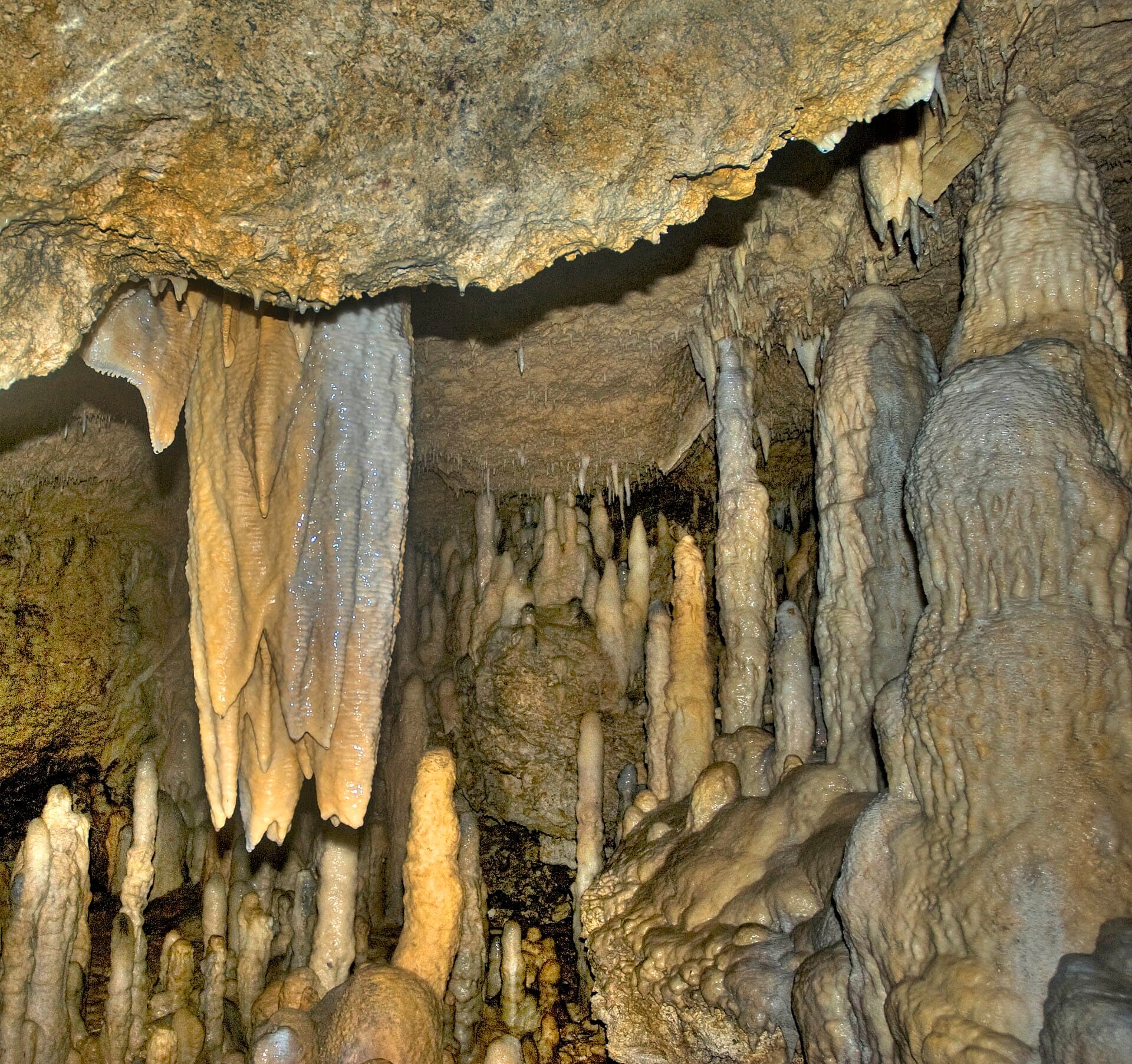
Why Harrison’s Cave Stands Out
Harrison’s Cave showcases Barbados’ karst landscape in its most striking form. Flowing underground rivers carve through chambers lined with stalactites, stalagmites, and delicate helictites, while deep pools reflect the limestone walls. The cave’s active hydrology sets it apart from drier systems elsewhere, creating a living environment where water constantly reshapes the rock.
What to Expect on a Visit
Exploration happens aboard electric trams that follow a fixed route through the main passages. Guides highlight named features such as the Cascade, the Mirror Pool, and the Great Hall, explaining the slow formation of each calcite deposit. The journey includes stops for photographs and short walks on paved paths. The constant 27 °C temperature and high humidity make the experience comfortable year-round.
Practical Route and Access
The cave sits in the central uplands near Welchman Hall. Most visitors arrive by rental car via Highway 2 from Bridgetown or by taxi from west-coast hotels. The drive from Holetown takes roughly 25 minutes through rolling sugarcane fields. Public buses run to the nearby village of Harrison’s, followed by a short uphill walk or local taxi.
Best Time to Visit
The December-to-May dry season offers the most reliable conditions, with lower rainfall reducing the chance of temporary closures after heavy showers. Early morning tours tend to have smaller groups. June through November brings occasional afternoon showers that can briefly raise water levels, though the cave remains open on most days.
Nearby Attractions Worth Combining
- Welchman Hall Gully offers a shaded surface walk among mahogany and breadfruit trees only minutes away.
- Flower Forest provides elevated garden views across the island’s interior.
- Mount Gay Distillery lies a short drive west for those interested in rum production history.
Pairing the cave with one of these sites creates a full-day itinerary focused on Barbados’ natural and agricultural heritage.