
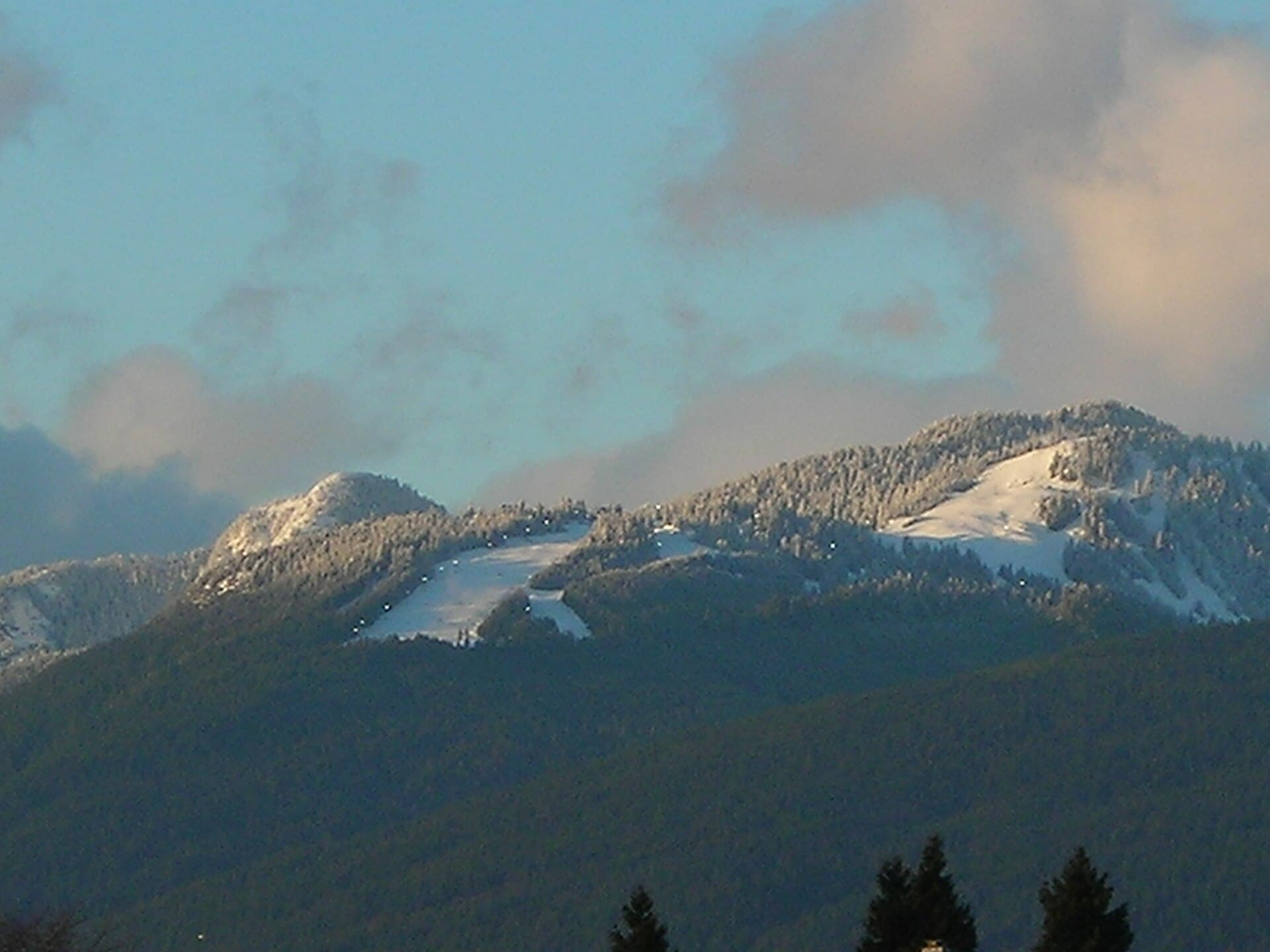
Grouse Mountain: Year-Round Alpine Adventures Above Vancouver
Ride the gondola from North Vancouver to trails, wildlife, and panoramic city views on this accessible coastal mountain.
Why Grouse Mountain Stands Out
Grouse Mountain rises steeply from the North Shore, offering direct access to subalpine terrain without multi-hour drives. Its 1,230-metre summit delivers sweeping views across Burrard Inlet to Vancouver’s skyline and the distant Strait of Georgia. The mountain combines a working ski area with protected second-growth forest, a wildlife refuge, and a network of trails that range from steep stair climbs to gentle ridge walks.
Getting There
Most visitors arrive via the Skyride gondola that departs from the base in North Vancouver. Public transit reaches the base area on several bus routes from downtown Vancouver and Lonsdale Quay. Drivers follow Highway 1 to the North Vancouver exits, then local roads that lead directly to the parking lots. Once at the summit, a short shuttle or walking paths connect the main lodge to trailheads and viewpoints.
Activities by Season
Summer and Fall
The famous Grouse Grind trail climbs 2.9 kilometres and 853 vertical metres through dense forest to the summit plateau. Hikers who prefer less vertical can ride up and descend via the BCMC Trail or the scenic Cut. The alpine loop around the summit features wildflower meadows in July and August and vibrant blueberry patches in September. Interpretive signs along the way explain coastal ecology and old-growth logging history.
Winter
Snow usually arrives by late November and lasts into April. The mountain maintains a small but varied ski and snowboard area served by three lifts. Beginners practice on gentle slopes near the lodge while intermediate and advanced riders explore steeper runs and gladed terrain. Snowshoe rentals and guided tours open the surrounding forest to non-skiers. The summit also hosts a small tubing area and a skating pond when conditions allow.
Wildlife and Educational Experiences
A fenced refuge houses orphaned grizzly bears, wolves, and raptors that cannot be released into the wild. Naturalists lead short talks several times daily explaining bear behaviour and coastal forest ecology. These encounters provide close views while keeping animals safely separated from visitors.
Best Time to Visit
Clear days from May through October give the most reliable weather for hiking and photography. Winter visits reward skiers and snowshoers with fewer crowds on weekdays. Shoulder months of April and November can bring mixed conditions—snow at the top and rain at the base—so layered clothing is essential regardless of season.
Nearby Attractions
Capilano Suspension Bridge Park lies a short drive west and pairs well with a Grouse visit. Lynn Canyon offers free suspension bridge hikes and swimming holes. The Sea-to-Sky Highway continues north to Squamish for more challenging climbs and Howe Sound viewpoints. Downtown Vancouver is only twenty minutes away by car or bus once you descend the mountain.