
Keep reading
Nearby & related
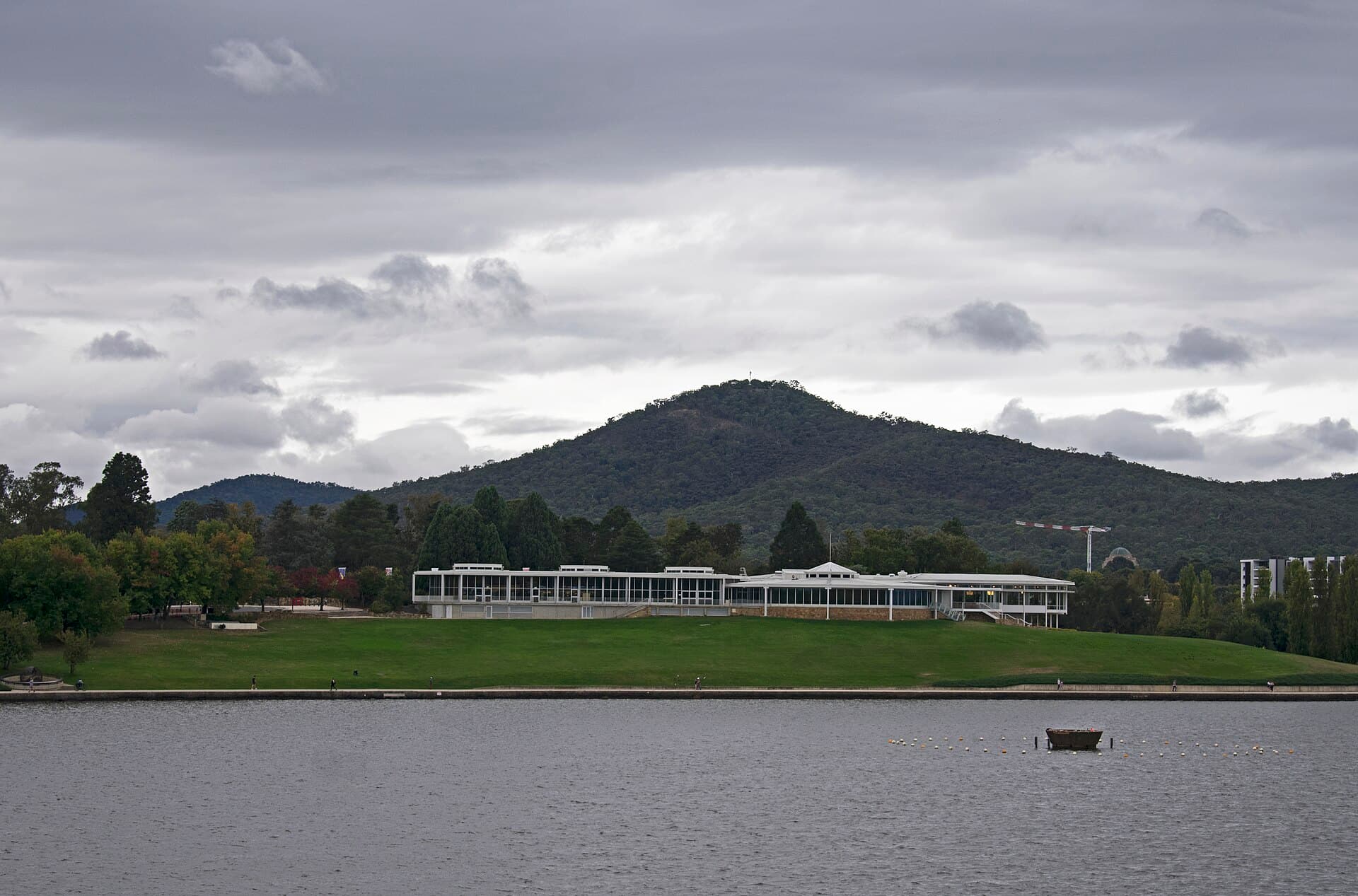
National Capital Exhibition: Uncover Canberra’s Planned Origins
Trace the vision and evolution of Australia’s purpose-built capital through engaging exhibits at this lakeside museum.
18 September 2026
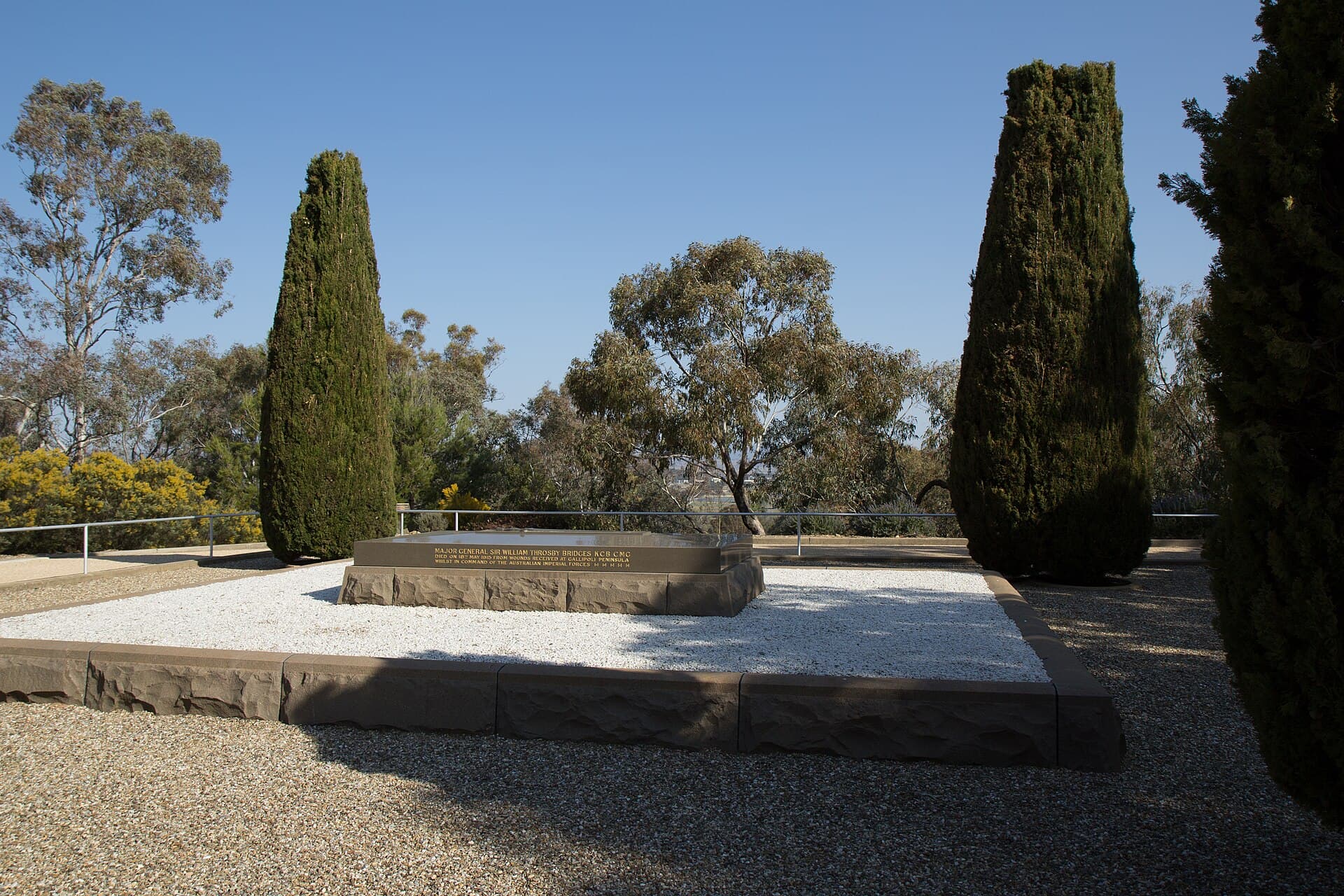
The final resting place of Major General William Throsby Bridges offers a quiet, reflective encounter with early Australian military history at Duntroon.
Major General William Throsby Bridges was the first Australian-born officer to command Australian troops in the First World War and the inaugural commandant of the Royal Military College at Duntroon. His grave stands as the only Australian general’s burial site in the country after he was mortally wounded at Gallipoli and returned home. Visitors find a simple, dignified stone set within the college grounds that quietly underscores Australia’s emergence as an independent military power.
Bridges died in May 1915 aboard a hospital ship and his body was brought back to Australia in 1916. The grave lies on the edge of the Duntroon campus, framed by native trees and the college’s sandstone buildings. A modest memorial plaque records his service and the fact that his charger, Sandy, was the only horse returned from the Western Front to Australia. The site feels removed from tourist crowds, offering an intimate connection to the nation’s early 20th-century story.
The grave is reached via the main entrance to Royal Military College, Duntroon, a short drive from central Canberra. Public buses run along Northcott Drive; from the stop it is a ten-minute walk along tree-lined paths. Drivers should use the visitor car park near the college headquarters and follow signage to the cemetery area. No special permit is required for pedestrians during daylight hours.
Canberra’s spring (September–November) and autumn (March–May) deliver mild temperatures and flowering gardens around the college. Early morning or late afternoon light is best for photographs, while midday visits suit those wanting to combine the grave with a tour of the adjacent military museum. Summer visits are possible but expect higher temperatures and fewer shaded spots.
After paying respects, visitors often continue to the Australian War Memorial, ten minutes by car, or stroll the grounds of the National Arboretum. Lake Burley Griffin’s foreshore paths provide a pleasant walk or cycle back toward the city centre, linking the military history site with Canberra’s planned landscape.
Keep reading
Trace the vision and evolution of Australia’s purpose-built capital through engaging exhibits at this lakeside museum.
Major General William Throsby Bridges commanded the Australian Imperial Force at Gallipoli. After dying of wounds he was returned to Australia and interred at Duntroon, the college he established, making his grave the only one of its kind in the country.
Yes, the site is accessible during daylight hours through the main Duntroon entrance. Visitors must respect active military areas and follow any temporary restrictions posted at the gate.
Photography is permitted for personal use, but avoid images that include cadets on parade or restricted buildings. Tripods and commercial shoots require prior approval from college administration.
Public toilets are located at the Duntroon visitor centre; the nearest cafes are a short drive away in the suburb of Campbell or at the Australian War Memorial.
The gravel paths are mostly level but can be uneven after rain. The short distance from the car park makes it manageable for most visitors, though prams and wheelchairs may require assistance on loose surfaces.
Discover the enduring legacy of aGOG, a pioneering venue that championed Australian women artists in the national…
Tackle this modest peak in the Australian Capital Territory for sweeping views across the Brindabella Ranges and quiet…