
Keep reading
Nearby & related
Balearic Islands
The Statue of James I of Aragon in Palma de Mallorca
Stand before the bronze monument to the king who conquered Mallorca and shaped the island’s medieval identity.
26 September 2026
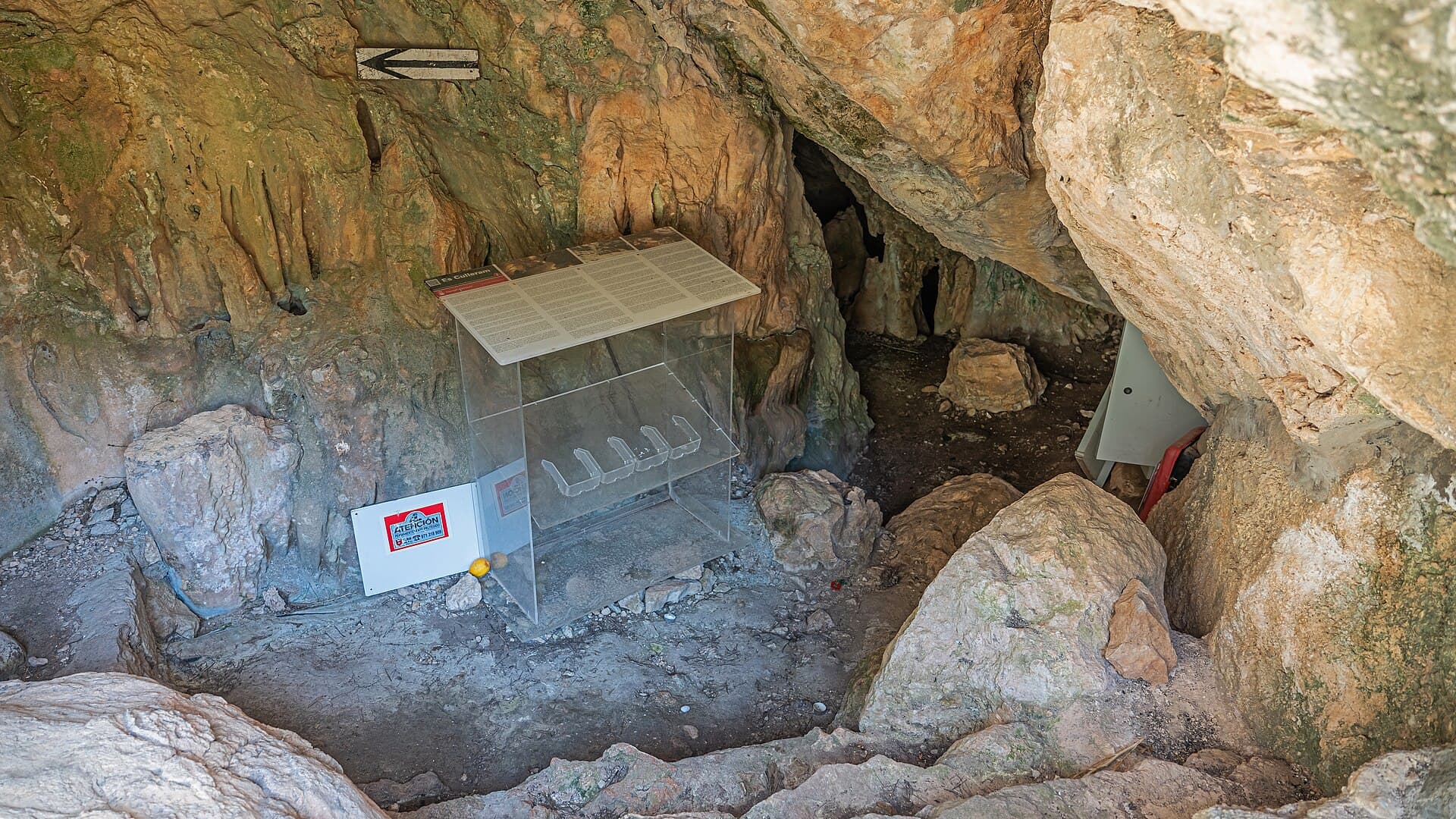
Discover the archaeological significance and natural setting of this secluded cave on Ibiza’s northeastern coast.
Es Culleram is a modest yet historically rich cave on the island of Ibiza that offers visitors a direct connection to the Phoenician and Punic past of the Balearic Islands. Unlike larger show caves, this site preserves evidence of ancient religious use, including bronze votive figures and inscriptions that archaeologists link to rituals honoring the goddess Tanit. The surrounding landscape of pine-covered hills and dramatic cliffs provides a quiet, atmospheric setting away from Ibiza’s busier beach resorts.
Archaeologists first explored the cave in the early twentieth century and uncovered hundreds of small bronze ibex figures, terracotta pieces, and lead plaques bearing Punic script. These finds indicate that the cave functioned as a sanctuary from at least the sixth century BCE into the Roman period. The narrow entrance opens into a single main chamber where natural light filters through fissures, illuminating the same rock surfaces used by ancient worshippers.
Today the cave remains largely in its natural state. Visitors can examine the uneven floor, small niches that once held offerings, and faint traces of ancient graffiti on the walls. Because the site is protected, no artificial lighting or walkways have been installed; the experience depends on daylight and careful footing.
The cave lies near the village of Sant Vicent de sa Cala in the municipality of Sant Joan de Labritja. Most visitors arrive by rental car along the coastal road that links Cala de Sant Vicent with Portinatx. A short, marked footpath leads from a small parking area to the cave entrance; the walk takes about ten minutes over rocky ground. Public buses stop in Sant Vicent, but the final stretch requires a taxi or walk.
Spring and early autumn offer the most comfortable temperatures and reliable daylight for exploring the interior. Summer visits are possible but require an early start to avoid midday heat and the risk of sudden thunderstorms that can make the path slippery.
Keep reading
Stand before the bronze monument to the king who conquered Mallorca and shaped the island’s medieval identity.
The cave is accessible at all times, though access may be restricted during periods of heavy rain or when archaeological work is underway.
No ticket or guide is required; the site is free and unsupervised. Respect the archaeological remains and leave nothing behind.
Most visitors spend 30 to 45 minutes inside the cave and another 20 minutes walking to and from the parking area.
The uneven terrain and lack of lighting make it best suited for older children accompanied by adults; young children may find the footing difficult.
No facilities exist at the cave itself; the nearest services are in the village of Sant Vicent de sa Cala, a short drive away.
This secluded viewpoint delivers sweeping vistas of rugged peaks, olive terraces, and the Mediterranean from the heart…
This secluded viewpoint reveals plunging gorges, terraced valleys, and distant sea horizons in the heart of the Serra de…