Skip to content
Plan & Tour
DestinationsItinerariesTravel BlogAboutContact
0Sign inPlan a trip
Plan & TourPlan & Tour

Travel guides, destination inspiration and curated itineraries for Canada, the USA and beyond, plus a free tool to plan your own day-by-day trip.

Get travel inspiration

Explore

  • All Destinations
  • Curated Itineraries
  • Travel Blog
  • Plan a Trip

Topics

  • Hiking & Nature
  • Food & Drink
  • City Breaks
  • Budget Travel

Company

  • About Us
  • Contact
  • Privacy Policy
  • Terms of Service

© 2026 Plan & Tour. Built for travellers.

Discover the world, one trip at a time.

Es Claper des Gegant: A Talayotic Megalith in Mallorca’s Countryside
  1. Home
  2. Destinations
  3. Balearic Islands
  4. Es Claper des Gegant: A Talayotic Megalith in Mallorca’s Countryside
Archaeological site

Es Claper des Gegant: A Talayotic Megalith in Mallorca’s Countryside

Explore the massive prehistoric stone structures of this little-visited Balearic archaeological site.

Balearic IslandsUpdated 21 September 2026

Introduction to Es Claper des Gegant

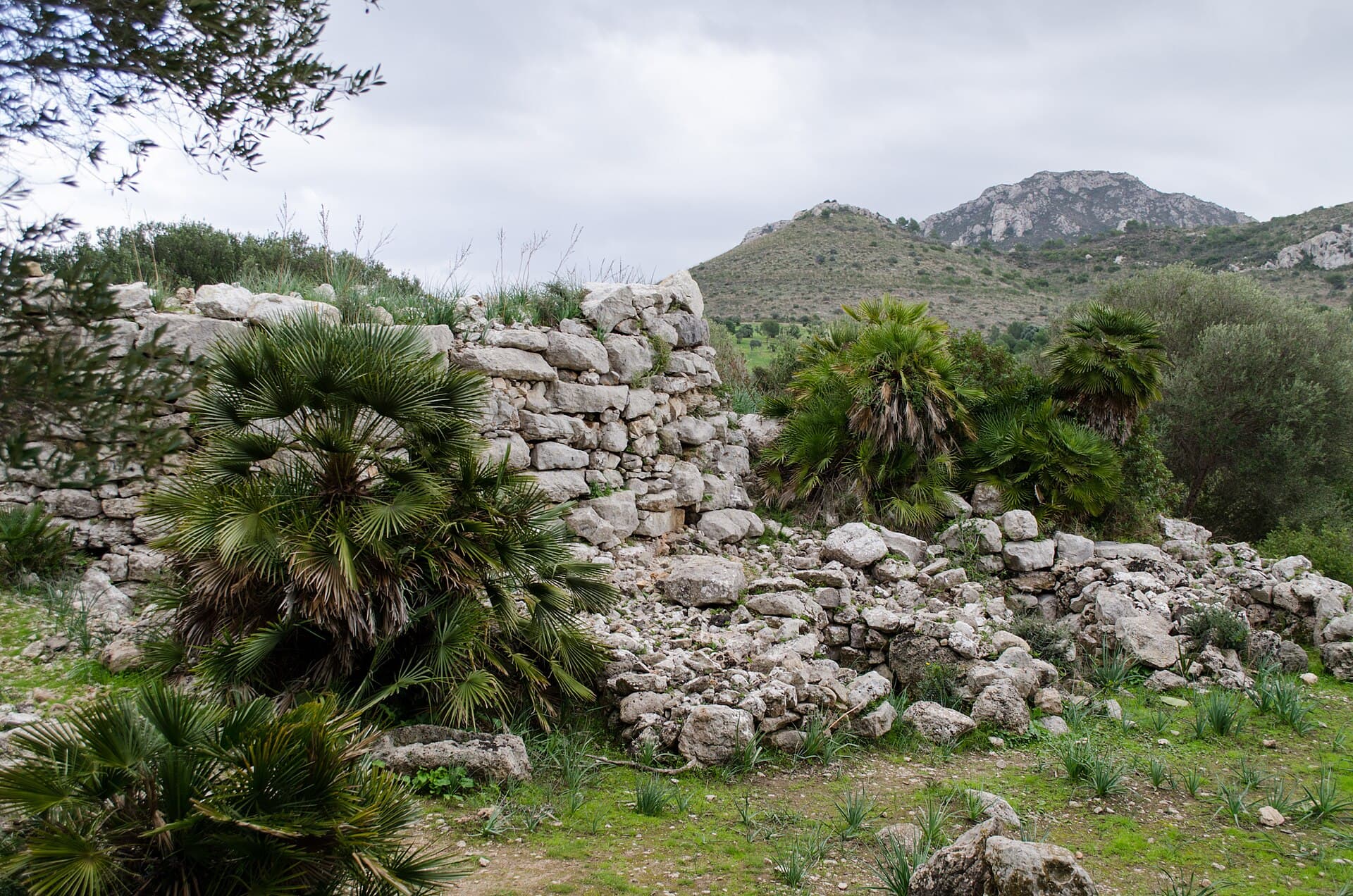
Es Claper des Gegant is a Talayotic-period archaeological site on the island of Mallorca in Spain’s Balearic Islands. The name, which translates roughly as “the giant’s stone heap,” refers to a large, circular mound of carefully placed boulders that once formed part of a prehistoric settlement. Visitors encounter a compact but impressive complex of cyclopean walls, a central talayot tower, and surrounding enclosures that date from the late Bronze Age into the early Iron Age.

What to See and Do

The main feature is the imposing talayot, a truncated cone of dry-stone masonry roughly 10 meters across. Walk the perimeter to appreciate the scale of the blocks, some weighing several tons. Adjacent to the tower are the remains of a naviform structure and smaller rectangular rooms whose doorways still show the classic post-and-lintel construction of the period. Informational panels on site explain the probable functions of each element without overwhelming the visitor.

Because the site is small, most people spend 45–60 minutes exploring. Bring binoculars; from the higher ground you can spot other talayots on distant ridges, illustrating how these monuments once formed a network across the island.

How to Get There

The site lies in the municipality of Artà, roughly 70 km northeast of Palma de Mallorca. Renting a car is the most practical option; follow the MA-12 highway toward Artà and watch for brown heritage signs. Public transport is limited, but seasonal buses run between Artà town and nearby beaches, after which a 25-minute walk along a quiet country lane reaches the entrance. Parking is available in a small unpaved area beside the path.

Best Time to Visit

Visit between late September and early June to avoid the intense summer heat and the occasional wildfire closures that affect the surrounding scrubland. Early morning or late afternoon light is ideal for photography, as the low sun accentuates the texture of the stones. Winter visits are especially pleasant, with fewer visitors and occasional wildflower displays in the surrounding fields.

Nearby Attractions

Combine your visit with the larger Talayotic settlement of Ses Païsses, only 10 minutes by car. Artà’s weekly market and the hilltop Santuari de Sant Salvador offer cultural contrast, while the coves of Cala Torta and Cala Mitjana provide a chance to swim after exploring the stones.

Visitor tips

  • Wear sturdy shoes; the uneven stone surfaces and loose gravel can be slippery after rain.
  • Bring water and sun protection; there is no shade or facilities at the site itself.
  • Respect the dry-stone wallsu2014climbing on them accelerates erosion and is prohibited.

Frequently asked questions

What exactly is Es Claper des Gegant?+

It is a Talayotic settlement centered on a large stone tower (talayot) and associated buildings constructed between roughly 1300 and 500 BCE.

Is the site suitable for children?+

Yes, the terrain is relatively flat and the visit is short, but supervise children around the uneven stones and low walls.

Do I need a guide or can I visit independently?+

The site is open to the public without a guide; clear interpretive panels provide sufficient context for most visitors.

Are there toilets or cafu00e9s nearby?+

No facilities exist at the site. The nearest services are in Artu00e0 town, about 8 km away.

Can I combine the visit with a beach day?+

Yes. Several small coves lie within a 15-minute drive, making the site an easy half-day addition to coastal plans.

Share
Google Maps Apple Maps Directions

Image: Olivamonchan · CC BY-SA 3.0 · via Wikimedia Commons

Keep reading

Nearby & related

All stories
Cornador Petit: Hiking Mallorca’s Quiet Tramuntana Summit
Balearic Islands

Cornador Petit: Hiking Mallorca’s Quiet Tramuntana Summit

A compact yet rewarding peak in the Serra de Tramuntana that rewards hikers with sweeping Mediterranean views and a…

21 September 2026
Penya des Migdia: Mallorca’s Wild Cliff-Top Viewpoint
Balearic Islands

Penya des Migdia: Mallorca’s Wild Cliff-Top Viewpoint

A rugged balcony over the Mediterranean with sweeping views of northern Mallorca’s coast and mountains.

21 September 2026
Bec de Ferrutx: Mallorca’s Wild Northeast Viewpoint
Balearic Islands

Bec de Ferrutx: Mallorca’s Wild Northeast Viewpoint

Hike to this dramatic rocky summit for sweeping coastal panoramas and a taste of Mallorca’s untamed interior.

21 September 2026