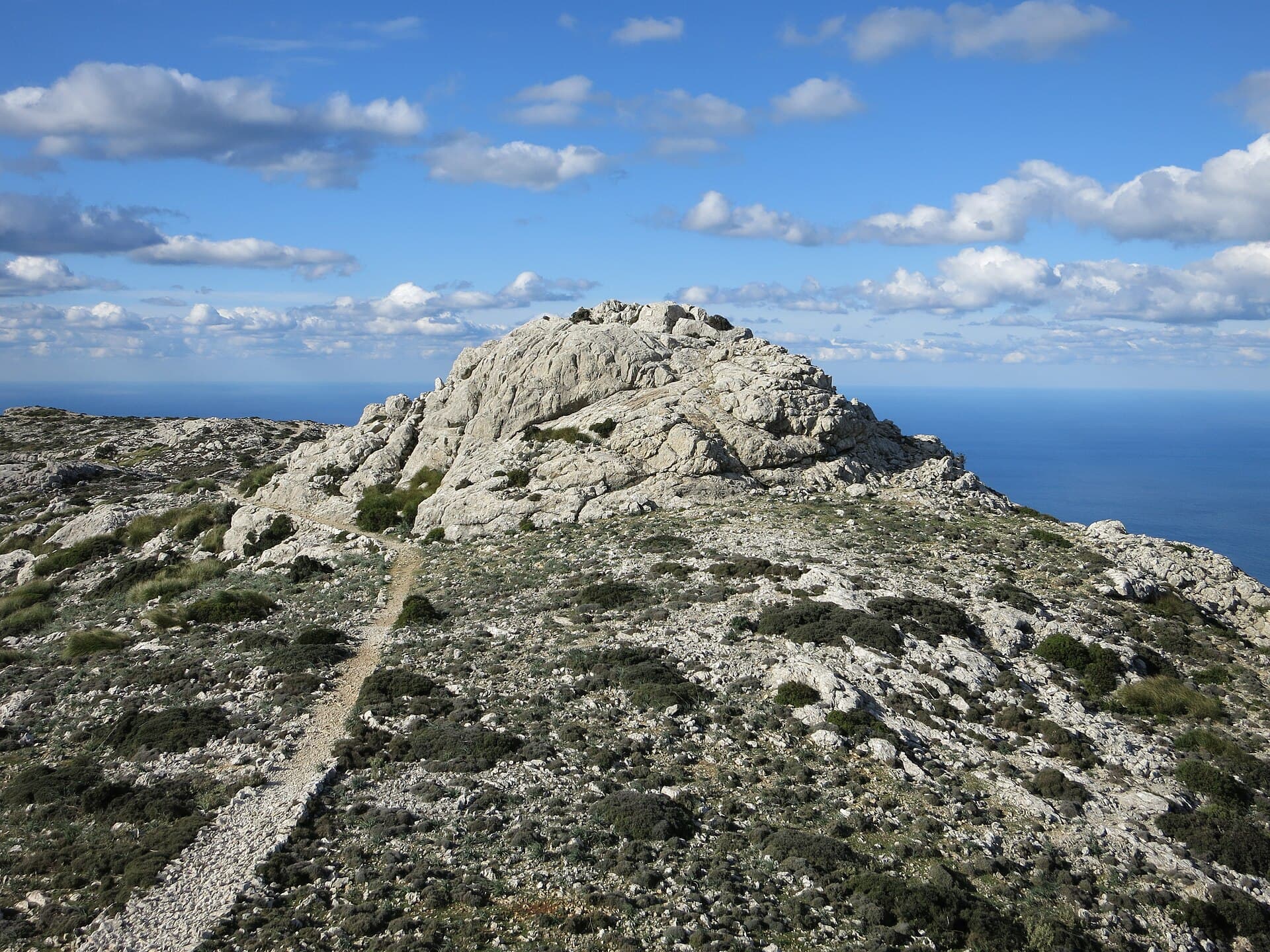
Why Es Caragolí Stands Out
Es Caragolí rises modestly among the western ridges of Mallorca’s Serra de Tramuntana, offering hikers an uncrowded summit with clear sightlines across the sea toward the island of Cabrera and along the rugged coastline. Its position between more famous peaks keeps visitor numbers low, making it ideal for those seeking solitude amid terraced olive groves and pine forest.
Reaching the Trailhead
Most visitors arrive by car from Palma, following the Ma-10 coastal road west before turning inland near Estellencs. Limited parking exists at the start of the forest track; early arrival avoids blocking narrow lanes. Public transport is impractical, so a rental car or taxi drop-off is the practical choice. The approach road itself winds through classic Mallorcan countryside of dry-stone walls and almond orchards.
The Ascent
Two main paths converge on the summit. The shorter southern route climbs steadily through holm oak and rosemary scrub, gaining elevation via a series of switchbacks. The longer northern variant follows an old charcoal-burner’s trail before joining the main ridge. Both routes are well-marked with cairns and occasional paint blazes; no technical scrambling is required, though loose scree appears near the top. Allow three to four hours round-trip including time at the summit cairn.
Best Time to Visit
Spring (March–May) brings wildflowers and comfortable temperatures, while autumn (September–November) offers clear skies and fewer insects. Summer hiking is possible but starts before dawn to avoid heat; winter days can be mild yet windy on the exposed ridge. Always check the local wind forecast, as Tramuntana gusts can make the final section unpleasant.
What to See and Do Nearby
After descending, continue along the Ma-10 to the village of Banyalbufar for coastal viewpoints and terraced vineyards. A short drive east reaches the historic manor house of La Granja, while westward the road leads to the dramatic cliffs of Cap de Formentor. For a longer day, combine Es Caragolí with the adjacent Puig de sa Morcupina along the same ridge system.
- Carry at least two liters of water per person; no reliable springs exist on the route.
- Wear sturdy boots—rocky sections can be slippery after rain.
- Download an offline map; mobile coverage fades on the northern slopes.