
Keep reading
Nearby & related
Canary Islands
Blas Cabrera Felipe Monument: Honoring a Canary Islands Physics Pioneer
Visit the monument to Blas Cabrera Felipe, the influential Spanish physicist born in the Canary Islands, set amid…
15 November 2026
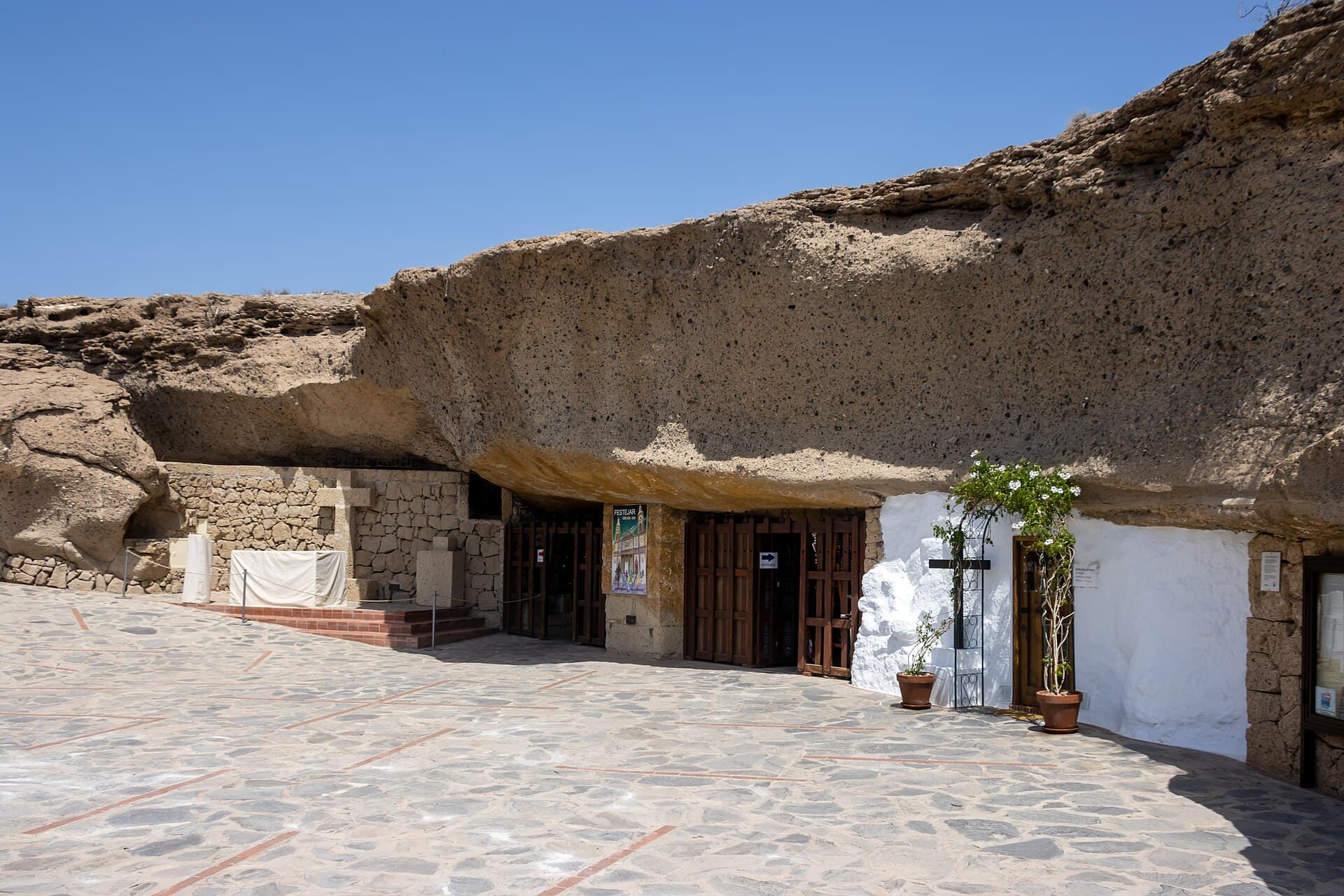
Step into the cave where the Canary Islands’ first saint lived as a hermit and discover a quiet place of reflection amid Tenerife’s volcanic landscape.
Cueva del Santo Hermano Pedro sits in the arid hills of southern Tenerife, a short distance from the coast. This modest cave became the retreat of Pedro de San José de Betancur, a 17th-century Franciscan who is revered as the first saint born in the Canary Islands. Locals and visitors alike come here to walk the same rocky ground where he prayed and cared for the poor and sick.
The main attraction is the cave itself, now enclosed by a simple chapel structure. Inside, a small altar marks the spot traditionally associated with the saint’s life of solitude. Outside, a short path leads to a viewpoint overlooking the surrounding barranco and distant ocean. Many pilgrims pause at the adjacent spring, said to have provided water during the saint’s time. The site remains a place for quiet contemplation rather than large-scale tourism.
Allow 45 to 90 minutes to explore the cave, chapel, and surrounding paths. The terrain is uneven, so sturdy shoes are essential. There is no entry fee, though donations support maintenance. Photography is permitted outside the chapel but discouraged inside to preserve the atmosphere.
The cave lies roughly 20 minutes by car from Tenerife South Airport. Follow the TF-1 motorway toward Granadilla de Abona, then take the local road that climbs into the hills above El Médano. Public buses run from the airport and nearby towns to the village of El Río; from there a signed walking path reaches the site in about 25 minutes. Parking is available in a small lot at the trailhead.
Year-round mild temperatures make any season suitable, though spring and autumn offer the most comfortable conditions for walking. Early morning or late afternoon visits avoid midday heat and provide softer light for photographs. Religious observances peak around the saint’s feast day in late April, when crowds increase.
Combine a visit with the black-sand beaches of El Médano or the coastal path that runs toward Los Abrigos. Inland, the vineyards of Abona and the higher slopes leading toward Mount Teide offer contrasting scenery within a short drive.
Keep reading
Visit the monument to Blas Cabrera Felipe, the influential Spanish physicist born in the Canary Islands, set amid…
The final approach involves uneven ground and a few steps; the site is not considered wheelchair accessible.
The site is open to independent visitors; no reservation or guide is required.
Basic restrooms are available near the parking area, but no cafu00e9 or shop operates on site.
Photography is discouraged inside the chapel to respect its religious character; it is permitted on the surrounding paths.
Most visitors spend between 45 minutes and an hour and a half exploring the cave, chapel, and short trails.
Experience sweeping Atlantic vistas of La Gomera island from this elevated Tenerife lookout point.
This elevated viewpoint on La Palma offers unobstructed panoramas of volcanic ridges, deep barrancos, and the Atlantic…