
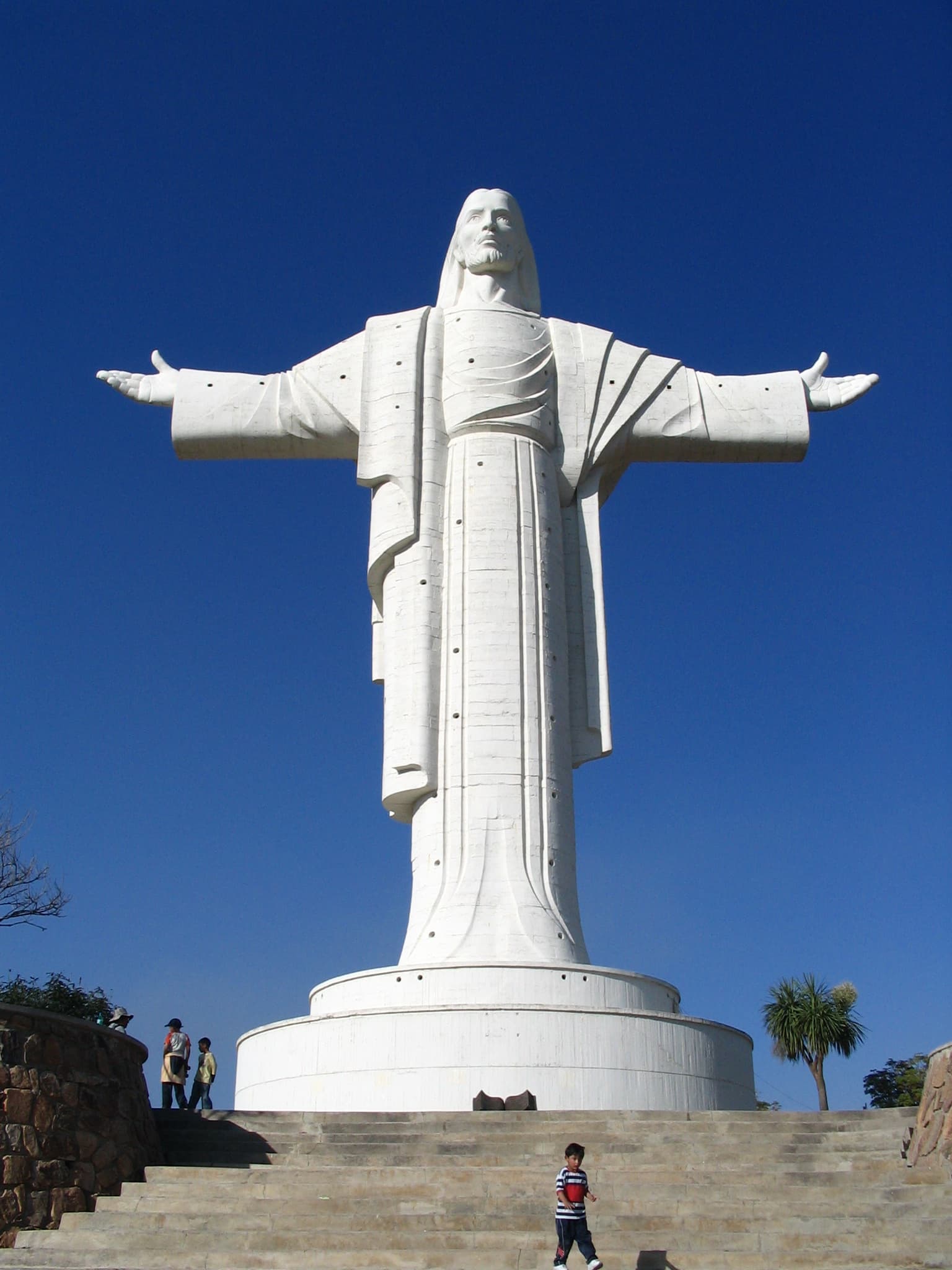
Cristo de la Concordia: Bolivia’s Towering Christ Statue Overlooking Cochabamba
Ascend San Pedro Hill to stand beside one of South America’s largest Christ monuments and enjoy sweeping views across the Cochabamba Valley.
Perched high on Cerro San Pedro, Cristo de la Concordia stands as a striking symbol of faith and a premier vantage point above Cochabamba. Completed in 1994, the reinforced-concrete figure rises above the city’s red-tile roofs and the surrounding Andean foothills, offering visitors both a cultural landmark and expansive panoramas of Bolivia’s fertile central valley.
The Monument and Its Setting
The statue depicts Christ with arms outstretched in blessing. Its scale allows visitors to climb internal staircases within the pedestal and torso, emerging at observation platforms near the hands and head. From these heights the entire urban grid of Cochabamba spreads out below, framed by the Tunari mountain range to the north and agricultural plains to the south. The site remains an active place of pilgrimage, especially during Holy Week, yet welcomes travelers year-round for photography, quiet reflection, and the simple pleasure of fresh mountain air.
Panoramic Views
Clear days reveal the distant snow-capped peaks of the Cordillera Real and the patchwork of quinoa and corn fields that give the region its nickname, the “Garden of Bolivia.” Sunset often paints the valley in warm light while the city lights begin to twinkle below, making late-afternoon visits particularly rewarding.
Getting There from Cochabamba
Most visitors start from the city center. Public minibuses labeled “Cristo” or “San Pedro” run frequently along Avenida Melchor Urquidi. Taxis and ride-hailing apps provide a direct, inexpensive option. At the base of the hill a cable-car system lifts passengers to the monument’s lower plaza in a few minutes; those preferring exercise can ascend the long staircase that parallels the cable route. The walk takes roughly 30–45 minutes and passes through eucalyptus groves with occasional shaded rest spots.
Best Time to Visit
The dry season, roughly April through October, brings the clearest skies and most comfortable temperatures. Early morning visits avoid both midday sun and weekend crowds, while late afternoon offers dramatic lighting for photographs. During the rainy months of December to March, brief afternoon showers are common; carry a light rain jacket and check conditions before climbing the open staircases inside the statue.
Nearby Attractions
- The colonial heart of Cochabamba, centered on Plaza 14 de Septiembre and the Metropolitan Cathedral, lies a short ride away and pairs well with a half-day trip to the Cristo.
- La Cancha market offers an authentic taste of local produce, textiles, and street food for those extending their visit into the afternoon.
- Parque de la Familia and the botanical gardens at the foot of the hill provide green space and playgrounds if traveling with children.
Visitor tips
- Wear sturdy shoes; the internal staircases are steep and the exterior paths can be uneven.
- Bring water, sunscreen, and a hatu2014the high-altitude sun is intense even on cooler days.
- Combine the visit with a cable-car ride up and a walk down the stairs for varied perspectives and a lighter return journey.
Frequently asked questions
How do I reach Cristo de la Concordia from downtown Cochabamba?
Take a marked minibus, taxi, or ride-hailing service to the base of Cerro San Pedro, then ride the cable car or climb the staircase to the monument plaza.
Can visitors enter the statue itself?
Yes, internal staircases lead from the pedestal to viewing platforms at the hands and head, though space is limited and lines may form on busy days.
What should I wear and bring for a visit?
Comfortable walking shoes, sun protection, and water are essential; a light jacket helps against wind at the summit.
Is the site suitable for children or elderly travelers?
The cable car makes the site accessible, but the internal stairs are steep; families with young children or limited mobility may prefer to stay at the plaza level.
Are there facilities such as restrooms or food vendors on site?
Basic restrooms and small snack kiosks operate near the lower plaza; carry extra water if planning a longer stay at the top.