
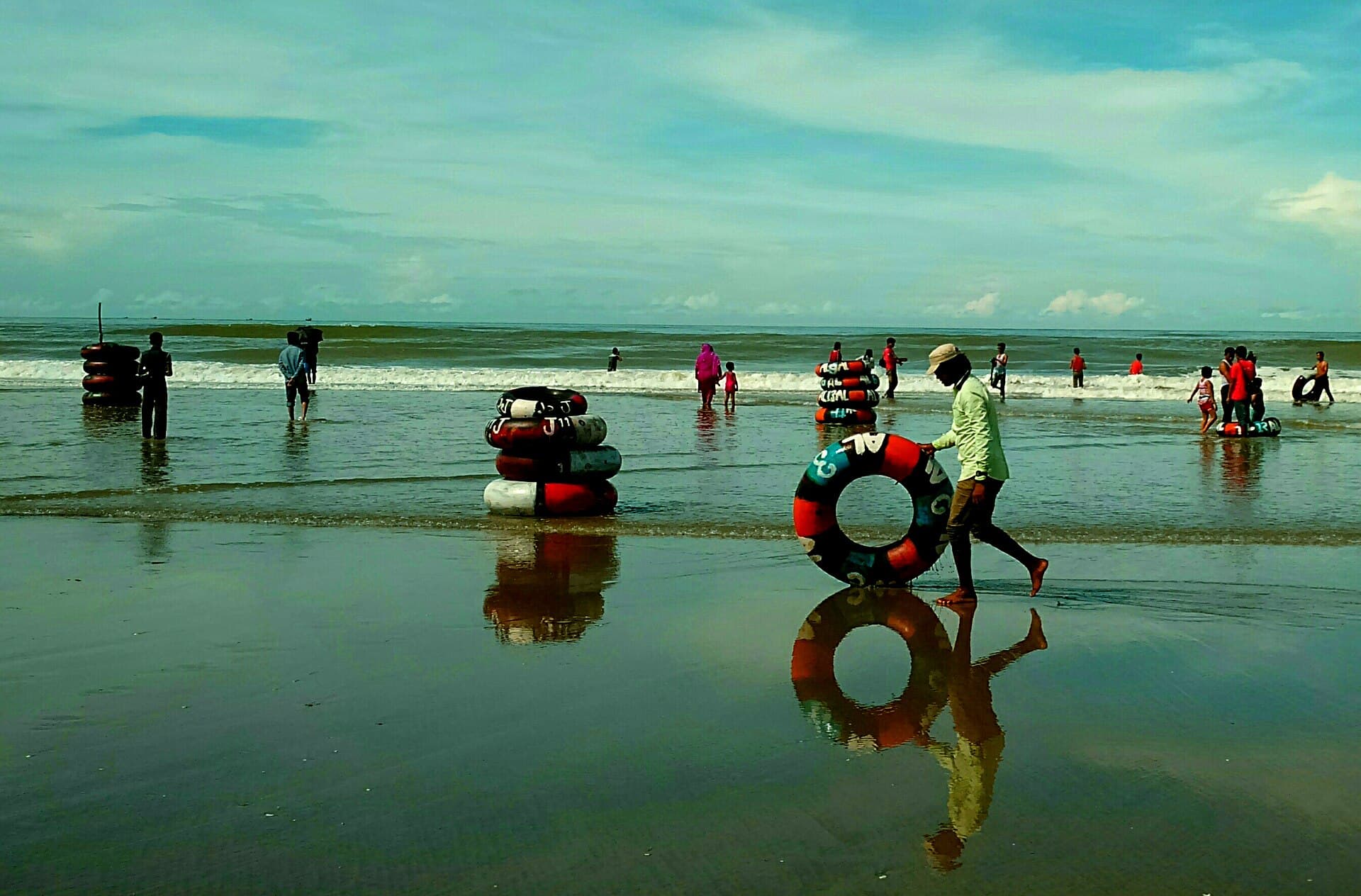
Cox’s Bazar Beach: Bangladesh’s Endless Sandy Shoreline
The world's longest natural sea beach offers vast horizons, coastal villages, and a gateway to the Bay of Bengal.
Why Cox’s Bazar Beach Stands Out
Cox’s Bazar Beach stretches more than 120 kilometers along the Bay of Bengal, making it the longest unbroken natural sandy shoreline on Earth. Its gentle gradient allows visitors to walk far into the water at low tide while the wide expanse provides space for quiet reflection even during peak season. The combination of open ocean, distant hills, and local fishing activity creates a distinctive coastal atmosphere that differs from crowded resort beaches elsewhere in South Asia.
Activities Along the Shore
Swimming and beachcombing remain the primary draws, yet the area also supports surfing lessons near the main stretch and leisurely boat rides that reveal the coastline from the water. Visitors often join early-morning excursions to watch fishermen haul in their nets or explore the adjacent villages where dried fish is prepared using traditional methods. Inland, low hills behind the beach invite short hikes that reward climbers with views over the sea and forested ridges.
Practical Pursuits
- Early morning or late afternoon walks along the firm sand near the waterline.
- Visits to nearby Buddhist temples and the large local market selling conch shells and woven mats.
- Day trips by local transport to the fishing harbor at Fishari Para for fresh seafood.
How to Reach Cox’s Bazar
Most travelers arrive via the regional airport with connections from Dhaka; the short drive from the terminal to the beach passes through palm groves and small settlements. Long-distance buses and private cars from Chittagong take roughly four hours along the coastal highway, offering changing views of rice fields and estuaries. Once in town, rickshaws and shared minibuses provide flexible movement between the main beach sections and quieter northern stretches.
Optimal Seasons for Your Visit
The dry months from November through February bring clear skies and moderate temperatures ideal for extended beach time. March and April remain pleasant for water activities before the monsoon arrives in June, when heavy rains limit outdoor plans but transform the surrounding hills into lush green backdrops. Avoid the peak cyclone period if possible, though local forecasts and hotel staff provide reliable updates on weather patterns.
Exploring Beyond the Beach
Short drives or boat journeys lead to Maheshkhali Island, known for its mangrove creeks and salt fields, while the Teknaf peninsula to the south offers opportunities to observe wildlife in nearby reserves. The combination of sea, hills, and rural communities allows visitors to experience both relaxation and light cultural exploration within a single trip.