
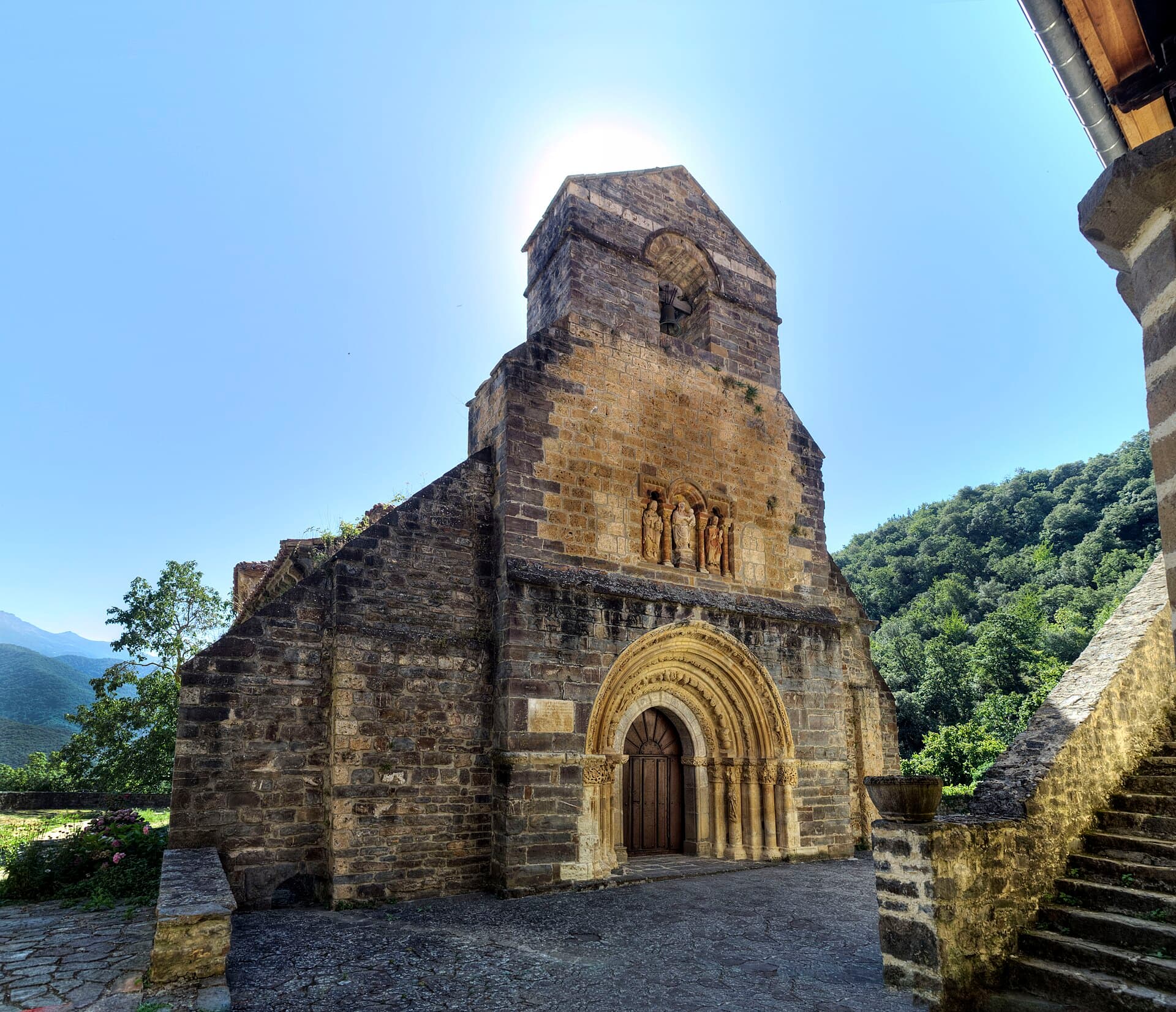
Colegiata de Santa María de Piasca: Romanesque Treasure in Cantabria’s Liébana Valley
This 12th-century collegiate church offers visitors a serene encounter with medieval architecture set against the foothills of the Picos de Europa.
Discovering Colegiata de Santa María de Piasca
Perched in the quiet village of Piasca within Cabezón de Liébana, the Colegiata de Santa María stands as one of Cantabria’s finest surviving Romanesque monuments. Its solid stone walls and sculpted portals reflect the region’s medieval prosperity, when pilgrims and local communities supported religious foundations along routes leading toward the shrine of Santo Toribio de Liébana.
Historical Background
Construction began in the mid-12th century on the site of an earlier monastery. The church served as a collegiate foundation, housing a chapter of canons rather than monks. Its location in the fertile Liébana valley provided both agricultural support and strategic access to mountain passes, linking the coast with the high Picos de Europa. Over centuries the building endured minor alterations, yet the original Romanesque fabric remains remarkably intact.
Architectural Highlights
Exterior Features
The west façade displays a richly carved portal framed by archivolts depicting biblical scenes and local flora. Two flanking towers and a simple rose window above the doorway create a balanced composition typical of rural Cantabrian Romanesque. Side walls reveal regular courses of ashlar masonry and narrow slit windows that once served defensive purposes.
Interior Elements
Inside, visitors encounter a three-aisled nave separated by sturdy columns with carved capitals showing animals and geometric motifs. The apse retains its original barrel vault and a small crypt beneath the main altar. Light filters through narrow windows, illuminating the clean lines and textured stone surfaces that define the space.
Getting There and Practical Orientation
Travelers reach Piasca by following the N-621 road from Potes toward Fuente Dé, then turning onto a minor road that climbs gently into the village. The surrounding landscape of chestnut groves and limestone cliffs makes the approach scenic. Parking is available near the village square; from there a short walk leads to the church.
Combining Culture with Nature
The Colegiata serves as an ideal base for exploring Liébana’s natural attractions. Nearby trails lead into the Picos de Europa National Park, offering day hikes to viewpoints overlooking the valley. The church’s quiet setting also pairs well with visits to the monastery of Santo Toribio, a short drive away, allowing travelers to compare two distinct expressions of medieval religious architecture in the same region.
Best Time to Visit
Spring and early autumn provide the most comfortable temperatures for walking between the church and surrounding trails. Summer brings longer daylight for extended exploration, while winter offers dramatic mountain views when snow caps the higher peaks, though access roads may require caution.
Visitor tips
- Wear sturdy shoes; the village lanes and nearby paths are uneven cobbled or gravel surfaces.
- Combine your visit with a stop at the nearby Santo Toribio monastery to compare two important Liu00e9bana religious sites in one day.
- Pack water and a light jacket; mountain weather changes quickly even on clear days.
Frequently asked questions
What architectural style defines the Colegiata de Santa Maru00eda de Piasca?
The building is a well-preserved example of 12th-century Romanesque architecture, featuring characteristic carved portals, barrel vaults, and sculpted capitals.
How long does a visit to the church typically take?
Most visitors spend 30 to 45 minutes inside the church and another 15 minutes walking around the exterior and village square.
Is the Colegiata suitable for visitors with limited mobility?
The main entrance involves a few steps and the interior has uneven stone floors; those with mobility concerns may find the exterior and surrounding village more accessible.
Can I combine a visit with hiking in the Picos de Europa?
Yes. Several marked trails begin within a short walk of the village and lead into the national park, making the site convenient for half-day cultural and nature outings.
What other historic sites are nearby?
The monastery of Santo Toribio de Liu00e9bana lies a short drive away, and the mountain village of Potes offers additional medieval streets and restaurants.