
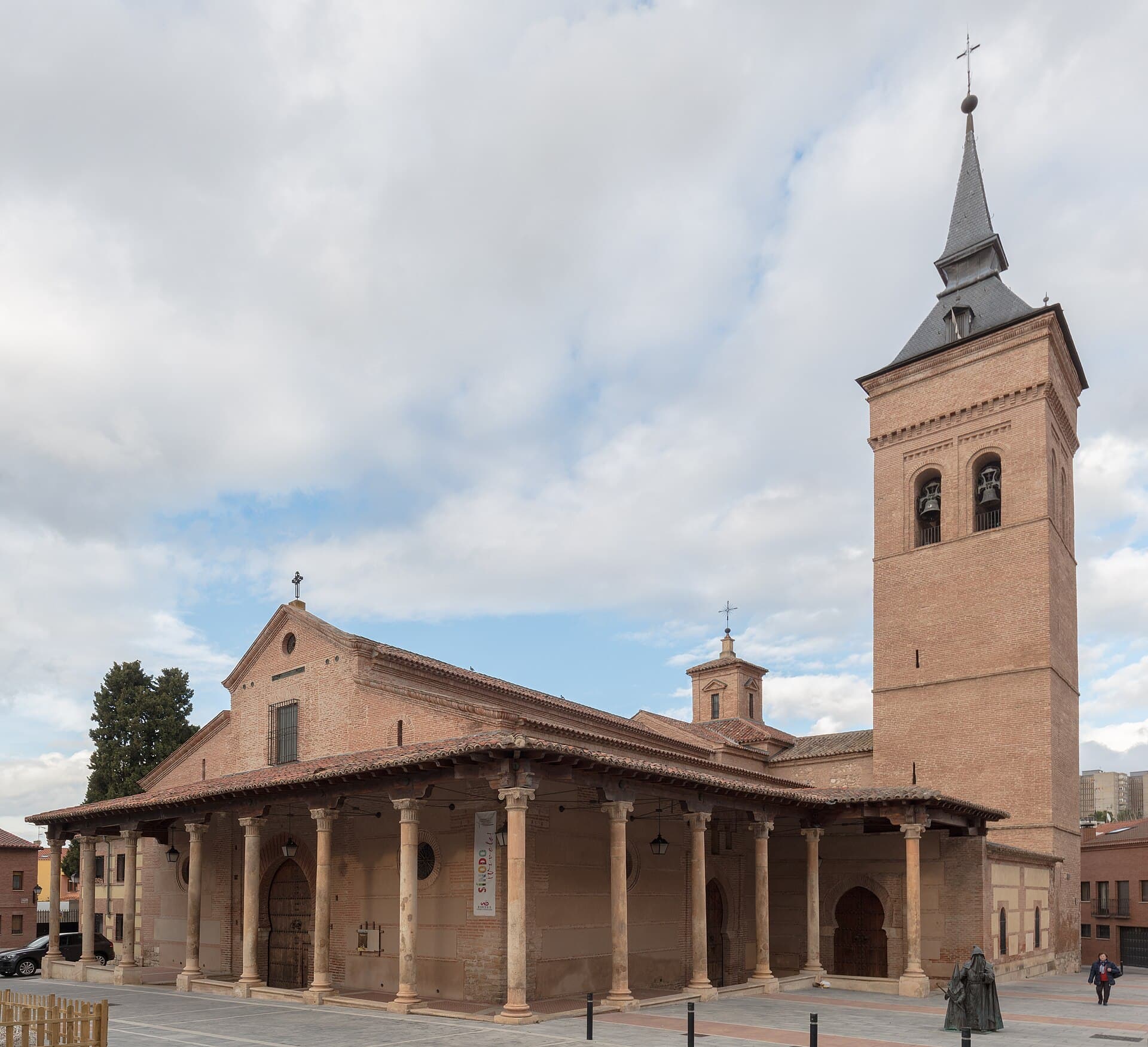
Co-cathedral of Santa María de la Fuente la Mayor: Guadalajara’s Historic Heart
This ancient co-cathedral blends centuries of Spanish architectural styles in the center of Castile-La Mancha.
Why Visit the Co-cathedral of Santa María de la Fuente la Mayor
Standing in Guadalajara’s old quarter, the Co-cathedral of Santa María de la Fuente la Mayor offers visitors a tangible record of the city’s religious and artistic evolution. Its long construction history spans Romanesque foundations through Gothic, Mudéjar and Renaissance additions, creating a layered monument that rewards slow exploration rather than a quick photo stop.
History and Architecture
The building began in the thirteenth century on the site of an earlier mosque, a common pattern after the Christian reconquest of the region. Successive bishops and local nobility funded expansions that introduced pointed arches, intricate brickwork in the Mudéjar style, and later Baroque altarpieces. The result is an interior where sober stone columns meet ornate gilded retables and colorful tile floors. The main nave remains relatively uncluttered, allowing the eye to follow the progression of styles from the transept outward.
Key Features Inside
- The high altar and its Renaissance retable, rich in carved figures and polychrome decoration.
- Side chapels containing family tombs of Guadalajara’s noble houses, some with heraldic reliefs still legible after centuries.
- A modest cloister area that preserves original Mudéjar brick patterns and offers a quieter space away from the main visitor flow.
How to Get There
Guadalajara’s main train station lies a short walk from the historic center; frequent cercanías trains connect the city with Madrid in under an hour. Once in the old town, the co-cathedral is reached on foot via pedestrian streets lined with traditional Castilian buildings. Drivers can use public parking garages on the outskirts of the center and continue by foot, as the narrow lanes around the monument are largely traffic-free.
Best Time to Visit
Spring and autumn provide the most comfortable temperatures for walking the surrounding streets and lingering inside the stone interior. Early weekday mornings or late afternoons avoid any tour groups that arrive from Madrid on weekends. Evening visits are especially atmospheric when low sunlight filters through the clerestory windows and highlights the brickwork details.
Nearby Attractions
After touring the co-cathedral, continue to the nearby Palacio del Infantado, whose Gothic-Isabelline façade and museum collections complement the religious architecture. The compact historic center also contains small plazas ideal for resting and sampling local Manchego cheese and wine. A short stroll leads to the remains of the medieval city walls, offering views over the surrounding plain of La Alcarria.
Visitor tips
- Wear comfortable shoes; the stone floors inside and the cobbled streets outside can be uneven.
- Respect the quiet atmosphere by keeping voices low and silencing phones, especially during any ongoing services.
- Combine the visit with a walk through Guadalajarau2019s pedestrian old town to see how the co-cathedral sits within its historic urban context.
Frequently asked questions
Is the co-cathedral still used for worship?
Yes, it functions as a co-cathedral and hosts regular masses; visitors should be prepared to pause or step aside during services.
How long does a typical visit take?
Most visitors spend 30 to 45 minutes inside, though those interested in architectural details may stay longer.
Are guided tours available?
Occasional guided tours are offered by local heritage groups; check posted notices at the entrance or ask at the city tourist office for current schedules.
Is photography allowed inside?
Non-flash photography for personal use is generally permitted, but tripods and commercial shoots require prior permission from cathedral staff.
What should I wear when visiting?
Modest clothing that covers shoulders and knees is appreciated, following standard practice for active places of worship in Spain.