
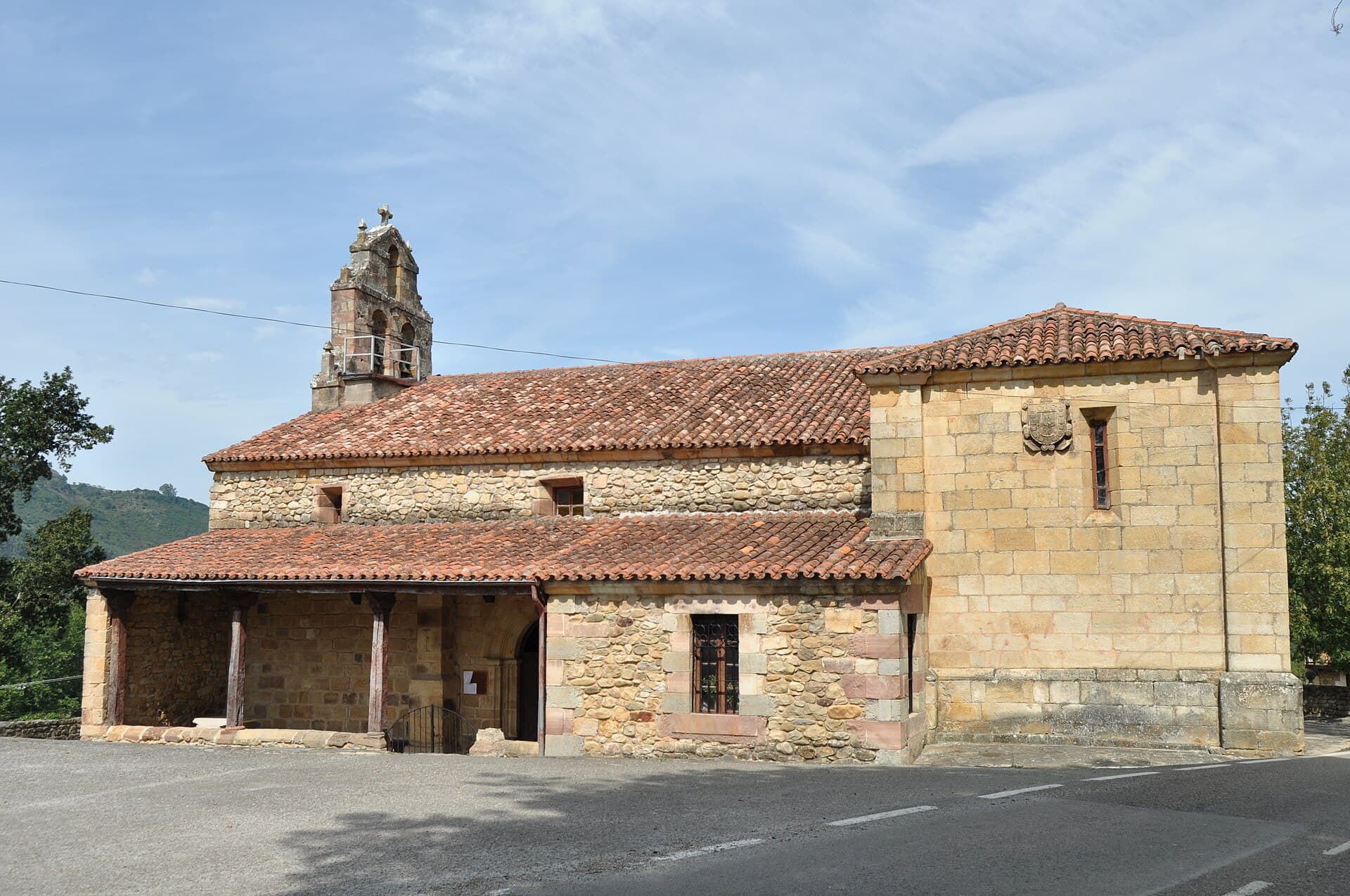
Church of Santa Cecilia in Vilasevil: Cantabria’s Enduring Romanesque Sanctuary
A 12th-century rural church whose sculpted portal and quiet valley setting reveal the layered history of northern Spain.
Why Visit the Church of Santa Cecilia
Perched on a gentle slope above the Toranzo valley, the Church of Santa Cecilia stands as one of Cantabria’s most intact Romanesque monuments. Built in the mid-12th century, it retains its original single-nave plan, semicircular apse, and a richly carved western portal that still shows traces of medieval polychromy. Visitors come for the architecture, but they stay for the profound stillness of the surrounding meadows and the distant views of the Cantabrian Mountains.
Architecture and Artistic Highlights
The portal features five archivolts resting on slender columns; the innermost archivolt carries a frieze of stylized leaves and human heads. Inside, the apse preserves a simple stone altar and fragments of 13th-century frescoes depicting geometric motifs. The barrel vault and the slightly pointed triumphal arch mark the transition from pure Romanesque toward early Gothic forms. A modest belfry rises from the west end, its two bells still rung for local festivals.
Surroundings and Atmosphere
The church sits within a small walled cemetery shaded by ancient yews. From the south side, a short path leads to a viewpoint overlooking the Pas River and the village of Santiurde de Toranzo. In spring, wild orchids dot the grass; in autumn, the valley turns gold. The site remains remarkably uncrowded even in peak season.
How to Get There
The church lies 35 km south of Santander. Drivers follow the N-623 toward Burgos, then take the CA-142 exit for Santiurde de Toranzo and continue 4 km along a narrow country road signposted “Vilasevil.” Public transport is limited; a taxi from Toranzo station or a rented bicycle along the valley cycle path offers pleasant alternatives. Parking is available on a gravel lay-by 150 m before the church.
Best Time to Visit
April through June and September through October provide mild temperatures and fewer visitors. Summer mornings are comfortable, while winter visits reward photographers with dramatic light on the bare hillsides, though paths can become muddy. Local romerías occur around 22 November; check village notices if you wish to witness traditional celebrations.
Nearby Attractions
- The Romanesque church of Santa María in Yermo, 12 km west, shares similar portal carving.
- Parque Natural de Cabárceno, 25 km north, offers easy wildlife viewing.
- The medieval bridge and thermal springs at Puente Viesgo lie 18 km away.
- Coastal beaches at Comillas and San Vicente de la Barquera are reachable in under an hour by car.
Visitor tips
- Wear sturdy shoes; the approach path is unpaved and can be slippery after rain.
- Bring a small flashlight to examine the apse frescoes, as interior lighting is minimal.
- Combine the visit with a picnic in the adjacent meadow; no facilities exist on site.
Frequently asked questions
Is the Church of Santa Cecilia open every day?
The church is usually unlocked during daylight hours, but access can vary with local events or maintenance. Arrive before noon for the best chance of entry.
Are guided tours available?
No regular guided tours operate, though occasional heritage walks are organized by the regional tourism office. Self-guided exploration is straightforward thanks to clear exterior signage.
Is photography permitted inside?
Photography without flash is allowed. Tripods are discouraged to protect the fragile stone floor.
What facilities are nearby?
The nearest cafu00e9s and restrooms are in Santiurde de Toranzo, 4 km away. Carry water, especially in summer.
Can I attend a service?
Mass is celebrated only on major feast days. The building otherwise functions as a quiet heritage site open to respectful visitors.