
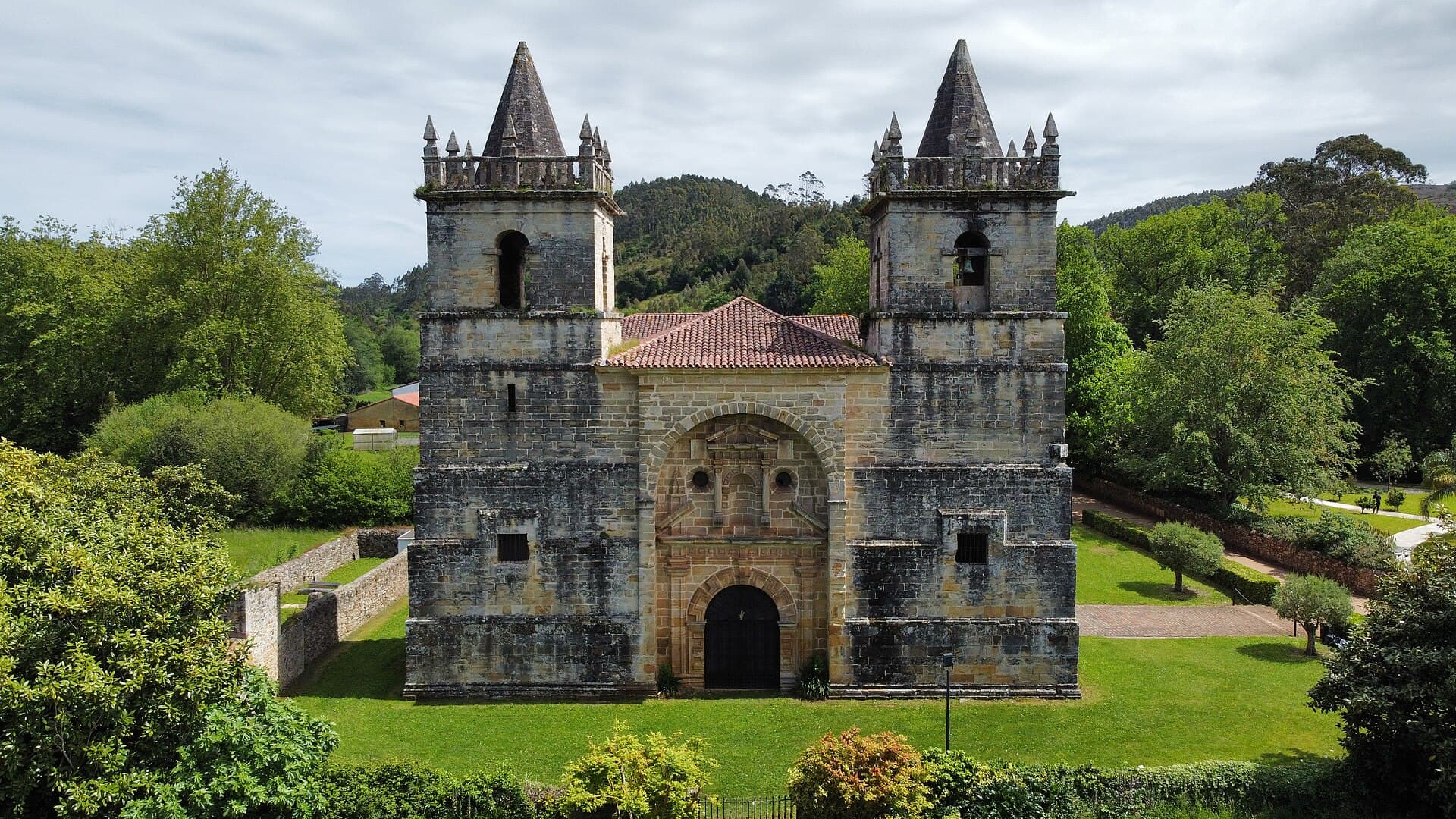
Church of San Martín de Tours, Cigüenza: Cantabria’s Romanesque Treasure
Step inside one of northern Spain’s best-preserved rural Romanesque churches set amid green hills and quiet villages.
Why Visit the Church of San Martín de Tours
Perched above the tiny hamlet of Cigüenza in Alfoz de Lloredo, this 12th-century church stands as a quiet testament to Cantabria’s medieval past. Its robust stone construction, simple rounded arches and sturdy bell tower distinguish it from later Gothic or Baroque buildings found elsewhere in the region. The church remains an active place of worship while welcoming respectful visitors who appreciate unspoiled rural heritage.
Architectural Highlights
Outside, notice the clean lines of the nave and the square tower capped by a pyramidal roof. Inside, the single nave is divided by a triumphal arch leading to a semicircular apse. Look for the carved corbels under the eaves and the original baptismal font still in use. The modest size allows every detail to be appreciated without crowds.
Getting There
The church lies roughly 35 km west of Santander. Drivers should follow the A-8 motorway toward Llanes, taking exit 166 for Cóbreces and then local roads through Cóbreces and Lloredo. The final approach is a narrow lane that ends at a small parking area beside the cemetery. Public transport is limited; a taxi from Cóbreces or a rented bicycle along the coastal paths are practical alternatives for independent travelers.
Best Time to Visit
Spring and early autumn offer mild weather ideal for walking the surrounding lanes. Summer brings longer daylight but occasional coastal fog. Winter visits are possible yet colder and wetter; the stone interior can feel damp. Local festivals around the feast of San Martín in November occasionally open the church for special events.
Nearby Attractions
- The dramatic cliffs and beach at Playa de Cóbreces, 8 km away.
- The medieval monastery of Santo Toribio de Liébana, a 40-minute drive south.
- Scenic viewpoints along the Costa Quebrada between Santillana del Mar and Comillas.
- Traditional cider houses in the villages of Ruiloba and Alfoz de Lloredo for authentic Cantabrian cuisine.
Combining a visit with these sites creates a full day exploring the western Cantabrian coast and countryside.
Visitor tips
- Wear sturdy shoes; the approach path and churchyard contain uneven stone and grass.
- Combine the visit with a stop at nearby Playa de Cu00f3breces for a complete coastal and cultural outing.
- Respect ongoing services; pause photography when worshippers are present and keep voices low.
Frequently asked questions
Is the Church of San Martu00edn de Tours open every day?
The church is generally accessible during daylight hours when not in use for services, though there are no fixed staff hours; visitors should check locally or try the door respectfully.
Can I take photographs inside the church?
Photography without flash is usually permitted, but always ask if a service is underway and avoid disturbing worshippers.
Is there parking at the church?
A small informal parking area exists beside the cemetery at the end of the lane; spaces are limited during local events.
Are there facilities such as toilets or cafu00e9s nearby?
No amenities stand at the church itself. The nearest cafu00e9s and restrooms are in the village of Cu00f3breces, about 8 km away.
Is the site suitable for visitors with mobility issues?
The final path is unpaved and the church threshold has a small step; the interior is flat but narrow, so accessibility is limited.