
Keep reading
Nearby & related
Canary Islands
Blas Cabrera Felipe Monument: Honoring a Canary Islands Physics Pioneer
Visit the monument to Blas Cabrera Felipe, the influential Spanish physicist born in the Canary Islands, set amid…
15 November 2026
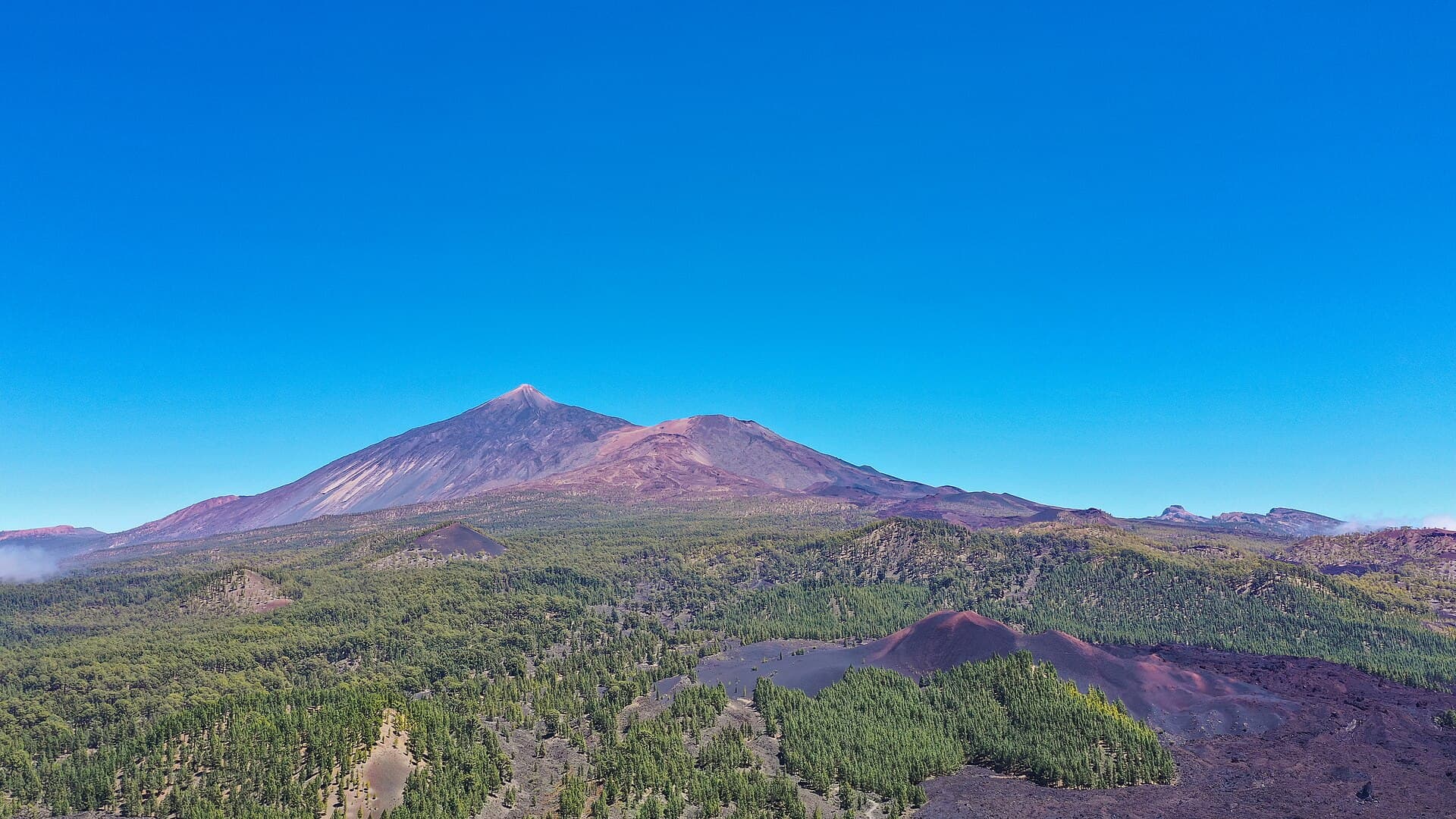
Discover the stark black cone and pine-shaded trails of Tenerife's most recent volcanic eruption site in the Canary Islands.
Chinyero stands as Tenerife’s youngest volcano, formed during the 1909 eruption that lasted ten days and covered surrounding slopes in fresh lava. Its dark cinder cone rises sharply above Canary pine forests, offering hikers a direct encounter with recent volcanic history without the crowds of nearby Teide. The stark contrast between jet-black lava and green pines creates a memorable landscape that changes dramatically with light and season.
The main route begins near the village of El Tanque and climbs steadily through pine woodland before emerging onto open lava fields. A well-marked path circles the base of the cone and ascends to the crater rim, where visitors gain sweeping views across the Santiago del Teide valley toward the Atlantic. Along the way, hikers pass rope-like pahoehoe lava formations and scattered volcanic bombs. The round-trip distance is moderate, with some steep sections of loose cinder that reward steady pacing.
Canary Island pines cling to the slopes, their thick bark protecting them from past fires and eruptions. In spring, endemic Teide violet and rockrose add color to the otherwise monochrome terrain. Birds such as the blue chaffinch and Berthelot’s pipit frequent the area, while lizards bask on warm rocks.
Most visitors arrive by rental car from Puerto de la Cruz or Playa de las Américas via the TF-82 road, parking at the signed trailhead near kilometer marker 11. Public buses run from Los Gigantes and Santiago del Teide to nearby stops, after which a short walk leads to the path entrance. The volcano sits outside Teide National Park boundaries, so no special permit is required for the standard trail.
Clear skies and comfortable temperatures make spring (March to May) and autumn (September to November) ideal. Summer brings intense sun on exposed lava, while winter can deliver strong winds and occasional rain that turns cinder paths slippery. Early morning starts avoid afternoon clouds that often shroud the cone.
Combine a Chinyero hike with a drive through the dramatic Masca valley or a visit to the coastal village of Garachico, both within thirty minutes. The larger Teide National Park lies to the east, offering further volcanic landscapes for those extending their stay on Tenerife.
Keep reading
Visit the monument to Blas Cabrera Felipe, the influential Spanish physicist born in the Canary Islands, set amid…
The trail is moderate, with a steady climb of around 400 meters over 4-5 km round trip; good fitness helps on the loose cinder sections near the top.
The lower forest sections suit families, but the steeper crater approach requires caution and is best for those comfortable with uneven terrain.
Pine trees provide shade on the lower slopes, but the upper lava fields are fully exposed; no drinking water is available, so bring your own supply.
Dogs are permitted if kept on a leash, though owners should watch for sharp lava edges that can injure paws.
Layered clothing, a sun hat, sturdy shoes, and wind protection are essential; the temperature drops quickly once you leave the pine forest.
Experience sweeping Atlantic vistas of La Gomera island from this elevated Tenerife lookout point.
This elevated viewpoint on La Palma offers unobstructed panoramas of volcanic ridges, deep barrancos, and the Atlantic…