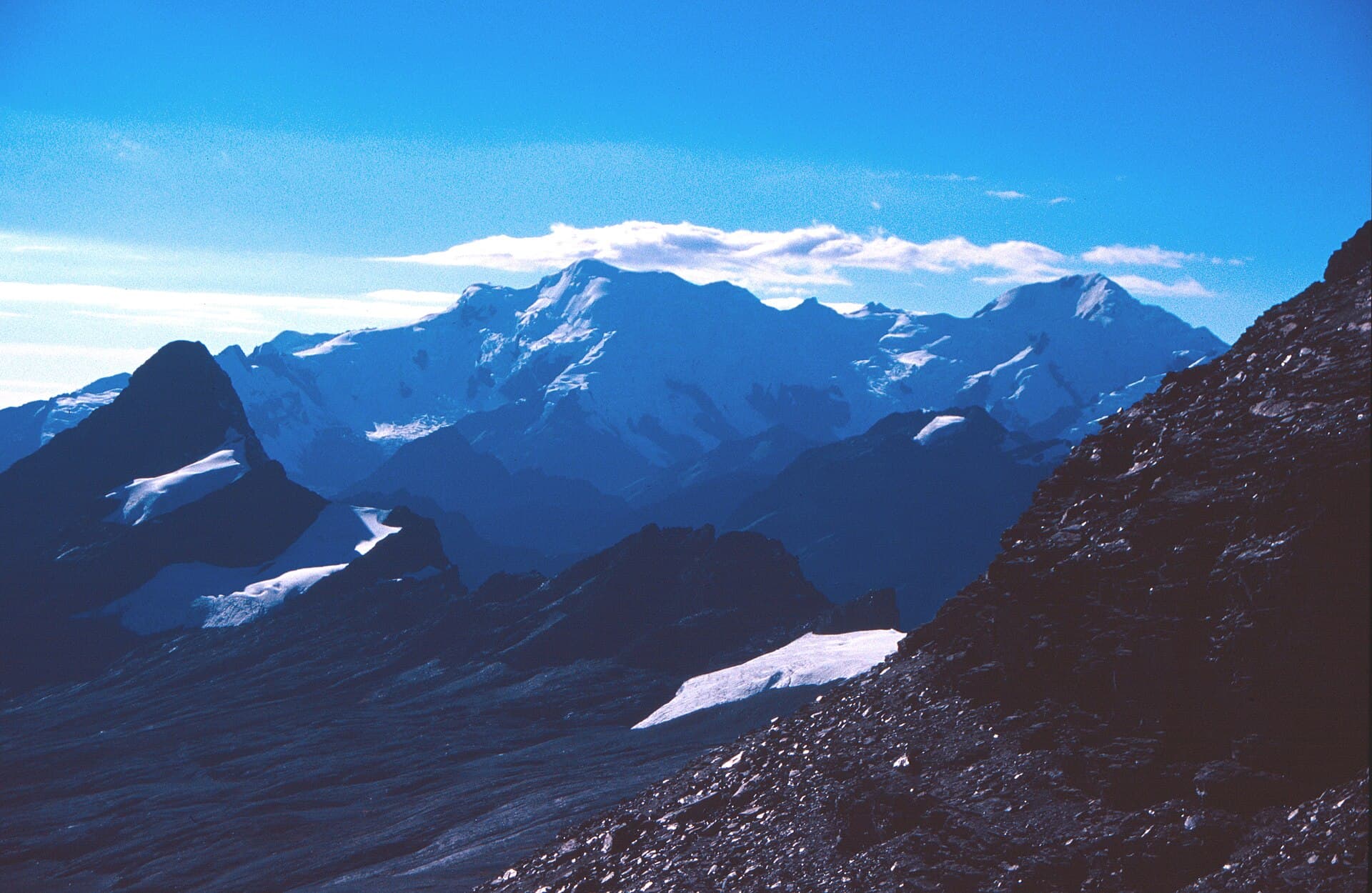
Why Chaupi Orco Rewards the Effort
Chaupi Orco rises 6,044 meters in the Cordillera Apolobamba, a seldom-visited section of the Andes where Bolivia meets Peru. Its broad, glaciated summit and the surrounding chain of sharp peaks create a dramatic high-altitude landscape that remains far quieter than the better-known Illimani or Sajama. The mountain offers experienced climbers a genuine expedition feel without the crowds or infrastructure of larger ranges.
Reaching the Mountain
Most travelers begin in La Paz. Regular buses run northeast to the town of Pelechuco, the usual trailhead village, in roughly 12 to 14 hours over unpaved roads. From Pelechucho, local transport or a hired 4×4 continues several hours farther to the hamlet of Hilo Hilo or the base of the Jatun Pampa valley. The final approach is on foot, crossing high passes and camping beside turquoise glacial lakes. Allow at least three days for the trek in and two for the return.
Best Time to Visit
The dry season from May through September brings the most stable weather. Daytime temperatures are mild, nights are cold, and fresh snow is less frequent. Outside these months, afternoon storms and deeper snow increase both avalanche risk and route-finding difficulty.
Climbing Routes and Activities
The standard route ascends the southwest ridge from a high camp near 5,200 meters. The climb involves glacier travel, moderate ice slopes, and a final rocky scramble to the summit. Most parties require two full days above base camp. Non-climbers can enjoy multi-day treks that circuit the massif, visiting traditional llama-herding communities and the striking turquoise waters of Laguna Juri Khota. Wildlife sightings often include vicuñas and Andean condors.
Nearby Highlights
- Cololo (5,915 m) – a striking pyramid visible from many campsites.
- The Apolobamba trekking circuit linking to Ulla Ulla National Reserve.
- Remote Aymara villages where travelers can purchase woven textiles and learn about high-altitude agriculture.
Essential Preparation
Independent travel here demands solid mountaineering experience, glacier-travel skills, and thorough acclimatization in La Paz beforehand. Hiring local arrieros for mules and a certified guide is strongly recommended for both safety and to support the local economy. Carry all food and fuel from La Paz; resupply options beyond Pelechuco are minimal.