
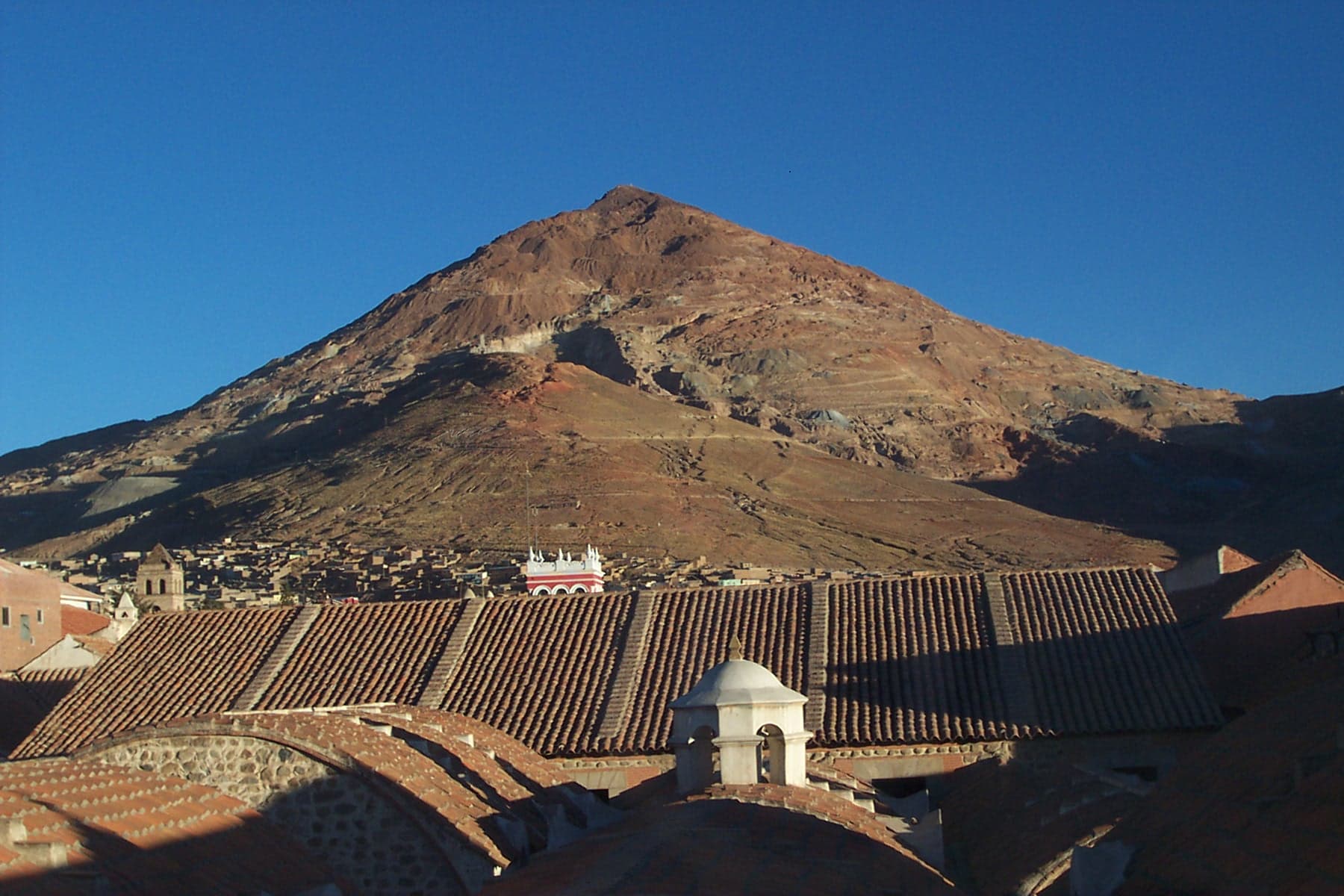
Cerro Rico: Bolivia’s Historic Silver Mountain Above Potosí
Explore the legendary Cerro Rico, the mountain whose silver riches built empires and whose mines still shape life in highland Bolivia today.
The Mountain That Fed an Empire
Cerro Rico rises directly above the colonial city of Potosí, its reddish peak visible from almost every street. For more than four centuries this single mountain supplied much of the silver that financed the Spanish Empire and helped create the modern global economy. Today the same slopes offer visitors a rare chance to stand inside working mines and meet the miners who continue the tradition.
Descending Into the Mines
Guided tours take small groups into the labyrinth of tunnels that honeycomb the mountain. Visitors walk through narrow passages, climb ladders, and watch miners drill and haul ore by hand. The experience is physical and humid; temperatures inside can reach 40 °C. Most tours pause at small shrines where miners leave offerings of coca leaves, cigarettes, and alcohol for the spirit they call Tío.
Respecting the Miners
Miners work in cooperatives and often spend days underground. Bring small gifts such as coca leaves or dynamite supplies if your guide suggests it; these items are genuinely useful rather than tourist souvenirs. Photography is usually allowed but always ask first.
Views and Context from Potosí
After a mine visit, spend time in Potosí’s historic center. The Casa Nacional de la Moneda still displays the massive wooden presses once used to stamp silver coins. Rooftop walks and the Convento de Santa Teresa give panoramic views of Cerro Rico’s scarred slopes. The contrast between the elegant colonial architecture and the bare mountain above it tells the story of the city’s wealth and hardship in one glance.
How to Reach Cerro Rico
Most travelers arrive in Potosí by bus from Sucre (three hours) or La Paz (eight to nine hours). Once in the city, Cerro Rico is a short taxi ride or steep walk from the main square. Tours depart daily from agencies clustered around Plaza 10 de Noviembre; choose operators that limit group size and supply helmets, lamps, and rubber boots.
Best Time to Visit
The dry season from May to October offers the most reliable conditions for mine tours. Afternoon thunderstorms are common from November to March and can flood lower tunnels. Early morning departures avoid the worst heat inside the mountain and give clearer light for photographs of the peak.
Nearby Attractions
While in the region, many visitors combine Cerro Rico with a stop at the Uyuni salt flats, reachable by overnight bus or organized tour. Closer to Potosí, the colonial villages of Tarapaya and the thermal springs at Chaquí provide a quieter contrast to the intensity of the mines.
Visitor tips
- Wear layers you can remove; mine temperatures are high while the surface can be cold and windy.
- Choose a cooperative-run tour rather than one that sensationalizes danger; the cooperatives benefit directly from visitor fees.
- Carry water and a small snack; tours last two to three hours and physical effort is required.
Frequently asked questions
Is it safe to visit the mines inside Cerro Rico?
Tours follow established routes used daily by miners, but the environment remains hazardous. Reputable operators provide safety equipment and briefings; visitors with claustrophobia, heart conditions, or mobility issues should reconsider.
Do I need to be physically fit for a Cerro Rico mine tour?
Moderate fitness helps. You will walk, stoop, and climb short ladders for up to three hours in warm, dusty conditions. Helmets, lamps, and boots are supplied.
Can I take photographs inside the mines?
Most cooperatives allow photos after asking permission. Flash photography near active work faces is discouraged because it can disturb miners.
How far is Cerro Rico from Potosu00edu2019s main square?
The mountain rises immediately south of the city; the lower mine entrances are a ten- to fifteen-minute walk or a short taxi ride uphill.
What should I bring as a gift for the miners?
Coca leaves, fruit, or small quantities of dynamite supplies are practical. Ask your guide what the specific cooperative currently needs.