
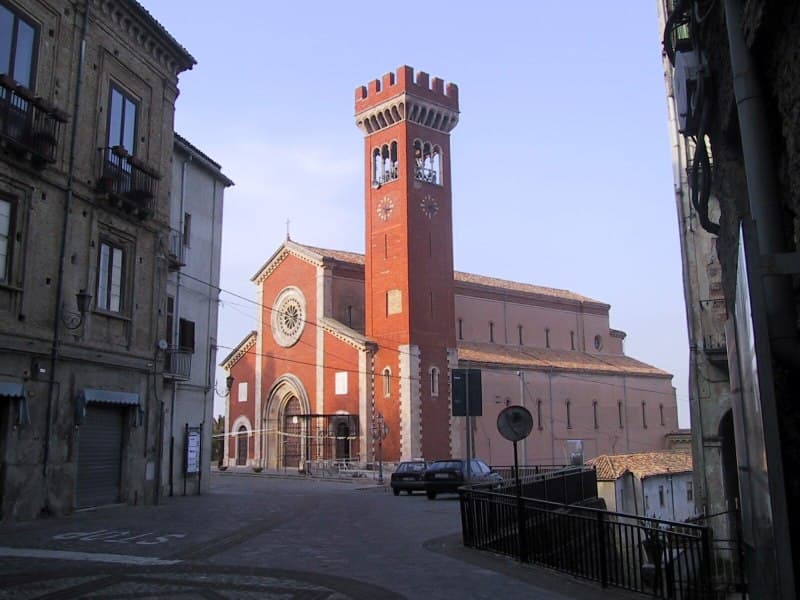
Cathedral of St. Nicholas in San Marco Argentano: Calabria’s Norman-Era Treasure
Explore the layered history, striking stonework, and quiet hill-town setting of this 11th-century cathedral in Calabria’s Cosenza province.
Why the Cathedral of St. Nicholas Matters
San Marco Argentano’s Cathedral of St. Nicholas stands as one of Calabria’s clearest surviving links to the Norman period. Built in the late 11th century on the site of an earlier Byzantine church, the building reflects the region’s successive Greek, Norman, and later Baroque influences without losing its solid Romanesque core.
Architectural Highlights to Look For
Outside, the plain stone façade is relieved by a tall, asymmetrical bell tower and a portal whose carved capitals still show Norman motifs. Inside, the nave is divided by massive piers rather than slender columns, giving the space a fortress-like calm. Side chapels added in the 17th and 18th centuries contain modest Baroque altars that contrast with the earlier stonework. The crypt preserves fragments of the original Byzantine floor plan and offers a cool, low-ceilinged counterpoint to the brighter upper church.
Practical Viewing Tips
- Walk the length of the nave first to understand the proportions before examining individual chapels.
- Look for the reused Roman inscriptions set into the walls—small details that reveal the site’s long reuse.
Getting There
The cathedral sits at the top of the historic center of San Marco Argentano, a compact hill town roughly 40 km northwest of Cosenza. Regional trains stop at the station below the town; a short, steep walk or local bus ride reaches the main square. Drivers can park near the lower gate and continue on foot through the narrow streets that preserve the medieval layout.
Best Time to Visit
Spring (April–June) and early autumn (September–October) offer the most comfortable temperatures for walking the steep lanes and exploring the surrounding countryside. Summer brings intense heat and occasional thunderstorms; winter is mild but can be damp, with fewer services open in the old town.
Nearby Attractions Worth Combining
Within a short drive are the Norman castle ruins at San Marco Argentano itself, the Greek-rite monastery of Santa Maria di Lucedio, and the dramatic gorges of the Raganello river. Further afield, the coastal towns of Scalea and Diamante provide a contrast of sea and mountain landscapes in a single day.
Respectful Visiting
The cathedral remains an active parish church. Visitors are welcome outside of services, but modest dress and quiet behavior are expected. Photography without flash is generally permitted in the nave, though tripods and video are discouraged during Mass.
Visitor tips
- Wear sturdy shoes; the steep cobblestone streets around the cathedral become slippery when wet.
- Combine your visit with a walk through the old town walls for views over the Crati valley.
- Check the posted schedule at the entrance for any upcoming local festivals that may close the building for several hours.
Frequently asked questions
Is the Cathedral of St. Nicholas the main church in San Marco Argentano?
Yes. It serves as the townu2019s principal parish church and the historic seat of the local diocese.
How old is the cathedral?
The present structure dates to the late 11th century, built by Norman settlers over an earlier Byzantine church.
Can visitors enter the crypt?
The crypt is usually accessible during regular opening times and contains the oldest surviving architectural fragments.
Is there parking near the cathedral?
Limited parking exists just outside the historic center; most visitors park lower down and walk the short, steep route uphill.
Are guided tours available?
Local volunteers sometimes offer informal tours on weekends; otherwise the building is best explored at your own pace with the information panels inside.