
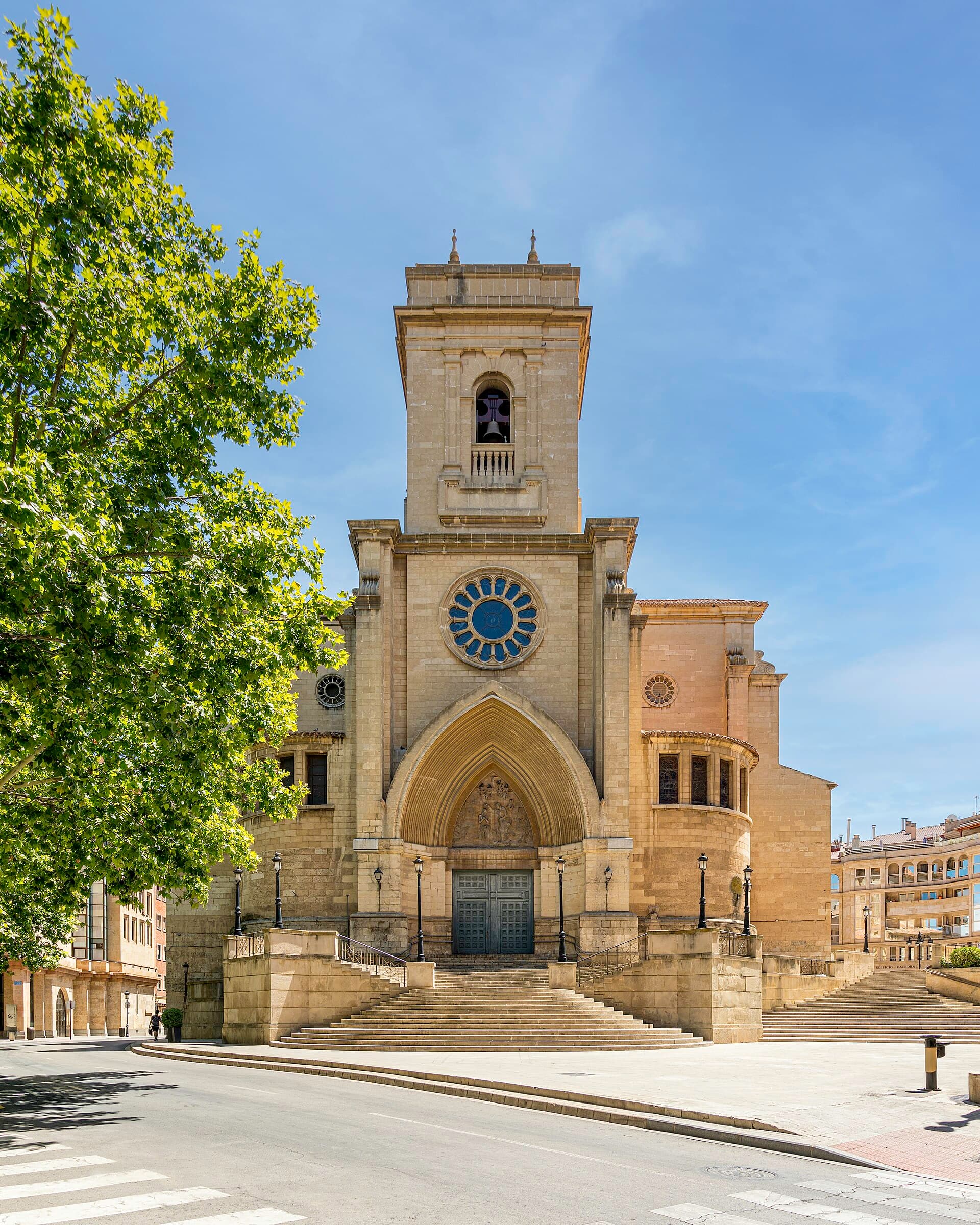
Cathedral of Saint John of Albacete: Exploring the Gothic-Renaissance Heart of La Mancha
Step inside Albacete’s principal cathedral to discover layered centuries of Spanish architecture, art, and local devotion.
History of the Cathedral
The Cathedral of Saint John of Albacete, formally dedicated to Saint John the Baptist, rose on the site of an earlier medieval church during the sixteenth century. Construction blended late Gothic structure with Renaissance detailing, reflecting the transition from medieval to early modern Spain in Castile–La Mancha. Successive additions, including the soaring tower and refined chapels, continued into the eighteenth century, giving the building its current silhouette that dominates the city’s historic core.
Architectural Highlights
Visitors first notice the imposing west façade framed by pointed arches and sculptural niches typical of the Gothic tradition. Inside, the nave opens into three aisles separated by slender pillars that support ribbed vaults. The main altarpiece, carved in polychrome wood, depicts scenes from the life of Saint John the Baptist and remains one of the cathedral’s most expressive works. Side chapels house paintings and silverwork produced by regional artisans, while the tower’s climb offers sweeping views across Albacete’s plains and the distant mountains of the Sistema Ibérico.
Interior Details Worth Noting
- The choir stalls feature intricate walnut carving that rewards close inspection.
- Stained-glass windows filter light across the central nave, changing color with the seasons.
- A small museum attached to the sacristy preserves liturgical objects spanning four centuries.
Visiting the Cathedral
Because the building remains an active place of worship, quiet movement and modest dress are expected. Photography without flash is generally permitted in the nave, though certain chapels request visitors refrain. Allow at least forty-five minutes to absorb the architecture and another thirty minutes if you wish to ascend the tower. The surrounding Plaza de la Catedral provides benches and shaded areas for reflection after the visit.
Best Time to Visit and Getting There
Spring and autumn bring comfortable temperatures and fewer crowds, making them ideal for unhurried exploration. Albacete’s central location means the cathedral sits within a short walk of the railway station and bus terminal; high-speed trains from Madrid reach the city in roughly ninety minutes. Once in Albacete, the monument is easily reached on foot from the main square.
Nearby Attractions
After leaving the cathedral, continue to the Museo de Albacete for archaeological finds from the surrounding plains, or stroll along the tree-lined Paseo de la Libertad to sample local saffron-infused dishes. The city’s famous knife museum and the expansive Parque de Abelardo Sanchez lie within a ten-minute walk, allowing visitors to combine cultural stops into a single half-day itinerary.
Visitor tips
- Combine the cathedral visit with a walk through Albaceteu2019s compact historic center to see how the monument anchors daily civic life.
- Wear comfortable shoes if you plan to climb the tower; the spiral staircase is narrow and the ascent involves several flights.
- Check local festival calendars in advance; Corpus Christi and the Feria de Albacete often feature processions that pass directly in front of the cathedral.
Frequently asked questions
How long should I spend at the Cathedral of Saint John of Albacete?
Most visitors spend forty-five minutes to an hour inside, with an extra half hour recommended for the tower climb and adjacent museum.
Is the cathedral suitable for visitors with mobility limitations?
The main floor is level and accessible, but the tower requires climbing many steps and is not recommended for those with limited mobility.
Can I attend a service at the cathedral?
Regular Masses are held; visitors are welcome provided they respect the liturgy and remain silent during worship.
What makes this cathedral different from others in Castileu2013La Mancha?
Its hybrid Gothic-Renaissance design and the survival of original altarpieces and choir stalls set it apart from more purely Baroque or Romanesque neighbors.
Are guided tours available in English?
Occasional English-language tours are offered by local guides; independent exploration with the provided information panels is also straightforward.