
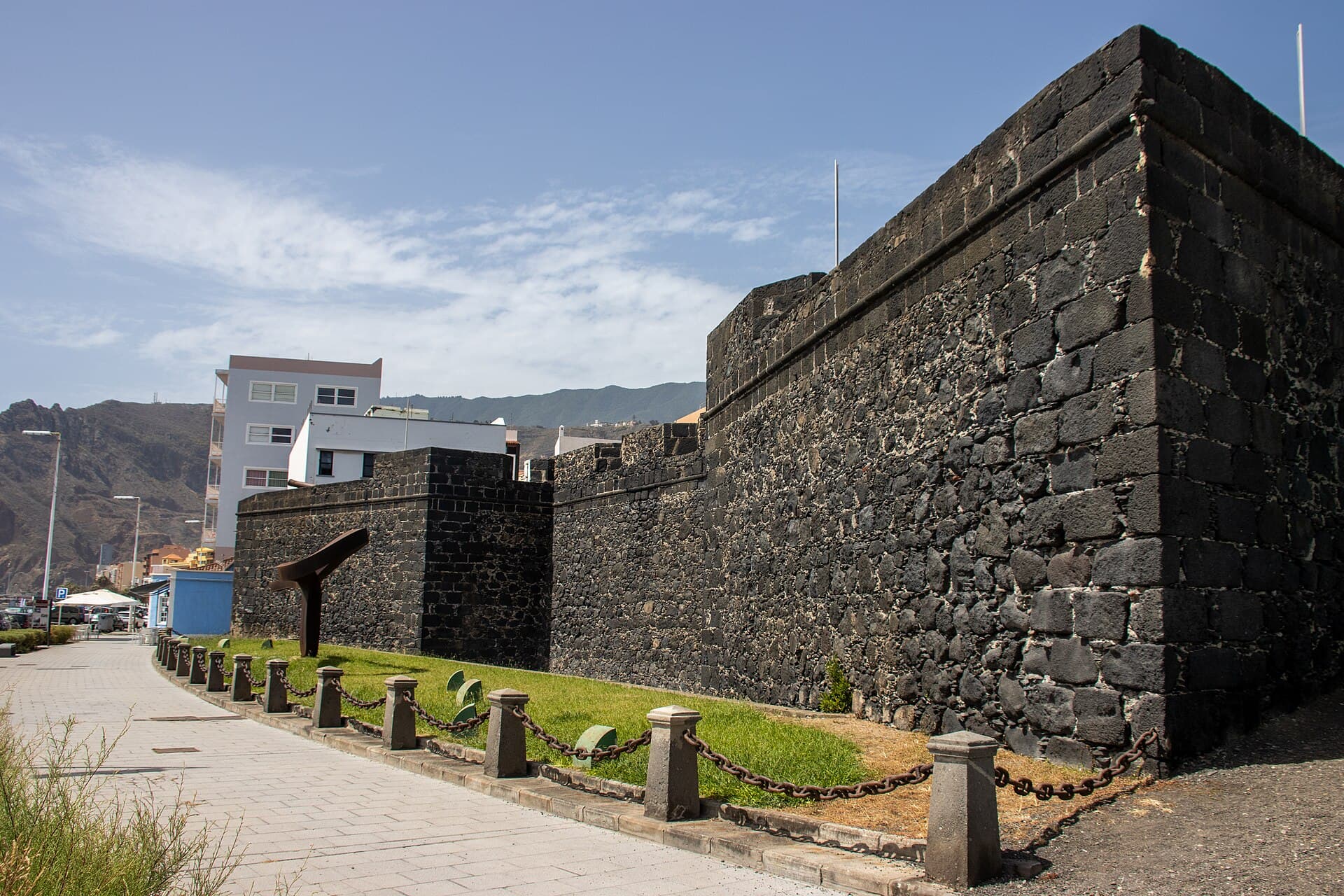
Castle of Santa Catalina: Historic Fortress Above Santa Cruz de La Palma
Climb to this 16th-century hilltop stronghold for sweeping Atlantic views and a direct link to La Palma’s maritime defense history.
Strategic Origins on a Volcanic Hill
The Castle of Santa Catalina was built to protect the natural harbor of Santa Cruz de La Palma from pirate raids that plagued the Canary Islands in the 1500s. Its elevated position on a steep slope gave lookouts clear sightlines across the ocean while cannons covered the narrow approach from the sea. Stone walls and bastions still follow the rocky contours of the hill, blending into the landscape shaped by ancient lava flows.
What Visitors Encounter Today
A short but steady uphill path leads from the lower town to the castle grounds. Inside the perimeter, open courtyards and low parapets offer unobstructed panoramas of the colorful waterfront, the cruise port, and the green ridges rising behind the town. Interpretive panels explain the fort’s role in regional history without overwhelming the quiet setting. Sunset visits are especially rewarding as the western light turns the volcanic rock warm orange and silhouettes the island’s profile.
Practical Layout and Access
The site is compact, allowing most visitors to explore the main terraces and viewpoints in under an hour. Shaded benches provide rest spots, and the surrounding hillside supports native Canary Island flora that changes subtly with the seasons. No interior museum exists, so the experience centers on the architecture, views, and atmosphere rather than collections or guided tours.
Getting There from Santa Cruz
The castle sits within easy walking distance of the town’s historic core. Pedestrians follow signposted lanes that climb gently at first, then more steeply near the summit. Those arriving by car can use limited roadside parking at the base of the path and continue on foot. Public buses stop near the harbor, placing the walk within reach for anyone staying in central Santa Cruz de La Palma.
Best Time to Visit
La Palma’s mild subtropical climate makes the castle accessible year-round. Spring and autumn bring comfortable temperatures and fewer crowds, while winter offers clear days with dramatic cloud formations over the sea. Summer mornings are best to avoid midday heat on the exposed slopes; the site has little shade once the path leaves the tree line.
Nearby Experiences
After descending, explore the narrow streets of Santa Cruz with their traditional Canarian balconies and the 16th-century church of El Salvador. The waterfront promenade leads to small fishing boats and local markets selling fresh produce and cheeses from the island’s volcanic soils. Short drives or hikes reveal La Palma’s famous laurel forests and volcanic trails, making the castle an ideal starting point for a broader island itinerary.
Visitor tips
- Wear sturdy shoes with good grip; the final approach includes uneven stone steps and loose gravel.
- Carry water and a light layer; the hilltop is windier and cooler than the sheltered harbor below.
- Combine the visit with a morning stroll through Santa Cruz to enjoy both the fortress views and the townu2019s architecture before the day warms.
Frequently asked questions
How long should I allow for a visit to the Castle of Santa Catalina?
Most people spend 45 to 60 minutes exploring the walls and viewpoints, though photographers or those who enjoy the panorama often stay longer.
Is the path to the castle suitable for children or older visitors?
The route involves a steady uphill climb with some steps; it is manageable for reasonably fit adults and older children, but those with mobility concerns may prefer to view it from below.
Are there restrooms or cafu00e9s at the castle itself?
No facilities are located inside the castle grounds; plan to use services in the town center before or after your visit.
Can I combine a castle visit with other La Palma attractions on the same day?
Yes. The site is close to the harbor, allowing easy pairing with a waterfront walk, a visit to the townu2019s historic church, or a short drive into the islandu2019s interior volcanic landscapes.
What kind of weather should I expect on the hilltop?
Expect stronger breezes and slightly cooler temperatures than at sea level; bring a light jacket even on sunny days.