
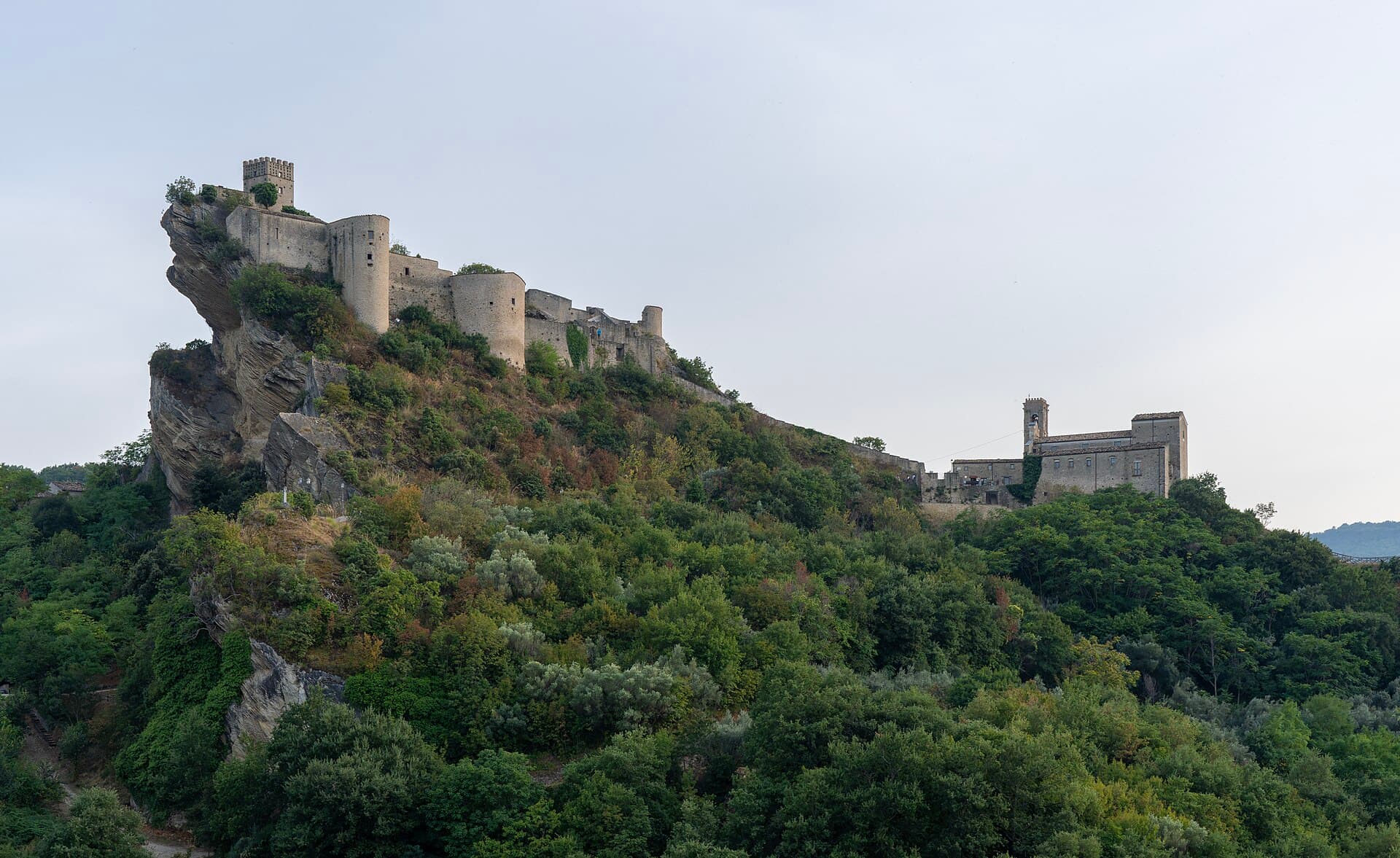
Castello di Roccascalegna: Abruzzo’s Cliff-Top Medieval Fortress
This dramatically sited 11th-century castle offers sweeping valley views and an intimate look at feudal life in Italy’s wildest region.
Why Castello di Roccascalegna Stands Out
Castello di Roccascalegna rises from a narrow limestone spur above the village of the same name, its towers and walls appearing to grow directly from the rock. Unlike many restored Italian castles, it retains a raw, fortress-like character that reflects its role guarding the Sangro and Aventino valleys. Visitors climb a steep path to reach the upper ward, where the panorama stretches across olive groves, forested ridges of the Maiella massif, and distant snow-capped peaks on clear days.
History and Architecture
Documented from the 11th century, the castle passed through Norman, Swabian, and Angevin hands before becoming a local baronial seat. The surviving structures include a tall keep, two corner towers, and sections of curtain wall that follow the natural contours of the cliff. A small chapel and cistern remain inside the lower courtyard, illustrating how the garrison sustained itself during sieges. The fortress never grew into a luxurious residence; its defensive layout stayed largely intact through the centuries.
What to See and Do
- Walk the full circuit of walls for changing perspectives over the valley and the village rooftops below.
- Climb the keep stairs for the highest viewpoint; the ascent is short but steep and exposed.
- Explore the village lanes leading up to the castle gate, where stone houses and a Baroque church provide context for daily life under the fortress.
- Photograph the silhouette at golden hour when the limestone glows against the green hills.
How to Reach the Castle
The nearest airports are Pescara (about 70 km) and Rome (roughly 180 km). From either city, drivers follow the SS652 through the Sangro valley and turn off at the village sign. A small parking area sits at the base of the path; the final approach is on foot. Regional trains stop at Atessa or Casoli, from where infrequent buses or taxis complete the journey. The approach roads are narrow but paved.
Best Time to Visit
Spring (April–June) and autumn (September–October) bring mild temperatures ideal for the uphill walk and clear visibility. Summer can be hot on the exposed rock; winter visits are possible but require caution after rain or snow, as paths become slippery. Early morning or late afternoon light enhances both photography and the sense of solitude.
Nearby Attractions Worth Combining
The castle sits within easy reach of several Abruzzo highlights. The historic center of Guardiagrele, known for copper and goldsmith workshops, lies 20 minutes away. The dramatic canyons and hiking trails of the Maiella National Park begin just south, while the coastal towns of Ortona and San Vito Chietino offer beaches and seafood for a change of scenery. A day trip can easily link the castle with the monasteries of San Giovanni in Venere or the hill town of Chieti.
Visitor tips
- Wear sturdy shoes with good grip; the final ascent involves uneven stone steps and gravel.
- Carry water, especially in summer, as there are no facilities once you pass the village square.
- Visit early in the day or late afternoon to avoid any tour groups and enjoy softer light for photos.
Frequently asked questions
Is Castello di Roccascalegna suitable for children or people with limited mobility?
The steep, uneven path and stairs make access difficult for wheelchairs or strollers; fit children usually enjoy the short climb, but parents should supervise closely near drop-offs.
Can you drive all the way to the castle entrance?
Vehicles stop in the village parking area below; the final section is a pedestrian path only.
Are there guided tours available?
Local guides sometimes offer walks by arrangement through the village; independent exploration is straightforward thanks to clear signage and compact size.
What should I bring for a visit?
Comfortable walking shoes, sun protection, and a bottle of water are essential; there are no cafu00e9s or restrooms inside the castle walls.
Is the castle open year-round?
The site remains accessible daily, though winter weather can make paths slippery and some sections may be closed after heavy snow or rain.