
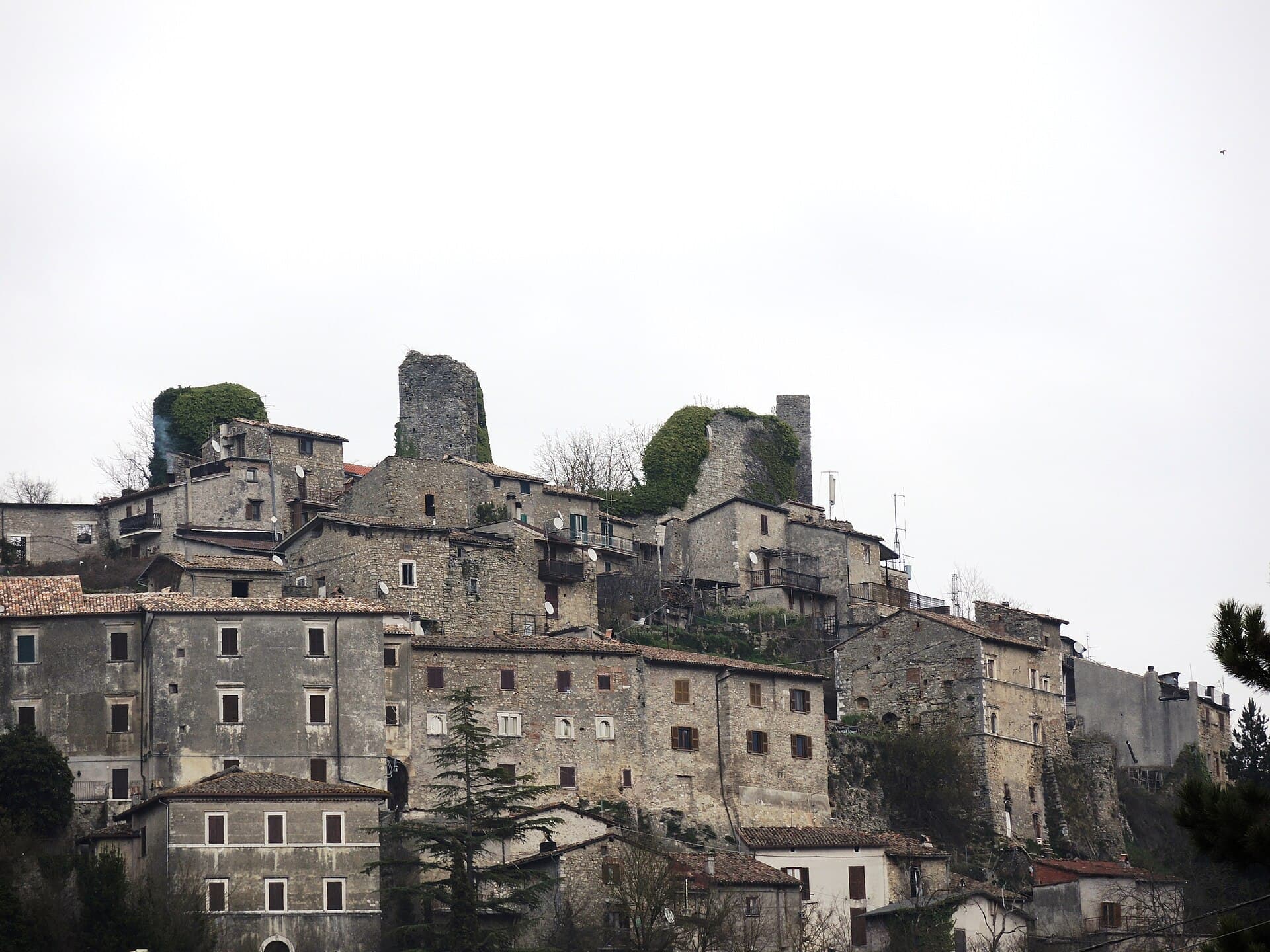
Castello di Carsoli: A Medieval Fortress in Abruzzo’s Heartland
Wander the ramparts and towers of this 12th-century castle overlooking the Marsica plain and Apennine peaks.
Why Visit Castello di Carsoli
Perched above the town of Carsoli, this fortress offers a tangible link to medieval Abruzzo and sweeping views across the valley toward the Gran Sasso massif. Its thick stone walls and surviving towers illustrate defensive architecture from the Norman period onward, while the restored interiors provide space for quiet reflection on the region’s layered history.
Historical Background
Construction began in the late 11th century under local lords who sought to control the strategic route between Rome and the Adriatic. The castle later passed to the powerful Orsini family, who strengthened its fortifications during the 14th and 15th centuries. Although damaged by earthquakes and time, the core structures remain, revealing successive building phases through different masonry styles.
What to See and Do
Start at the main gate and climb the external staircase to the upper courtyard. From the battlements you can trace the original curtain walls and identify the round tower that once housed the keep. Inside, modest exhibitions display period ceramics and architectural fragments found during restoration. Walk the perimeter path for unobstructed panoramas of the surrounding hills and the distant peaks of the Abruzzo National Park.
Practical Visiting Advice
- Allow at least ninety minutes for a thorough exploration, including time to pause on the terraces.
- Bring binoculars for spotting raptors that soar above the valley.
- Combine the visit with a stroll through Carsoli’s historic center, where 16th-century churches line the main street.
Getting There
Carsoli lies roughly 70 kilometers east of Rome along the A24 and A25 motorways. Exit at Carsoli-Oricola and follow signs uphill to the castle. Regional trains stop at Carsoli station; from there a steep but direct footpath leads to the entrance in about twenty minutes. Drivers should note limited parking near the summit and consider arriving early on weekends.
Best Time to Visit
Spring and early autumn deliver mild temperatures ideal for walking the walls without summer heat or winter chill. Snow can dust the battlements from December through February, creating dramatic photographs but requiring sturdy footwear. Summer evenings occasionally host outdoor performances that take advantage of the natural amphitheater formed by the courtyard.
Nearby Attractions
Within a short drive lie the ruins of the Cistercian abbey of Santa Maria in Cellis and the scenic shores of Lago del Salto. Further afield, the dramatic Rocca Calascio and the medieval village of Santo Stefano di Sessanio offer additional examples of Abruzzo’s fortified heritage, making the area rich for a multi-day itinerary focused on castles and mountain landscapes.
Visitor tips
- Wear sturdy shoes; the stone paths and staircases can be uneven and slippery after rain.
- Visit on weekdays to avoid small tour groups that sometimes arrive on weekends.
- Carry water and a light jacket; the elevated position creates breezes even on warm days.
- Check local weather forecasts, as sudden mountain showers can occur year-round.
Frequently asked questions
How long does it take to explore Castello di Carsoli?
Most visitors spend between one and two hours walking the walls, courtyards, and towers while enjoying the views.
Is the castle suitable for children?
Yes, the open spaces and towers interest many young visitors, but parents should supervise closely on the higher battlements.
Can I reach the castle without a car?
Trains stop at Carsoli station; a marked footpath climbs from the platform to the entrance in roughly twenty minutes.
Are there facilities like restrooms or cafu00e9s at the castle?
Basic restrooms are available near the entrance, but food and drink options are limited; plan to eat in Carsoli town.
What should I photograph at Castello di Carsoli?
The round keep at sunset and the panoramic view toward the Gran Sasso range from the western wall are especially rewarding.