
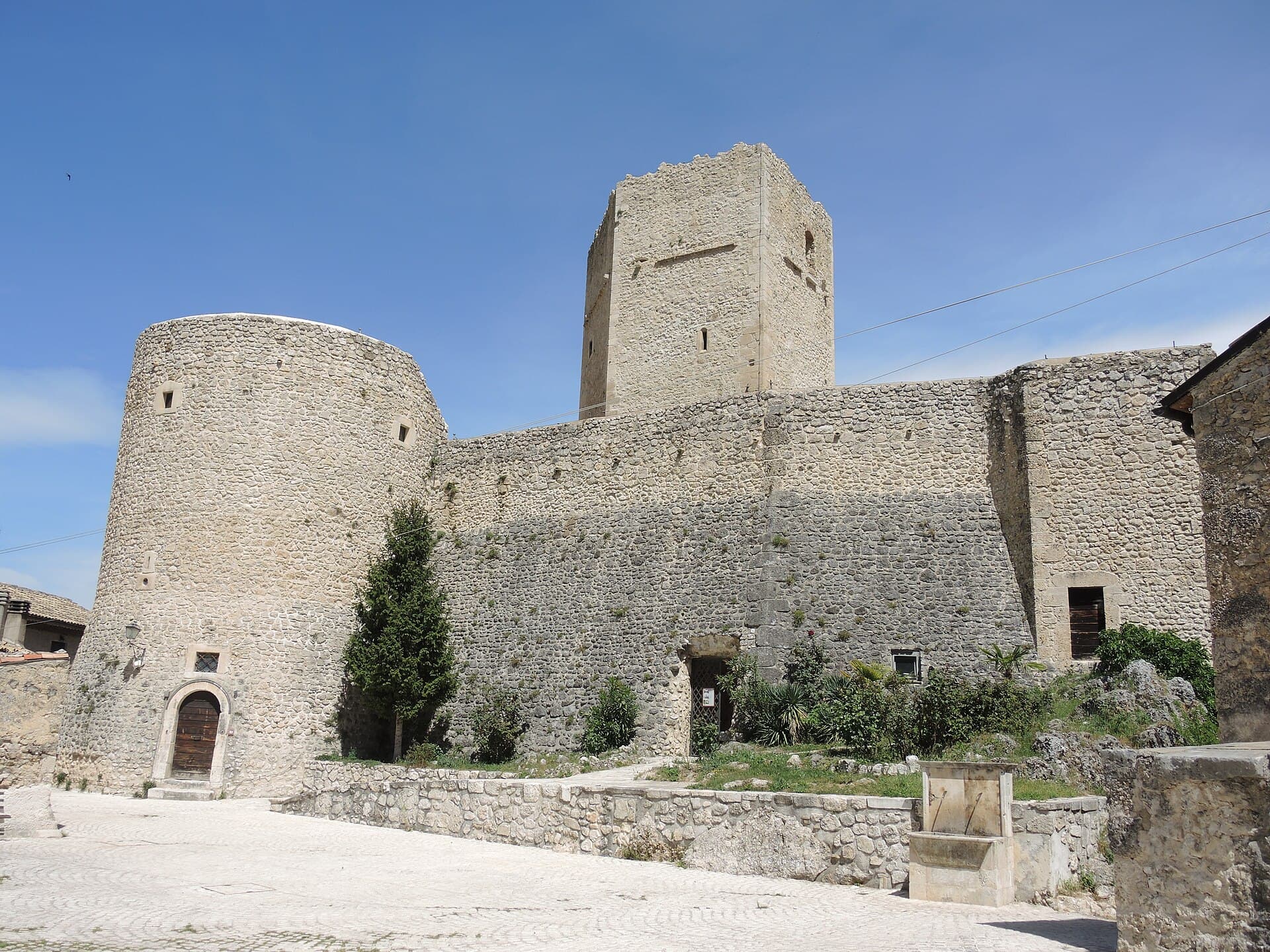
Castello Cantelmo: Medieval Fortress Above Pettorano sul Gizio
A preserved 14th-century stronghold offering sweeping valley views and a window into Abruzzo’s feudal past.
Why Visit Castello Cantelmo
Perched on a rocky spur overlooking the Gizio river valley, Castello Cantelmo stands as one of Abruzzo’s most intact medieval strongholds. Its thick stone walls and twin towers dominate the hilltop village of Pettorano sul Gizio, providing visitors with both architectural interest and expansive views across the Peligna basin toward the Maiella massif. The castle’s isolated position makes it an easy half-day destination that rewards travelers seeking quiet history over crowded sites.
History and Architecture
Built in the mid-14th century by the Cantelmo family, the fortress controlled the route between Sulmona and the Adriatic. Successive modifications added a residential wing and defensive bastions while retaining the original keep and curtain walls. Today the structure shows a mix of Gothic pointed arches and later Renaissance windows, illustrating centuries of regional power shifts without any single-era reconstruction.
What to See and Do
Walk the perimeter path for unobstructed panoramas, then enter the courtyard where remnants of the original stables and cistern remain visible. Climb the accessible tower for a 360-degree view that reaches the snow-capped peaks on clear days. Inside the restored hall, informational panels in Italian and English outline the Cantelmo lineage and local defensive strategies. Photographers appreciate the contrast between warm limestone and the deep green valley below, especially at golden hour.
Getting There
Drive from Rome via the A25 motorway, exiting at Sulmona and following signs for Pettorano sul Gizio (approximately 90 minutes). From Pescara the journey takes under an hour. Public transport reaches Sulmona by train, after which local buses or a short taxi ride complete the trip. The final approach includes a steep but short paved road ending at a small parking area below the walls.
Best Time to Visit and Nearby Attractions
Spring and autumn deliver comfortable temperatures and fewer visitors, while summer evenings allow comfortable exploration once the sun drops. Winter visits are possible but may involve snow-covered access roads. Combine the castle with Sulmona’s historic center, known for its medieval aqueduct and traditional confetti production, or continue to the shores of Lago di Scanno for a full-day itinerary that mixes culture and nature.