
Keep reading
Nearby & related
Canary Islands
Blas Cabrera Felipe Monument: Honoring a Canary Islands Physics Pioneer
Visit the monument to Blas Cabrera Felipe, the influential Spanish physicist born in the Canary Islands, set amid…
15 November 2026
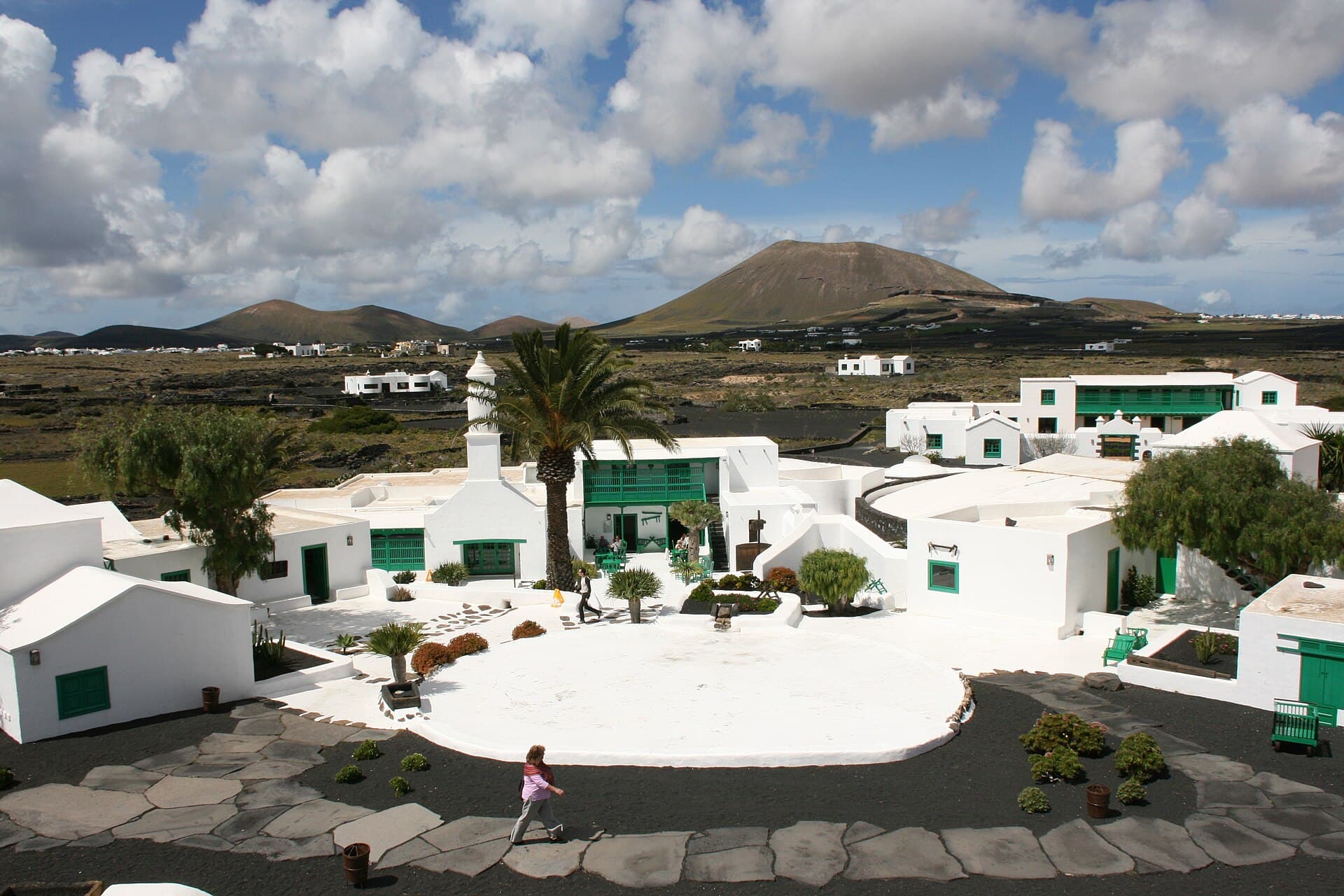
This open-air museum created by César Manrique celebrates Lanzarote’s rural heritage through restored farm buildings, local crafts, and volcanic-landscape architecture.
Casa Museo del Campesino stands at the geographic center of Lanzarote as a living tribute to the island’s peasant traditions. Designed by artist César Manrique in the mid-1970s, the complex uses whitewashed walls, volcanic stone, and native plants to recreate a self-sufficient rural homestead. Visitors walk through low, thick-walled houses that once sheltered families, livestock, and stored harvests against the trade winds.
Manrique integrated functional elements such as a working windmill, stone corrals, and shaded courtyards that demonstrate how Canarian farmers adapted to arid conditions. The buildings sit low to the ground, their rounded corners and small windows reducing wind resistance. A central patio planted with prickly pear and aloe vera shows the drought-resistant crops that sustained island households for generations.
Rooms display traditional tools for plowing, threshing, and water collection. One section reconstructs a typical kitchen with a hearth and earthenware vessels. Outside, visitors can observe demonstrations of rope-making from palm fiber and the pressing of gofio, the toasted grain staple still eaten today. The on-site winery produces small batches of Malvasía from vines grown in the surrounding volcanic soil.
Many travelers combine a visit with lunch at the museum’s restaurant, which serves hearty Canarian stews and fresh goat cheese. The adjacent craft shop sells handmade pottery and woven baskets produced by local artisans. Children enjoy the small animal area featuring native breeds of goats, chickens, and donkeys.
Located on the LZ-30 highway between Arrecife and Teguise, the site is easily reached by rental car or the island’s regular bus service. The mild climate makes any season suitable, though spring and autumn offer the most comfortable temperatures for walking the open grounds. Arrive early to avoid midday sun and to enjoy quieter moments among the stone pathways.
After exploring the museum, continue north to the historic town of Teguise for its weekly market or south to the Fundación César Manrique, where the artist’s own home is carved into lava bubbles. The coastal village of Caleta de Famara lies a short drive west, offering dramatic cliffs and black-sand beaches that complete a full day of Lanzarote’s diverse landscapes.
Keep reading
Visit the monument to Blas Cabrera Felipe, the influential Spanish physicist born in the Canary Islands, set amid…
Yes. The open spaces, animal area, and hands-on craft demonstrations appeal to families, though young children should be supervised near the low stone walls and windmill.
Plan two to three hours to walk the buildings, watch a short demonstration, and enjoy the restaurant or shop without rushing.
The museum restaurant serves traditional Canarian dishes using local ingredients, and the shop offers snacks and wine produced on the property.
Public buses stop nearby on the LZ-30 route connecting Arrecife and Teguise; schedules are reliable but less frequent on weekends.
It focuses specifically on rural peasant life rather than natural wonders or modern art, providing context for the islandu2019s agricultural history and Manriqueu2019s respect for traditional building techniques.
Experience sweeping Atlantic vistas of La Gomera island from this elevated Tenerife lookout point.
This elevated viewpoint on La Palma offers unobstructed panoramas of volcanic ridges, deep barrancos, and the Atlantic…