
Keep reading
Nearby & related
Balearic Islands
The Statue of James I of Aragon in Palma de Mallorca
Stand before the bronze monument to the king who conquered Mallorca and shaped the island’s medieval identity.
26 September 2026
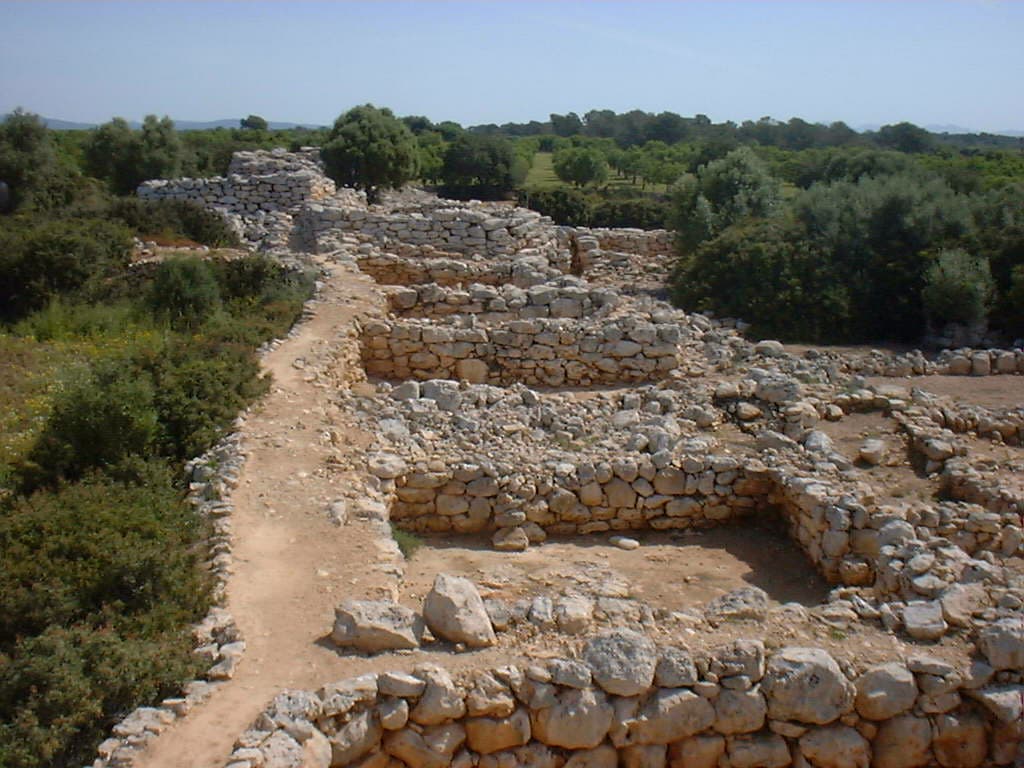
Explore the stone towers, houses and tombs of this 3,000-year-old site that offers a rare window into Bronze Age life on the island.
Capocorb Vell sits on a low rise in southern Mallorca, a short drive inland from the coast. The site preserves the largest concentration of Talayotic structures on the island, with five massive talayots, clusters of circular dwellings, and elongated naveta tombs spread across open fields. Visitors walk among dry-stone walls that have stood for more than three millennia, gaining a direct sense of how early Mallorcans lived, farmed and defended themselves.
The settlement dates from roughly 1200 BCE to the Roman conquest. Its builders used local limestone to create thick-walled towers that likely served as both lookout points and status symbols. Around the towers, families constructed apsidal houses with central hearths and storage pits. The navetas, shaped like upturned boats, held collective burials and reflect the community’s ritual practices. Excavations have revealed pottery, bronze tools and bone remains that illustrate a mixed economy of cereal cultivation, herding and coastal trade.
The site lies between the towns of Llucmajor and Ses Salines, easily reached by rental car or taxi from Palma or the southern resorts. Park beside the farm buildings and follow the marked path that loops through the ruins. Allow at least ninety minutes to walk the full circuit and read the interpretive panels. The terrain is uneven with loose stones, so sturdy footwear is essential. Shade is limited, making early morning or late afternoon the most comfortable times to explore.
Spring and autumn bring mild temperatures and fewer visitors. Summer visits are possible but require sun protection and plenty of water. After the ruins, continue south to the coastal watchtowers at Cap de Ses Salines or relax on the wide sandy beaches of Es Trenc. The medieval town of Santanyi, with its weekly market, lies only ten minutes away and offers a pleasant contrast between ancient stones and living island culture.
Keep reading
Stand before the bronze monument to the king who conquered Mallorca and shaped the island’s medieval identity.
It is a large Talayotic settlement featuring five stone towers, circular houses and boat-shaped tombs built between 1200 BCE and the Roman period.
Drive south on the Ma-19 motorway, then take the Ma-6014 toward Llucmajor; the site is signposted and lies about 25 minutes from the city centre.
Yes, older children usually enjoy climbing the gentle slopes and exploring the open structures, though younger ones need close supervision on the rough ground.
A small information hut stands near the entrance; basic toilets are available, but visitors should bring their own refreshments.
Self-guided visits are straightforward thanks to clear paths and explanatory panels in several languages.
This secluded viewpoint delivers sweeping vistas of rugged peaks, olive terraces, and the Mediterranean from the heart…
This secluded viewpoint reveals plunging gorges, terraced valleys, and distant sea horizons in the heart of the Serra de…