
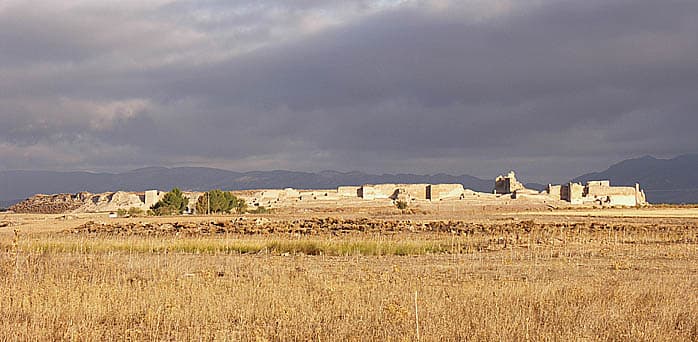
Calatrava la Vieja Castle: Exploring the Medieval Fortress of the Order of Calatrava
Uncover the ruins of this pivotal 12th-century stronghold that shaped the Reconquista in Spain's La Mancha region.
The Historical Significance of Calatrava la Vieja
Calatrava la Vieja stands as one of the earliest and most important fortresses in medieval Spain, founded in the mid-12th century along the Guadiana River. It served as the original seat of the Order of Calatrava, a military order established to defend the frontier during the Reconquista. The site’s strategic location made it a key defensive point between Christian and Muslim territories, influencing centuries of regional power struggles.
What to See and Do at the Site
Visitors explore extensive archaeological remains including defensive walls, towers, a mosque converted into a church, and residential structures. The layout reveals layers of occupation from Roman times through the Islamic period and into the Christian era. Walking trails allow close inspection of excavated foundations and artifacts displayed in open-air settings, offering insight into daily life in a frontier castle.
Archaeological Highlights
- Thick stone ramparts that once protected the settlement from sieges.
- Remains of the alcazaba, the fortified core of the complex.
- Evidence of irrigation systems and agricultural terraces that supported the garrison.
Getting to Calatrava la Vieja
The site lies near Carrión de Calatrava in Ciudad Real province. Most travelers arrive by car via the A-4 highway from Madrid or Ciudad Real, with parking available near the entrance. Public transport options include regional buses to Carrión followed by a short taxi ride. The flat terrain of La Mancha makes cycling or walking from nearby villages feasible for active visitors.
Best Time to Visit
Spring and autumn provide the most comfortable conditions for exploring the open ruins, with mild temperatures and fewer crowds. Summer brings intense heat typical of the Castilian plain, while winter can turn paths muddy after rain. Early morning visits help avoid midday sun and allow time to appreciate the quiet landscape.
Nearby Places Worth Exploring
Combine a trip with Calatrava la Nueva, a later fortress-monastery of the same order located about 20 kilometers south. The historic center of Ciudad Real offers museums and Gothic architecture, while the Tablas de Daimiel wetlands provide a natural contrast to the arid surroundings.
Visitor tips
- Wear sturdy walking shoes, as the terrain includes uneven stones and gravel paths across the ruins.
- Carry water and sun protection, especially during warmer months when shade is limited.
- Visit early in the day to enjoy cooler temperatures and better light for photography.
Frequently asked questions
What makes Calatrava la Vieja different from other Spanish castles?
It is the original headquarters of the Order of Calatrava and preserves layers of Roman, Islamic, and medieval Christian occupation in a single archaeological park.
How long does a typical visit take?
Most visitors spend one to two hours walking the main trails and examining the visible remains.
Are there guided tours available?
Occasional interpretive visits are offered by local heritage groups; independent exploration with informational panels is the standard experience.
Is the site suitable for children?
Yes, the open landscape and visible foundations make it engaging for families, though supervision is advised around drop-offs and uneven ground.
Can I combine a visit with other regional sites in one day?
Yes, the location works well with nearby Calatrava la Nueva and the wetlands of Tablas de Daimiel for a full-day itinerary.