
Keep reading
Nearby & related
Chadpai Wildlife Sanctuary: A Gateway to Bangladesh’s Mangrove Wilderness
Discover the protected mangroves, diverse wildlife, and quiet boat journeys that define this corner of Bagerhat…
24 September 2026
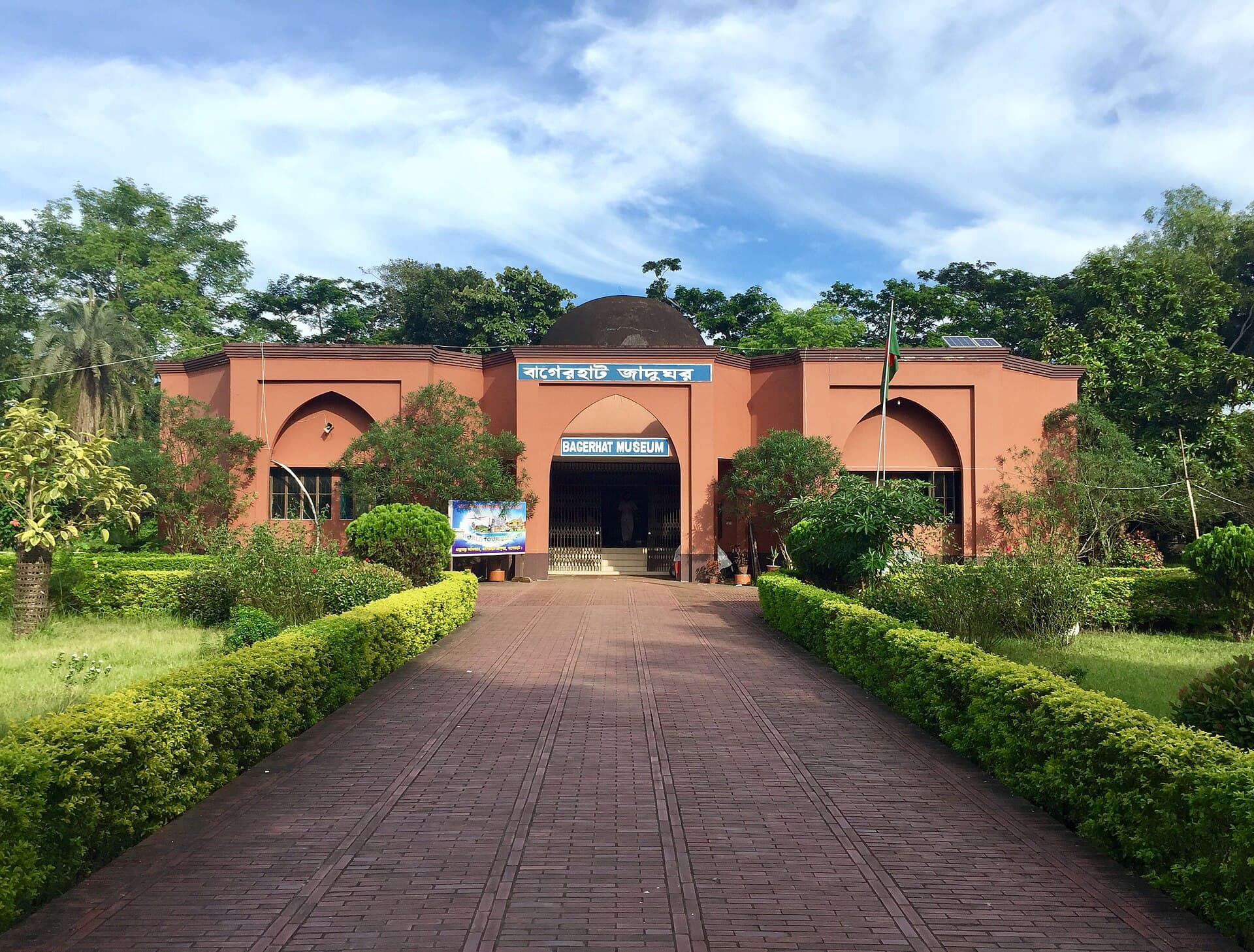
Discover the terracotta plaques, stone inscriptions, and everyday relics that illuminate Khan Jahan Ali’s historic legacy in southern Bangladesh.
Bagerhat Museum preserves the material culture of the Mosque City of Bagerhat, a UNESCO World Heritage site built in the mid-1400s by Turkish-born administrator Khan Jahan Ali. The collection focuses on objects recovered from the surrounding ruins rather than replicas, giving visitors direct contact with the bricks, tiles, and tools that shaped one of Bengal’s earliest Islamic urban centers.
Rows of floral and geometric plaques line the walls. Many still show the original firing marks from the kilns that supplied the Sixty Dome Mosque and nearby structures. Look for the small, repeating lotus motifs that appear on both mosque walls and household pottery, illustrating how decorative styles crossed from sacred to domestic use.
Stone slabs and copper coins carry Persian and Arabic texts that record land grants, mosque endowments, and trade links with the wider Indian Ocean world. These documents help date the rapid growth of Bagerhat from a frontier settlement to a planned city within a single generation.
Display cases hold terracotta lamps, cooking pots, and iron tools excavated from residential mounds. These items reveal the daily rhythms of the city’s builders, merchants, and farmers who supported the monumental mosque projects.
Bagerhat town lies roughly 15 kilometers east of Khulna. Most travelers arrive by bus or private car from Khulna or by launch from Mongla port. From the town center, the museum sits a short ride or walk from the Sixty Dome Mosque complex; the flat terrain makes bicycle rickshaws practical for the final stretch.
November through February offers the driest, coolest weather for walking between the museum and the open-air ruins. Avoid the June–September monsoon when heavy rain can flood approach roads and limit outdoor exploration of the larger mosque site.
Most visitors spend 45u201360 minutes inside the galleries and another hour exploring the nearby mosques on foot.
Yes. The displays are at eye level for most school-age children, and the open spaces around the museum allow them to stretch their legs afterward.
The mosque lies within easy walking distance; many travelers visit both on the same morning or afternoon.
Photography without flash is generally permitted, but always check posted signs near sensitive artifacts.
Labels appear in Bengali and English; a short printed guide in additional languages is sometimes available at the entrance.
Keep reading
Discover the protected mangroves, diverse wildlife, and quiet boat journeys that define this corner of Bagerhat…